Key Takeaways
Engineered yeast has produced 4′-DMEPI-4-O-Glc, an advanced precursor that can be converted into etoposide or teniposide through a final chemical reaction.
The 2026 pathway required more than 60 genetic edits and 45 heterologous enzymes, illustrating both the power and complexity of microbial natural-product synthesis.
The reported precursor titer of 132 ± 8 µg/L remains a major obstacle to industrial production despite promising downstream chemical conversion yields.
Plant chassis, fed-substrate microbial bioconversion, and glucose-based fermentation offer distinct trade-offs in feedstock dependence, pathway complexity, and manufacturing productivity.
Commercial viability will depend on optimizing the complete process, including fermentation, intermediate recovery, impurity control, chemical conversion, and reliable supply.
From Plant Extraction to Programmable Manufacturing
Some of the most sophisticated medicines in modern oncology still depend on chemistry performed first by plants. Etoposide and teniposide, two established anticancer drugs, have traditionally relied on podophyllotoxin obtained from botanical sources, including Sinopodophyllum hexandrum, a medicinal plant native to the Himalayan region. Its restricted geographic distribution and harvesting pressures have raised concerns about the long-term sustainability of this supply route, motivating efforts to develop alternative methods for producing these medicines.1,2
Plants produce chemically complex molecules through coordinated networks of enzymatic reactions, often constructing structures that are difficult to reproduce efficiently through conventional synthesis. These natural products can serve as active pharmaceutical ingredients (APIs) or as starting materials for subsequent chemical transformations. Although extraction and semisynthesis have enabled the manufacture of important medicines, dependence on specialized botanical feedstocks can introduce vulnerabilities associated with agricultural conditions, geographic concentration, and raw-material availability.
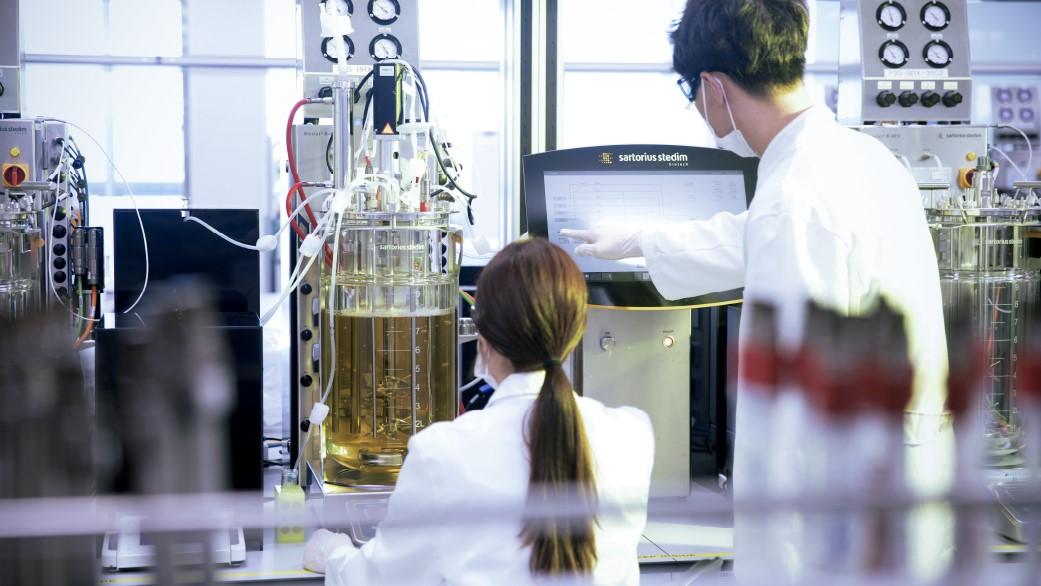
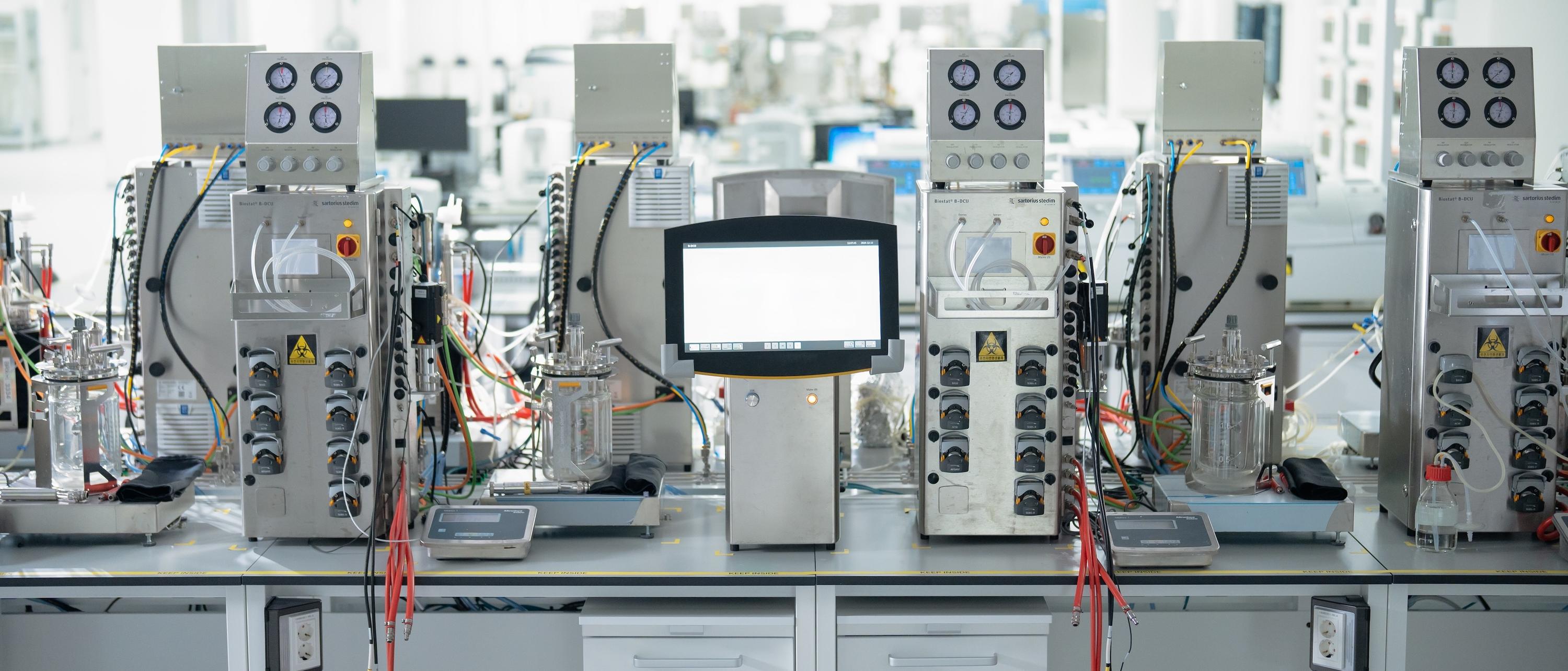
Synthetic biology offers an alternative by transferring biosynthetic machinery into microorganisms cultivated under controlled conditions. Yeast or bacteria can perform selected transformations using more readily available feedstocks, while chemical synthesis completes reactions better suited to conventional processing.
In July 2026, researchers reported a significant advance.2,3 By reconstructing an extensive plant-derived pathway in yeast, they enabled production of an advanced precursor of etoposide and teniposide from glucose. The intermediate could then be converted into either anticancer drug through a single chemical transformation. The achievement offers a possible route around traditional botanical sourcing, although the reported production level remains far below commercial requirements.
The work raises a question extending beyond these two drugs: how can complex biological pathways become production systems capable of supplying pharmaceutical intermediates reliably, efficiently, and at a competitive cost?
Reconstructing a Plant Pathway in Yeast
Producing an etoposide precursor from glucose requires more than reconstructing podophyllotoxin biosynthesis. The desired drugs contain additional structural features, including a sugar group attached at a specific position. Engineering the organism to produce an intermediate with that linkage already installed can simplify the remaining chemical synthesis.
Siyu Shen and colleagues engineered Saccharomyces cerevisiae to produce 4′-demethyl-epipodophyllotoxin-4-O-glucoside (4′-DMEPI-4-O-Glc), an advanced glycosylated intermediate suitable for conversion into etoposide and teniposide.2 The work involved more than 60 genetic edits and 45 heterologous enzymes, illustrating the complexity of coordinating plant-derived reactions within a microbial host.
A crucial step was identifying the enzyme responsible for installing glucose at the required position. The team screened 354 candidate UDP-glycosyltransferase genes from the S. hexandrum genome and identified UGT709AX1, which catalyzes the required regioselective glycosylation. The discovery closed a missing step in the pathway toward the desired pharmaceutical intermediate.3
The team also had to increase the supply of upstream metabolites. Coniferyl alcohol, an early lignan building block, accumulated poorly through the native plant-derived route when reconstructed in yeast. The researchers developed an alternative route involving engineered carboxylic acid reductases, screened aldehyde reductases, and adjusted cofactor supply. These interventions raised coniferyl alcohol production approximately 45-fold, to 89 ± 2 mg/L.
Further engineering addressed coupling reactions and oxidative modifications of the lignan scaffold, including steps requiring control of stereochemistry. Production of deoxypodophyllotoxin reached 357 ± 58 µg/L. The team then assembled oxidative tailoring and glycosylation modules capable of generating 12 related podophyllotoxin-type compounds, and improved production of the target glycosylated precursor to 132 ± 8 µg/L.
The choice of precursor mattered. A final acetalization reaction converted the glycosylated intermediate into etoposide at a reported yield of 89.1%, while a related reaction produced teniposide at 64.9%. These values describe the chemical transformations, not the yield of the entire fermentation-to-drug process. Nevertheless, they demonstrate the advantage of performing a difficult, position-specific glycosylation biologically before completing the remaining chemistry.
Multiple Routes to the Same Pharmaceutical Precursors
The 2026 platform builds on earlier efforts to produce podophyllotoxin-related intermediates outside their traditional botanical sources. The approaches differ in their hosts, starting materials, and intended products, making simple comparisons of reported concentrations misleading.
In 2019, Bailey Schultz and colleagues reconstructed a pathway for deoxypodophyllotoxin in tobacco.1 Transient expression of 16 genes yielded up to 4.3 mg/g of dry plant weight, with up to 0.71 mg/g isolated after chromatography. This approach exploited a plant chassis already equipped to support many aspects of complex natural-product biosynthesis.
A bacterial approach reported by Davide Decembrino and colleagues in 2021 used Escherichia coli to convert supplied matairesinol into deoxypodophyllotoxin.4 A single-cell configuration accumulated yatein, prompting the researchers to divide the pathway between two bacterial populations. Sequential conversion achieved 196 µM, equivalent to 78 mg/L of deoxypodophyllotoxin and 98% of the theoretical yield from supplied matairesinol. Extending the cascade also enabled epipodophyllotoxin production.
A separate 2026 study investigated engineered yeast converting supplied yatein into 4′-desmethyl-epipodophyllotoxin, followed by chemical conversion to etoposide.4 That work explored pathway configuration and bioreactor feeding, while also identifying potential plant sources of yatein. It represents a hybrid approach in which botanical sourcing supplies a relatively advanced intermediate for microbial conversion.
These platforms address different manufacturing objectives. Plant chassis can exploit native cellular machinery; shorter microbial cascades can efficiently transform supplied precursors; and longer glucose-based routes can reduce reliance on specialized intermediates. The 78 mg/L achieved from fed matairesinol and the 132 ± 8 µg/L achieved from glucose refer to different products and different extents of biosynthesis. Their concentrations alone cannot establish which route is more attractive industrially.
A process intended to supplement an existing supply might benefit from a short, productive bioconversion pathway. A process intended to reduce botanical dependence more completely may justify a longer route from basic feedstocks, provided its additional complexity can be managed.
Why Completing a Pathway Is Only the Beginning
Identifying the required enzymes establishes the reactions that must occur, but production depends on making them work together in a suitable cellular environment. Plant enzymes may require specific compartments, electron-transfer partners, or carefully regulated supplies of substrates and cofactors. Those relationships can be difficult to reproduce in yeast or bacteria.
Cytochrome P450 enzymes are particularly relevant because they catalyze many oxidative transformations involved in constructing natural products. Their activity depends on proper protein folding, membrane interactions, and suitable redox partners. When transferred into microbial hosts, plant P450s can exhibit poor expression, instability, or limited activity.
The 2026 yeast work encountered limitations at several pathway nodes. Increasing coniferyl alcohol supply improved an early step, but subsequent coupling reactions did not consistently produce the desired stereochemical configuration.3 Competing reactions diverted shared intermediates, and increasing expression of some downstream enzymes failed to improve the final precursor titer.
These observations illustrate the importance of metabolic flux — the movement of carbon and other molecular resources through biochemical reactions. A host can contain every required enzyme while directing only a small proportion of available substrate toward the desired compound. Improving output may therefore require rebalancing enzyme expression, reducing competing reactions, adjusting cofactor supply, or bringing cooperating enzymes into closer proximity. Changes must be evaluated across the complete pathway rather than one reaction at a time.
The number of introduced enzymes also creates questions for industrial development. Maintaining extensive heterologous expression may impose a metabolic burden, and genetic or physiological changes during cultivation could alter pathway performance. Such effects have not been established as failures of the reported strain; they are issues to test when assessing sustained productivity and reproducibility at manufacturing scale.
Designing the Interface Between Biology and Chemistry
The manufacturing value of an engineered pathway depends partly on where biological synthesis ends and chemical synthesis begins. Enzymes can execute highly selective transformations that are difficult to reproduce chemically, while established chemical methods may be more efficient for other steps. Choosing the biosynthetic endpoint therefore involves a trade-off: a more advanced intermediate can simplify downstream chemistry but may demand a longer, less productive fermentation pathway.
The etoposide platform illustrates this decision.2 Installing the required glucose linkage within yeast moved a challenging stereoselective transformation into biology and left a comparatively direct chemical conversion. The optimal endpoint, however, cannot be judged solely by the number of chemical steps eliminated; it must be evaluated through the efficiency of the combined process.
Semisynthetic artemisinin provides an industrial precedent. Researchers engineered yeast to produce artemisinic acid, a precursor subsequently converted into the antimalarial drug through chemical synthesis. A 2013 study reported artemisinic acid production reaching 25 g/L and described an integrated route combining fermentation with chemical processing.6 That achievement demonstrates the feasibility of the general manufacturing architecture, although its performance cannot be extrapolated to the chemically distinct etoposide pathway.
For etoposide, the reported final reaction yields establish chemical feasibility under the investigated conditions. Overall process performance would also depend on precursor recovery, purification, solvent and reagent use, impurity formation, and final isolation. A high-yielding chemical reaction offers limited economic advantage if its feedstock is recovered inefficiently from a dilute fermentation broth.
The modularity of the yeast pathway also supports exploration of related molecules. However, the flexibility to generate multiple analogs during research differs from the consistency required to manufacture one defined pharmaceutical intermediate. Individual products may demand different strain configurations, cultivation conditions, analytical methods, and purification strategies. A reusable biosynthetic framework can accelerate development without eliminating product-specific process optimization.
What Would Make the Process Commercially Viable?
The immediate obstacle is the gap between pathway completion and industrial productivity. At the reported laboratory titer of 132 ± 8 µg/L, approximately 7,600 liters of fermentation broth would contain one gram of precursor before recovery losses, assuming the same concentration could be maintained throughout that volume.3 This arithmetic illustrates the magnitude of the challenge; it is not a scale-up projection or a prediction of recovered output.
Development must improve titer, the concentration of the desired product; productivity, its rate of accumulation; and yield, the efficiency with which feedstock becomes product. These measures are related but not interchangeable. A higher concentration may require a longer fermentation, while faster production may come with increased feedstock consumption or byproduct formation.
The reconstructed yeast pathway contains many interacting enzymatic steps, so improvement will depend on coordinated changes to pathway flux and host metabolism. Scale-up must then demonstrate that the resulting strain maintains production under conditions involving different mixing, oxygen transfer, nutrient availability, and process-control demands. Genetic stability and reproducibility across production campaigns are equally important to the commercial assessment.
Downstream recovery is another major consideration. The target glycoside must be separated from fermentation components and structurally related compounds. Analytical methods will need to distinguish the desired intermediate from pathway byproducts and track impurities through recovery and chemical conversion. At low titers, processing large broth volumes to recover small quantities of precursor could make separations particularly costly.
The chemical stage introduces further losses. The reported 89.1% and 64.9% conversion yields cannot be treated as overall process yields, which would reflect fermentation, recovery, purification, chemical conversion, and final product isolation. Reagent consumption, solvent use, reaction concentration, and product quality would also influence the economic and operational assessment.
Comparing complete routes is therefore more informative than ranking fermentation titers. A short bioconversion pathway may be productive but remain dependent on an expensive botanical precursor. A glucose-based pathway may reduce that dependence while requiring more intensive strain and process engineering. The preferable route will be determined by feedstock availability, manufacturing capacity, cycle time, downstream efficiency, product quality, cost, and supply reliability.
Supply chain resilience also requires distinguishing replacement from supplementation. An alternative microbial process could have value as contingency capacity or a supplemental source before it becomes the lowest-cost option for routine production. Conversely, fermentation introduces dependencies on specialized infrastructure, expertise, and operational consistency. Its adoption would shift supply risks rather than automatically eliminate them.
The next decisive evidence will come from improved precursor productivity, sustained fermentation performance, efficient recovery, and reliable integration with the final chemical conversion. Those results will establish whether the route can compete with existing botanical supply or provide a practical additional source.
From Alternative Production to Supply Chain Resilience
The reconstruction of an advanced etoposide and teniposide precursor pathway in yeast shows how synthetic biology can reproduce complex plant chemistry in a microbial production system. Identifying the missing glycosylation enzyme and integrating dozens of heterologous activities established a route from glucose to a precursor that can be converted directly into two clinically important drugs.
The achievement also distinguishes a discovery platform from a pharmaceutical manufacturing platform. Demonstrating a complete pathway establishes what is chemically possible; reliable production requires sustained productivity, efficient recovery, controlled quality, and a viable integrated process. For plant-derived medicines, the first commercial benefit may be diversified sourcing or supplemental capacity rather than wholesale replacement of established supply routes.
The broader significance of the etoposide work lies in the ability to reconsider how complex pharmaceutical molecules are manufactured, choosing which transformations should occur within an engineered organism and which are better completed through chemistry. The eventual value of this approach will depend on whether those decisions produce an integrated process that meets pharmaceutical quality requirements while offering meaningful advantages in reliability, flexibility, or cost.
References
1. Schultz, Bailey J, et al. “Total Biosynthesis for Milligram-Scale Production of Etoposide Intermediates in a Plant Chassis.” Journal of the American Chemical Society. 141: 19231–19235 (2019).
2. Shen, Siyu, et al. “Enabling Sustainable Supply of the Essential Cancer Medicines Etoposide and Teniposide in Yeast.” Science. 393: aef5438 (2026).
3. Gautron, Nicolas, Nicolas Papon, and Vincent Courdavault. “Engineering Yeast for Anticancer Drug Biosynthesis.” Cell Discovery. 12: 79 (2026).
4. Decembrino, Davide, et al. “Synthesis of (−)-Deoxypodophyllotoxin and (−)-Epipodophyllotoxin via a Multi-Enzyme Cascade in E. coli.” Microbial Cell Factories. 20: 183 (2021).
5. Gautron, Nicolas, et al. “A Yeast-Based Platform for Etoposide Production via Yatein Bioconversion.” Metabolic Engineering Communications. 22: e00280 (2026).
6. Paddon, C J, et al. “High-Level Semi-Synthetic Production of the Potent Antimalarial Artemisinin.” Nature. 496: 528–532 (2013).