The Patent Landscape and its Implications: Biologics and ADCs
Jun 1, 2026NI-06-26-01
Key Takeaways: Insights on the Biologics and ADC Patent Landscape
The Upcoming Patent Cliff and Revenue Strategies: A looming patent cliff is set to launch a new wave of blockbuster biosimilars. This shift is forcing Big Pharma to aggressively pursue "bio-betters" and new drug pipelines to offset significant projected revenue losses.
The PBM Gatekeeper Effect on Drug Pricing: Despite the promise of lower costs, the Humira case proves that biosimilars don’t always reduce market prices. In the U.S., Pharmacy Benefit Managers (PBMs) act as the ultimate gatekeepers, controlling market access and pricing structures through complex rebate cycles.
ADCs as the Next Frontier for Innovation: While Antibody–Drug Conjugates (ADCs) have been called an "invitation for innovation," the path for biosimilar integration remains complex. To maintain a competitive edge, the industry is pivoting toward novel antibodies, advanced linker technologies, and next-generation payloads rather than simple replication.
1.1. The industry is also facing a wave of major patent expirations, peaking in 2027–2028, when a total of $100 billion in annual sales — equivalent to 6.6% of global pharma revenues — will be at risk due to loss of exclusivity (LOE).1 Among the most high-profile drugs set to lose patent protection during this period are Keytruda, Opdivo, Eliquis, Ibrance, and Trulicity, which collectively generated $58 billion in sales in 2023. By 2030, sales of these drugs are expected to decline by more than 50% due to biosimilar and generic competition.
1.2. In response, Big Pharma is refocusing its strategy, moving away from niche areas such as rare diseases and oncology and reinvesting in high-volume blockbuster therapies — a trend described as “Big Drugs for Big Diseases.”1 The most prominent example of this shift is the rapid expansion of the GLP-1 agonist market, led by Novo Nordisk’s Wegovy and Lilly’s Zepbound. These drugs, initially approved for type 2 diabetes and obesity, are now being explored for additional metabolic and cardiovascular benefits, positioning them as multi-indication blockbuster therapies. The race is now on to develop next-generation GLP-1 therapies with greater potency, offering enhanced weight loss and metabolic improvements; longer duration of action, reducing dosing frequency; and improved convenience, with a shift toward oral formulations rather than injectable delivery.
1.3. Beyond GLP-1 therapies, blockbuster immuno-inflammatory treatments are making a substantial impact on pharmaceutical market growth. Sanofi’s Dupixent and AbbVie’s Skyrizi stand out as multi-indication powerhouses, driving sales across a broad range of inflammatory conditions.1 These drugs exemplify the “pipeline-in-a-product” strategy, where a single therapy targets multiple diseases, enhancing its long-term market potential. However, competition in the autoimmune space is intensifying, making it increasingly challenging to sustain dominance. As a result, drug developers are shifting toward more personalized treatment approaches, leveraging biomarker-led patient stratification to optimize therapeutic outcomes and differentiate their products.
1.4. By 2030, Evaluate Pharma projects that weight-loss drugs will dominate five of the top ten best-selling therapies, with the remaining five spots occupied by two immuno-inflammatory treatments and three central nervous system (CNS) drugs.1 Despite this shift, oncology will retain its position as the most valuable therapeutic category, generating more than twice the sales of obesity/diabetes, immunology, and CNS treatments combined.
2.1 A significant fraction of the biopharmaceutical development pipeline comprises not only follow-on biopharmaceuticals — mostly biosimilars — but also many biogenerics (copies of protein products that were not originally approved as biologics and, therefore, not subject to approval as biosimilars but more often via the 505(b)(2) pathway) and biobetters (modified versions of previously approved products, often but not always for the same indication, which typically provide some benefit with respect to delivery, stability, etc.). By the end of 2019, 17% of the biologics market was accessible to biosimilar competition, and biosimilars had achieved a 20% market share.2 In addition, including approved but not yet launched biosimilars, 50% of the biologics market could ultimately face biosimilar competition. By April 2024, a total of 50 biosimilars had been approved by the FDA (Table 2). And by year’s end, a record total of 18 biosimilars for 8 reference products had been approved in 2024.3
2.2 The COVID-19 pandemic had a dramatic, chilling effect (Figure 1) on the pace of biosimilar approvals, probably due to priority review by the FDA of pandemic-related therapies and somewhat due to reprioritization of projects by the innovators. Nevertheless, the FDA has averaged approval of five biosimilars per year since Zarxio was approved in 2015. If we assume 2020 was an outlier and exclude it, the average annual approval rate is 5.2; however, the 2024 data cited above indicate that this rate has increased.
2.3 Excluding vaccines and blood-derived products, a total of 22 follow-on biologics (biosimilars, biogenerics, and biobetters) were approved in 2019, accounting for 63% of FDA biologic approvals that year. Of those 22 approvals, 10 received formal biosimilar biologics license application (BLA) approvals, two received approvals via the 505(b)(2) pathway, and 10 were biobetters. These numbers decreased in the following years: three in 2020, four in 2021, and seven in 2022.4
2.4 In April 2020, BioPlan Associates reported a total of 1,099 biosimilars/biogenerics and 560 biobetters in development or on the market worldwide, with 588 of the biosimilars/biogenerics and 296 of the biobetters either in clinical trials or commercially available, respectively.5
2.5 Growth in the biosimilars market is being driven by multiple factors: greater opportunities for biosimilar launches as more biologics lose patent protection; a higher approval rate in the United States, increasing adoption of biosimilars there and in other mature markets due to greater awareness of their safety and cost benefits and government programs encouraging their use; and increasing demand in emerging markets.5
2.6 Patent protection for biologic drugs is shorter in some countries as compared to the United States. As a result, as of April 2024 the EMA had authorized 82 biosimilars (nine of which have since been withdrawn from the market).6
2.7 Many of the approved but not yet launched biosimilars will also be reaching the market — five biosimilars of AbbVie’s Humira noted above hit the market in 2023.7
2.8 Separately, biosimilar producers are contending with global price declines and rising competition, which is driving interest in manufacturing solutions that increase efficiency and productivity while also providing flexibility and agility.8
2.9 Patent expiration dates are not the full story, however. Humira, made by AbbVie, officially lost its primary patent protection in 2016, but AbbVie managed to extend some of their protections significantly. At last, in 2019, nine biosimilars became available in the U.S. market, some of which had already been available in Europe. Until 2024, Humira had only lost 4% of its market share to biosimilars. A major blow came to the manufacturer when CVS’s pharmacy benefits manager Caremark dropped Humira from its major formularies, effective April 1, 2024. As of May 1, 2024, AbbVie had lost $2.3 billion in Q1 2024.8 We will have to wait and see how the story plays out for other biosimilars, but as of the end of 2023 biosimilars retained less than 2.5% of the total market share for antibody sales (Figure 3).
2.10 Global market forecasts vary among sources, but a brief survey of forecasts for the biosimilars market — including insulin, mAbs, hormones, and growth factors — consistently predicts very high growth in an already large market (Table 1).
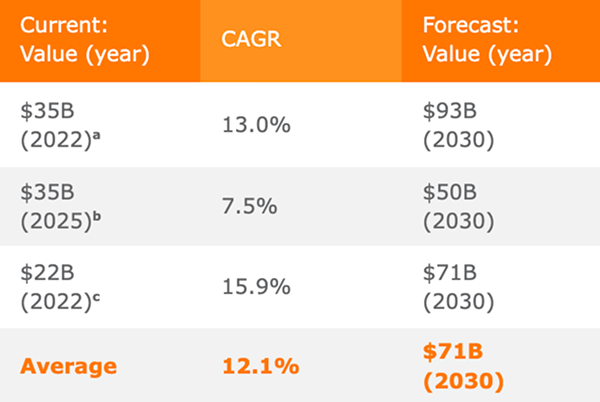 Forecasts as of Oct. 2025. References: a10; b11; c12
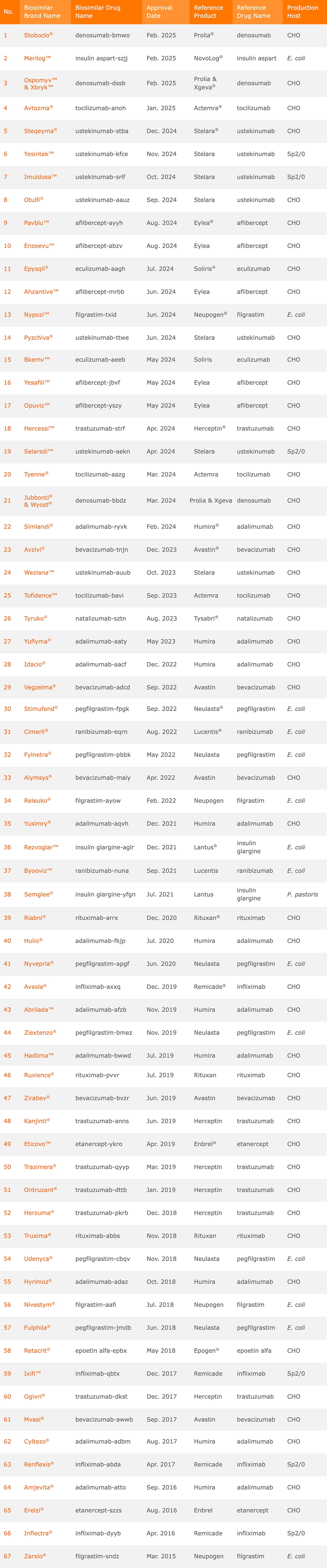 Last updated: January 2025
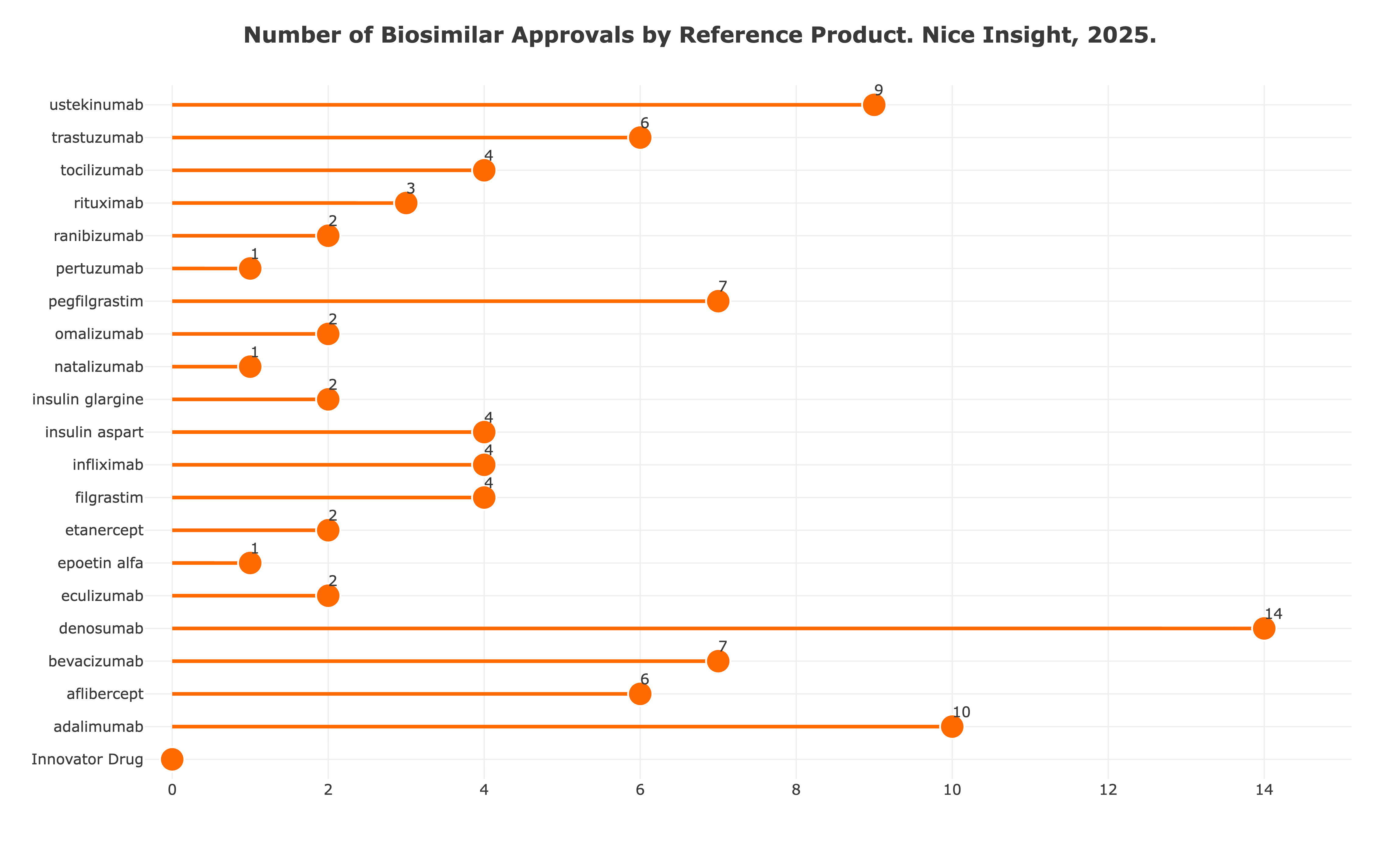 Figure 1. Number of Biosimilar Approvals by Reference Product
Biosimilar approvals are sorted by the reference product. Approvals are listed as of December 15, 2025.
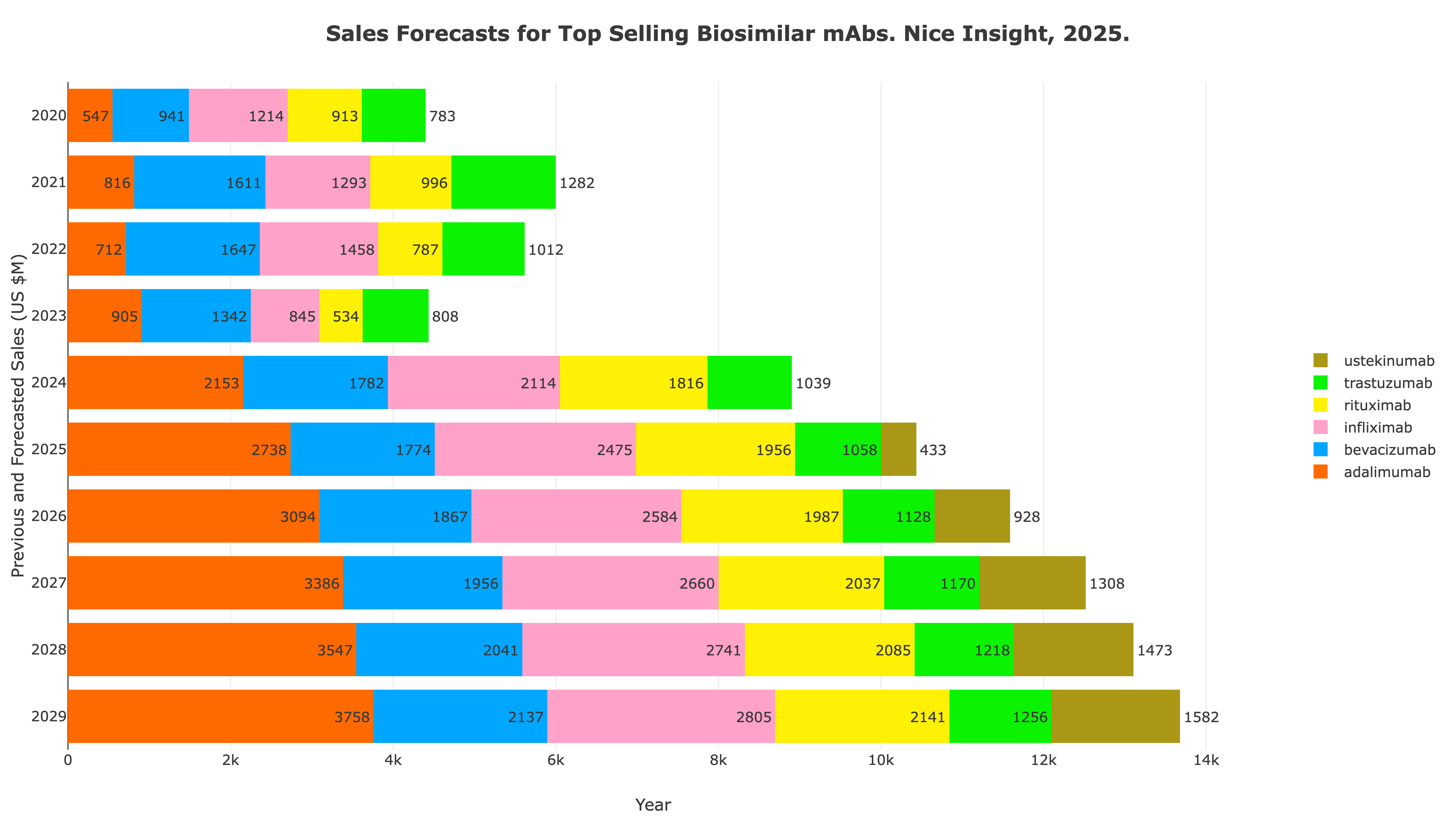 Figure 2. Biosimilar mAb Sales by Molecule Type
Sales forecasts are aggregated per reference product. Forecasts include 2024 and onward. Source: Global Data
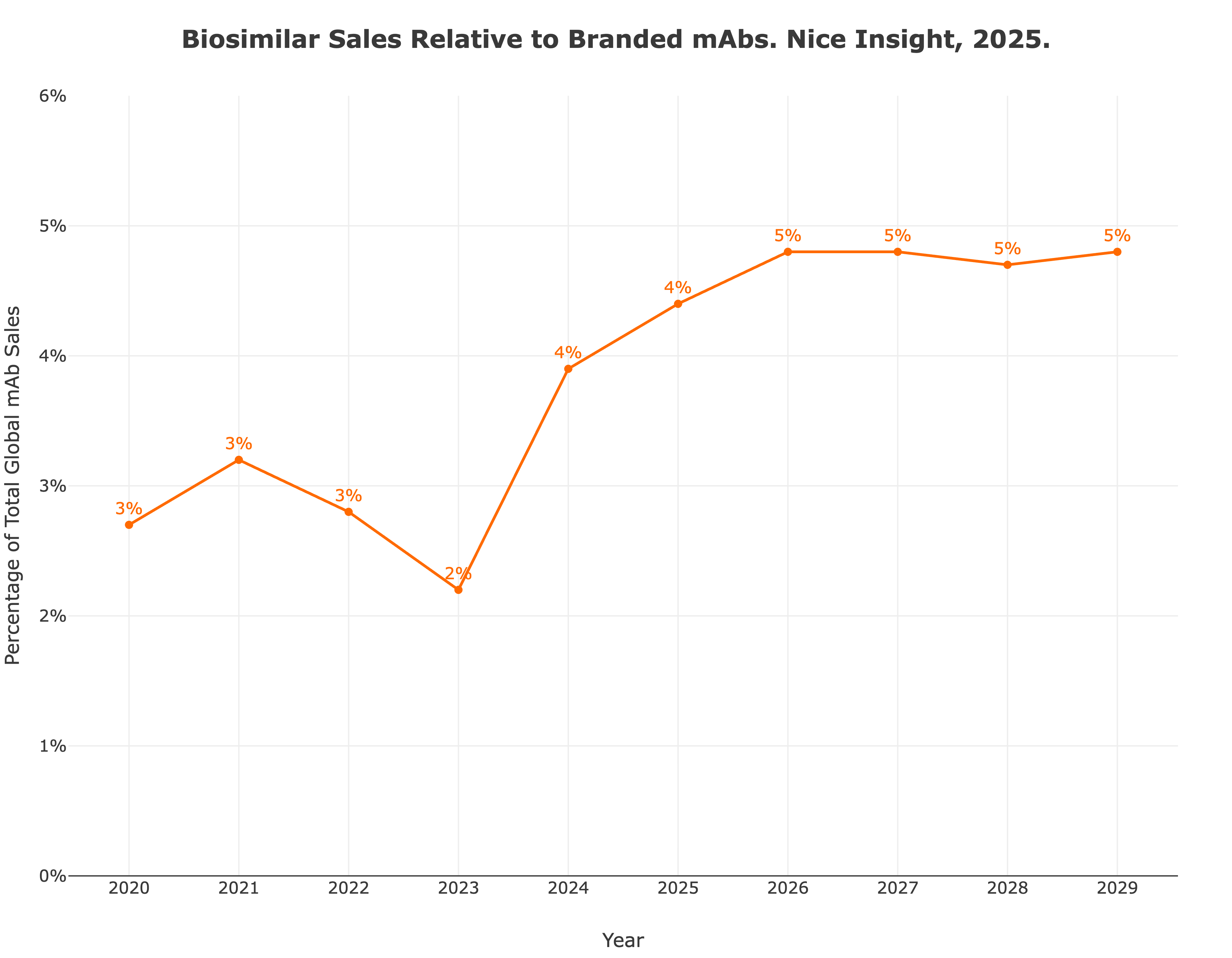 Figure 3. Sales Forecasts: Biosimilar mAbs as a Percentage of Branded mAbs
Biosimilar sales and sales forecasts presented as a percentage of total antibody market share. The data were generated in April 2024 before the announcement of a dramatic drop in sales of Humira.9 If more benefits providers drop reference products from their formularies, these forecasts may change dramatically. Source: GlobalData
3.1 Antibody–drug conjugates have been called an “invitation for innovation”13 and the intellectual property (IP) is complex because of their multiple parts in the drug, along with a maze of third party IP rights. Because these drugs combine IP in biotechnology and organic chemistry, the developer requires counsel with expertise in both backgrounds.13
3.2 Freedom to operate (FTO) searches must focus on the antibody, the payload, and the linker, as well as specific combinations of each, and therefore, they are not as straightforward as a typical FTO for a traditional antibody or small molecule. Very often a specific combination of a payload and a linker is protected.
3.3 Patent claims for antibodies used in ADCs generally follow the most common pathway currently employed for protecting antibodies, which relies on the specific sequence of the protein, although other types of claims have been granted.
3.4 Discovering new therapeutic targets for antibodies is difficult, and patent claims for novel targets have been reduced in recent years. The European Patent Office (EPO) also applies a higher standard to patent applications, and requires that the patents based on sequence demonstrate some type of surprising effect. It is no surprise, therefore, that biosimilars have been employed successfully in ADCs. The first biosimilar-based ADC, Kadcyla, was approved in 2013 and clarified some of the IP landscape for future developers. Interestingly, a biosimilar for Kadcyla, Ujvirap, has also been approved in India.13
3.5 Incorporating a biosimilar into an ADC can reduce the clinical risk of a development program, but the IP pathway isn’t as straightforward as one may assume because any chemical modification of the antibody generally requires an entirely new filing. Nevertheless, biosimilar antibodies are found in both the approved ADCs [Kadcyla; Enhertu (see Table 12)] and in clinical development.
3.6 Linker technologies are often in-licensed, because they are often developed by smaller developers with an outlicensing business model. Note that large pharma is unlikely to outlicense such technology, and will instead use it to develop an internal platform. Linker technologies are the most active space for technology development. New chemistries and modes of action are the focus of the next generation of ADCs (Table 3).
3.7 The focus on payload development to date has employed three overarching classes: maytansinoids, auristatins, and calcheamicins (although there are many more in the clinic). ImmunoGen and Seattle Genetics own most of the IP for maytansinoids and auristatins, respectively. The novel developer, therefore, would need to in-license and/or purchase the payload from these companies. Such deals often include upfront payments and then milestone payments as the drug progresses through the clinic and/or royalties on sales. As ADCs continue to demonstrate commercial success, deal terms are becoming more onerous for the novel developer to in-license, which, in turn, is part of the drive for innovation regarding payloads. (Some examples are given in Storz.13)
3.8 Toxins that were previously known but considered too toxic for therapeutic use can be repurposed for incorporation into ADCs. These cases require second-use medical patents, in which the innovator specifies a new application for the payload and often incorporates the specific antibody-binding partner into the claims. These types of patents still require FTO for the antibody-binding partner, so again, biosimilars are an attractive antibody moiety.
3.9 All intellectual property must be considered nonobvious for patent claims to be granted. Although early decisions on ADCs did not always clarify what constitutes a nonobvious invention, Genentech successfully argued in patent application EP2283867 (for ado-trastuzumab emtansine) that not all antibody–toxin combinations produce clinically effective ADCs. They demonstrated that the interaction between the drug and the antibody can diminish the efficacy of one or both components. This allowed the mere demonstration of efficacy for the components of an ADC to be considered sufficient for nonobviousness. As more patent claims are granted, however, the standard for demonstrating nonobviousness is becoming increasingly complex.13
3.10 In conclusion, ADC developers, like all biotech innovators, must carefully plan how they will negotiate the IP landscape and seek counsel with the appropriate expertise.
Answer: The 2027–2028 patent cliff will jeopardize $100 billion in annual sales, forcing Big Pharma to transition away from niche oncology and rare diseases toward high-volume blockbuster therapies. This shift, known as "Big Drugs for Big Diseases," heavily emphasizes multi-indication treatments like GLP-1 agonists and immuno-inflammatory powerhouses to offset revenue loss.
Answer: Pharmacy Benefit Managers (PBMs) act as final gatekeepers by determining which molecules enter the U.S. market and at what price point. For example, CVS Caremark significantly impacted AbbVie by dropping Humira from major formularies in 2024, leading to a $2.3 billion quarterly loss and demonstrating that patent expiration alone does not guarantee market share.
Answer: The ADC patent landscape is uniquely complex because these drugs merge biotechnology with organic chemistry, requiring separate FTO searches for three distinct components: the antibody, the linker, and the payload. Developers must often navigate a maze of third-party rights, as linker technologies are frequently in-licensed from smaller specialized developers using an out-licensing business model.
Answer: Biosimilars are frequently employed as the antibody moiety in ADCs to reduce the clinical risk of a development program. However, the IP pathway is not straightforward; any chemical modification to the biosimilar antibody generally triggers the requirement for an entirely new patent filing, despite the use of a known reference antibody.
Answer: Current ADC development primarily focuses on three overarching classes of cytotoxic payloads: maytansinoids, auristatins, and calcheamicins. Most intellectual property for these payloads is owned by ImmunoGen and Seattle Genetics, requiring novel developers to enter in-licensing deals involving upfront payments, milestone markers, and long-term sales royalties.
Senior, Melanie. World Preview 2024: Pharma’s Growth Boost. Report/Ebook. Evaluate. 9 Jul. 2024.
Robust Research & Development Results In Faster Growth Of The Global Biologics Market. Press release. The Business Research Company. 14 Oct. 2020.
Advancing Health Through Innovation: New Drug Therapy Approvals 2024. Report. Center for Drug Evaluation and Research. U.S. Food and Drug Administration. Accessed 11 Jan. 2025.
Biosimilars Market: Growth, Size, Share, and Trends. Report. Markets and Markets. Jun. 2023.
17th Annual Report and Survey of Biopharmaceutical Manufacturing Capacity and Production. Report. BioPlan Associates. Apr. 2020.
“Biosimilars approved in Europe.” Generics and Biosimilars Initiative. 20 Jun. 2025.
“Biosimilars of adalimumab.” Generics and Biosimilars Initiative. 11 Mar. 2024.
Langer, Eric, and Ronald A. Rader. “CMOs & Biosimilars Mfg. in the U.S.” Contract Pharma. 20 Apr. 2017.
Constantino, Annika Kim, and Ashley Capoot. “Sales of Humira are plunging, but AbbVie has two promising successors.” Newsletter. . 1 May 2024.
Biosimilars Market. Report. Global Market Insights. Accessed 15 Oct. 2025.
Biosimilars Market: Growth, Size, Share, and Trends. Report. Markets and Markets. Accessed 15 Oct. 2025.
Biosimilars Market (2025 - 2033). Grand View Research. Accessed 15 Oct. 2025.
Storz, Ulrich. “Antibody-drug conjugates: Intellectual property considerations.” mAbs. 7(6):989–1009 (2015).