Impact of Advanced Granulation: Implementing modern granulation technologies significantly reduces overhead by lowering energy consumption, minimizing solvent waste, and shrinking the overall manufacturing footprint.
Operational Efficiency & Safety: Beyond cost savings, advanced processes enhance workplace safety and streamline production workflows for better resource management.
Universal Biomanufacturing Challenges: While OSD manufacturing is a specialized niche, it shares core hurdles with broader biomanufacturing, specifically in scale-up modeling, in-process parameter measurement, and intermediate hold-time optimization.
Quality Standards & Parameters: Success depends on the precise definition of quality standards and the ability to accurately monitor variables throughout the production lifecycle.
Navigating Intense Cost Pressures: The OSD sector faces higher economic scrutiny than other pharmaceutical segments, driving a critical need for technologies that eliminate wastage and improve processing throughput.
Sustainability as a Strategy: Reducing energy usage and solvent waste isn't just an environmental goal; it is a primary lever for maintaining profitability under strict pharmaceutical cost pressures.
For an introduction to common Oral Solid Dose formats and technologies, see Nice Insights articles (links to MA#6 and MA#12).
1. Pneumatic Dry Granulation
1.1. Pneumatic dry granulation (PDG) is a recent advance in dry granulation technology. In this method, a blended powder containing API and excipients is mildly compressed by roller compaction to create a compacted mass with a mixture of granules and fine particles. The finer particles are removed from the granules of preferred size by a pneumatic system. The correctly sized granules have good flowability and compressibility characteristics and are processed into tablets. The removed particles are usually returned to the system for another cycle of compaction.
1.2. This method has been used to create tablets with very high drug loads (potentially up to 100%) because of the superior flowability and compressibility achieved at even low compaction forces. Processing is also faster than many other technologies and has little or no waste. Because the unit is closed, there is a low risk of dust creation and a relatively small equipment footprint.[1]
Table 1. Comparison of Different Dry Granulation Workflows
2. Advanced Methods of Wet Granulation
2.1. There are numerous variations on wet granulation methods, each with their own specific use cases. An overview of all granulation techniques is presented in Figure 1. As a very brief summary, some advances include the following:[1]
Reverse wet granulation. The powder is immersed into the wet binder. This yields consistently sized spherical granules with good flow properties and works well for poorly water-soluble APIs.
Steam granulation. Water is the solvent, although as steam. The steam diffuses better than liquid water and generates larger spherical granules than reverse wet granulation.
Moisture-activated dry granulation (MADG), also called moist wet granulation. This is a two-step process in which a small amount of water is added to the API and excipient powder to cause agglomeration, and then a moisture-absorbing material such as cellulose is added to absorb the excess material from the agglomerates. The process does not require a drying step and produces granules with good compression characteristics.
Thermal adhesion granulation. This process is related to MADG, although water and solvents are used in combination with heat, up to 130 °C. This is a simple process that yields granules with good compression characteristics.
Melt granulation, also called thermoplastic granulation. This process uses a molten binder to form agglomerates. Although heat is required, it does not require large amounts of solvent and is suitable for moisture-sensitive APIs. A specific type of melt granulation, hot-melt extrusion, is described in greater detail elsewhere.
Freeze granulation. In this process, a slurry or suspension of API and excipients is sprayed into liquid nitrogen, which is then dried by sublimation. Freeze granulation preserves the homogeneity of the API slurry and creates spherical granules.
Foam granulation. Developed by Dow Chemical Company in 2003, this process employs a binder as foam rather than droplets. Employing foam allows better distribution of the binder within the powder, thereby greatly reducing the amount of binder required even as more homogeneous distribution is achieved. It may be particularly advantageous in preparation of granules involving HPAPIs because of the enhanced distribution.
Figure 1. Summary of Granulation Methods
Different types of granulation methods are shown. Terminology may differ by source. Fluidized bed granulation may be called fluid bed granulation; moisture-activated dry granulation (MADG) may be called moist wet granulation. Per common usage, all terms are used in this text. Source: adapted from Vadaga et al.[2]
3. Challenges in Granulation Processing
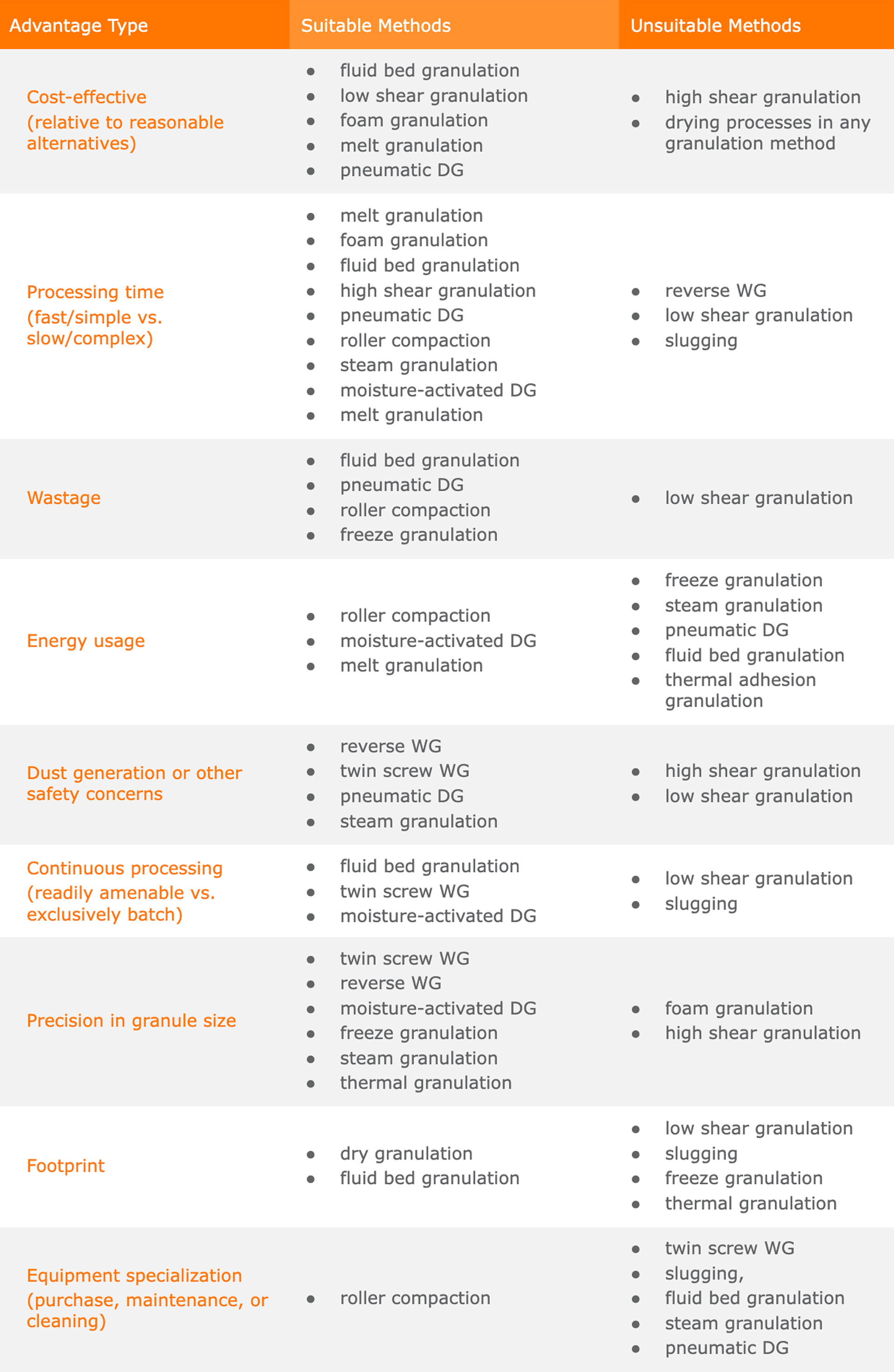
3.1. The core challenge in all granulation methods is to produce uniform-sized granules of consistent mixture of API and excipients that have suitable flowability and compressibility characteristics. No one method is appropriate for every API, and so matching the method best suited to the needs of a given project, facility, scale, and cost requirements is an ongoing puzzle for manufacturers and developers to determine. A high-level overview of some key attributes for different technologies is presented in Table 2.
3.2. There are four common challenges to the practical implementation of granulation methods:[3]
Endpoint detection. As with any manufacturing process, there must be a suitable parameter to measure that defines the end of the process. Over-granulation increases manufacturing costs, but under-granulation yields poor-quality product. The choice of parameter to measure that adequately reflects granule quality is not obvious in all systems and can lead to poorly controlled processes. Common parameters to measure are particle size distribution, bulk density (how tightly the granules pack together), flowability, and moisture content.
Assessing the quality of intermediates. If defining the endpoint of a granulation process is difficult, then defining the quality of material produced in intermediate steps is even more difficult. One must not only understand the ideal characteristics of an intermediate but how they influence the final product.
Scale-up. Adaptation to larger equipment yields non-linear changes in geometry and processing times. Adaptation of processes must be adequately calculated and implemented. For example, a 10-fold increase in granulation quantity does not require a 10-fold increase in drying time, because the large dryer can be more efficient. Some common non-linear, scale-up parameters include impeller speed, binder addition rate, drying time, and flow rates.
Monitoring and control within a continuous processing environment. While scale-up is a particular challenge for batch processing, continuous processing must be continuously monitored. This includes the physical parameters in the process, but also the material and intermediates being produced. This is more challenging when material characteristics are ill-defined.
Table 2. Comparison of Different Granulation Methods
DG = dry granulation; WG = wet granulation. Sources: adapted from Shanmugam[1] and Frost and Freeman Technology[3]
4. Challenges in Handling Dry Powders
4.1. While manufacturing of nearly every type of pharmaceutical, including APIs, biologics, and advanced therapies, includes some processing of dry powders, OSD manufacturing is a particular challenge. Large quantities of powders are incorporated as raw materials, intermediate steps, and even final dosage form in the case of dry powder inhalers (DPI). Raw materials for granulation projects must be delumped or otherwise preprocessed before weighing and dispensing. Manufacturing is often centered around creating the appropriate-sized granules or powders for incorporation into a tablet or capsule, and DPIs are packaged into therapeutic devices.
4.2. Safe handling of dry powders must account for dust generation, ergonomics, and combustibility. Dust is a health hazard when inhaled, and therefore must be controlled from both accumulating on surfaces or suspended in the air. Engineering controls, such as equipment design, transfer containers and connections, and isolation equipment, are all used to prevent dust generation, but staff must be properly trained to use the equipment and clean up any spills as they process the material. Staff must always wear proper PPE.
4.3. Bulk powders are heavy, and automated or semiautomated lift devices are used to move materials, but the flow characteristics must be considered so that materials can be adequately transferred safely.
4.4. While the hazards of combustible liquids are readily acknowledged in the industry, and the flash point/boiling point of liquids is usually clearly marked on flammable components, combustibility of dust can be overlooked. Determining the combustibility of a powder or blend often requires third-party testing. The full process and facility should undergo a dust hazard analysis (DHA) in which both the materials and the processing are evaluated for safety, and mitigations for hazards are identified. In North America, a DHA analysis is required for the facility.[4]
5. Continuous Manufacturing
5.1. Continuous manufacturing (CM) methods have largely been implemented across the OSD CDMO industry because they significantly lower the energy costs, process wastage, and downtime while increasing the reproducibility from lot to lot. Many firms worldwide now utilize at least some CM within their plants. Continuous direct compression systems have proven to be the easiest to implement and are quickly becoming industry standard. Beyond direct compression systems, continuous feed of excipients and APIs and fully automated tablet testing are often the next steps to convert to CM. Some plants are moving toward fully CM systems that encompass powders-in to tablets-out. This can be achieved with both dry and wet granulation methods, tablet coating, and final dosage form collection.[5]
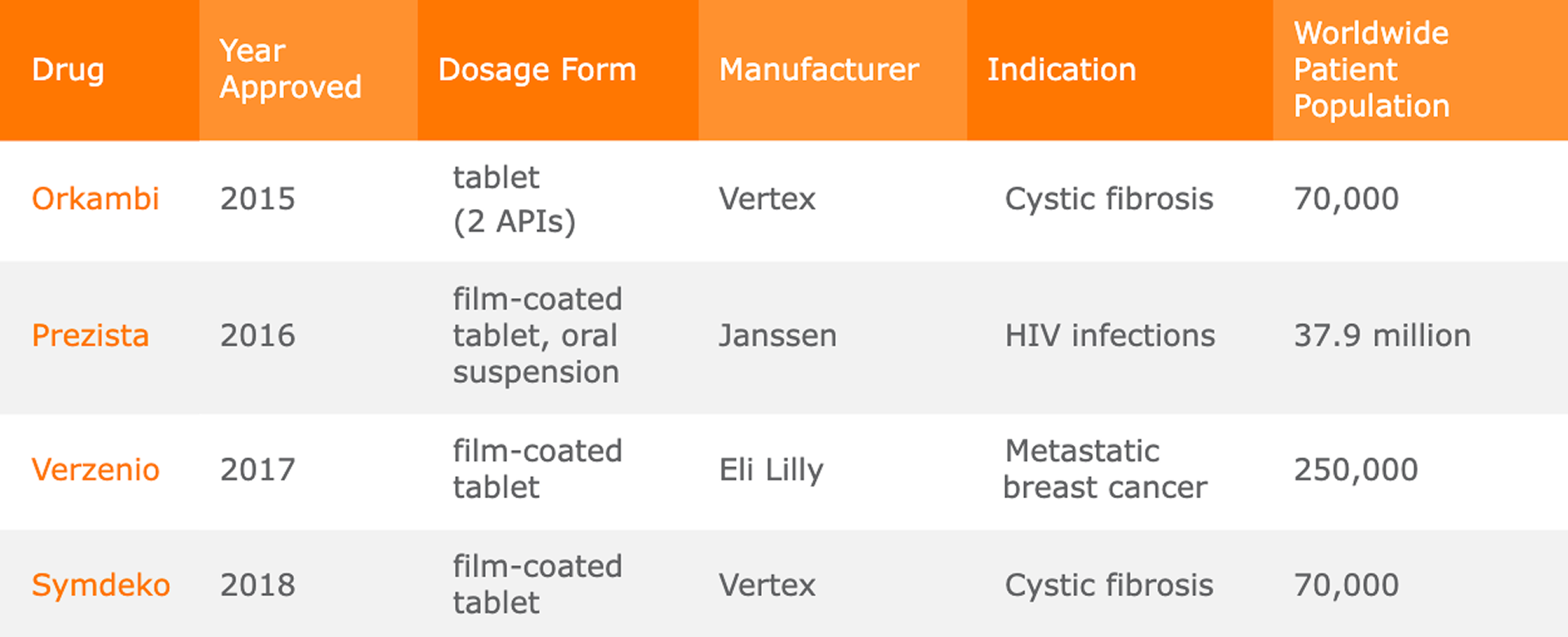
5.2. Although cost savings and quality were the initial drivers for CDMOs to implement CM, patients are benefiting from the technology as well, and several drugs manufactured by CM have been approved. The examples listed in Table 3 demonstrate CM can be successfully implemented for both small-scale patient populations and very large-scale patient populations.
Table 3. Selected Drugs Manufactured by Continuous Manufacturing
Source: adapted from DiProspero[5]
6. Adoption of Wet Granulation Methods to Continuous Manufacturing
6.1. Wet granulation methods have been more challenging to adapt to CM, in part because the methods are newer and continuous processing equipment hasn’t yet become mainstream. Some notable advances in equipment have improved the adoption of CM, however, and include loss-in-weight feeders and integrated granulation and tablet compression lines, along with some PATs.
6.2. A critical gap in CM is the ability to continuously dry the granules without the use of elevated temperatures or excessively large equipment installations. Some semicontinuous equipment has been introduced, but the hurdles of filter cleaning and scale-up may still remain. In a recent paper, researchers at Merck published a study evaluating granules produced with a novel microfluidized vibratory fluid–bed dryer (VFBD), the QbCon® 1 (L.B. Bohle, Ennigerloh, Germany). This equipment continuously discharges the granules into an integrated vibratory fluid–bed dryer along with dry compressed air. They found that the continuous equipment generated high-quality granules with flowability and compaction characteristics similar to those produced in batch and tray drying.[6]
7. Challenges in Capsule Manufacturing
7.1. Although it is a common process, capsule manufacturing is just as complex as other types of pharmaceutical manufacturing. Due to the nature of the process, capsule manufacturing is very sensitive to environmental moisture and temperature changes. During mixing of the molten gelatin with colorants and other compounds, it is challenging to maintain the same temperature throughout the jelly, and mixing of viscous compounds always requires special consideration. Not only does the manufacturer need to ensure proper mixing of a system that is difficult to engineer, but the formation of bubbles in the bulk jelly can lead to improperly formed capsules. Once the capsules are formed, drying them requires constant temperature and humidity for the entirety of the drying process.
7.2. Filling the capsules requires specialized equipment, and the challenge in this step is to ensure each capsule is properly filled with granules or powder but not overfilled, so that wastage is minimized. Flowability characteristics of the fillings can vary, depending on the API, and the manufacturer must accommodate different capsule sizes and components while ensuring bubbles or clumps don’t form in the capsule.[7]
8. Challenges in Spray-Drying
8.1. Despite its advantages, spray-drying presents significant challenges, particularly for biopharmaceuticals and heat-sensitive drugs. The high temperatures required for solvent evaporation can lead to denaturation, aggregation, or degradation of proteins and peptides, compromising their therapeutic efficacy.[8][9] This is a major limitation compared with freeze-drying (lyophilization), which avoids thermal exposure but is more time-consuming and expensive. To mitigate heat-related degradation, strategies such as lowering outlet temperatures, adjusting drying kinetics, and incorporating stabilizing excipients (e.g., trehalose, sorbitol) are employed.[10] Additionally, the physical and chemical stability of spray-dried powders must be carefully controlled to prevent residual moisture accumulation, phase separation, and recrystallization, all of which can affect drug solubility and bioavailability.[11]
8.2. Another challenge is the optimization of process parameters, as the interactions between feed composition, atomization conditions, and drying temperatures are complex and require significant trial-and-error experimentation.[12] Computational approaches, such as computational fluid dynamics (CFD) modeling and design of experiment (DoE) techniques, help streamline optimization by predicting particle formation, solvent evaporation dynamics, and morphology changes during drying.[13][14] However, gaps remain in accurately modeling the behavior of complex biological molecules, particularly with respect to protein aggregation and structural changes under drying conditions.[15] Additionally, the choice of drying gas (e.g., nitrogen vs. carbon dioxide) can affect heat transfer, crystallization tendencies, and product stability, adding further complexity to the optimization process.[16]
8.3. Despite these challenges, ongoing advancements in spray-drying technology continue to expand its applicability. Innovations in nozzle design, real-time process monitoring, and advanced excipient formulations are helping to improve yield, efficiency, and the stability of spray-dried formulations.[17] The increasing adoption of closed-loop drying systems, which recover solvents, prevent oxidation, and enable aseptic processing, is further enhancing the feasibility of spray-drying for sensitive and high-value biopharmaceuticals.[18] As the pharmaceutical industry continues to prioritize drug solubility, stability, and scalable production, spray-drying is poised to play an increasingly important role in formulating next-generation therapeutics.
9. Advances in Hot-Melt Extrusion
9.1. Wet granulation is the most commonly used tablet manufacturing process, but investigators have begun studying HME as an alternative continuous granulation process using co-rotating intermeshing TSEs. The versatility of the technology has been demonstrated in applications for taste-masking, solubility enhancement, controlled or extended release, and targeted drug delivery of APIs.[19]
10. Challenges in HME
10.1. A successful HME process depends heavily on the miscibility of the drug–polymer system, which is difficult to predict in silico. Not only must different systems be tested in an HME process, but long-term stability testing is required before the final HME components can be validated. HME development programs, therefore, rely on a number of advanced screening methods, such as solvent evaporation studies and hot-stage microscopy.[19]
10.2. HME process development is also in its infancy, as most of the publications investigating HME processes have come since 2017. The effects of process parameters such as feed rate, temperature, and screw speed have only recently been investigated using rational approaches and design of experiments (DOE).[19]
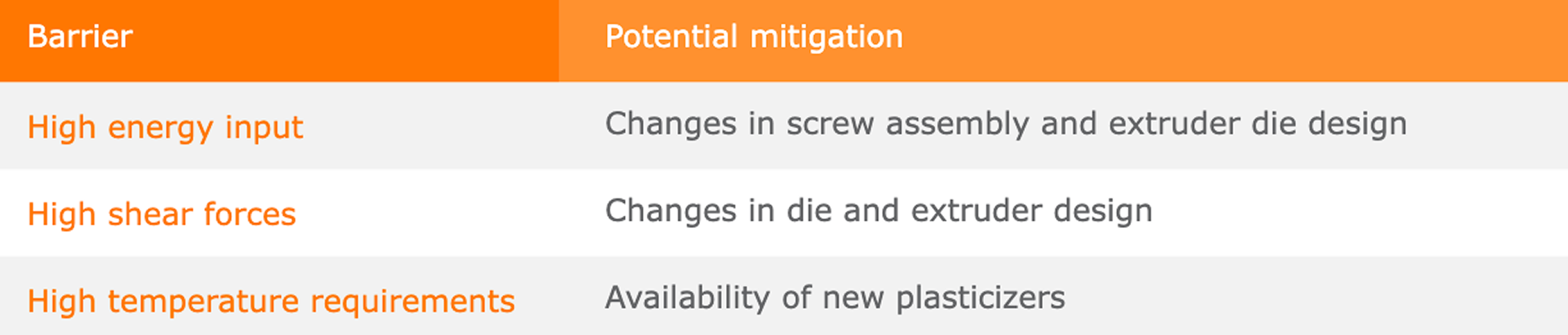
10.3. Despite the promise of HME, a few barriers have prevented its widespread implementation and continue to slow adoption (Table 4).[20] The process is readily amenable to QbD and PAT for continued improvements and potential implementation for complex APIs, so its prevalence in the industry is likely to continue growing.
Table 4. Barriers to Widespread HME Adoption
11. 3D Printing
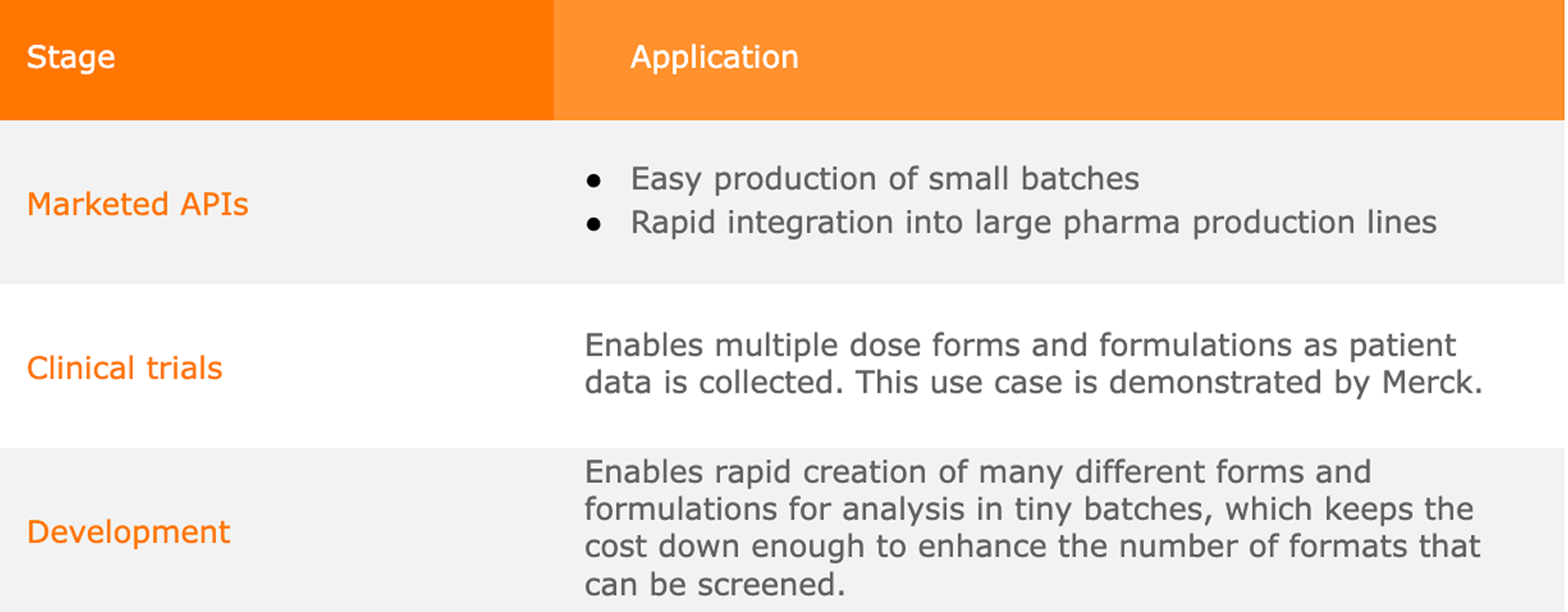
11.1. The market approval of Spritam (levetiracetam) demonstrated the applicability of three-dimensional (3D) printing to the pharmaceutical industry. Also known as additive manufacturing, the technology marries computer-aided design with the need for personalized drug manufacturing. Because 3D printing enables production of complex API and API formulations in very small batches, it has applicability in nearly all stages of the drug development life cycle (Table 5).[21]
Table 5. Use Cases of 3D Printing Across the Drug Development Life Cycle
Source: adapted from Wang et al.[21]
12. Energy Conservation
12.1. OSD pharmaceuticals, especially generics, are under significant cost pressures, and over the past two decades energy usage has become a significant portion of the cost.[22] Manufacturers are therefore incentivized to implement energy-efficient procedures at every step in their facility. Connecting every piece of equipment in a facility to create an internet of things (IoT) is becoming common practice. This enables big data analysis of sensors from across the facility, the creation of key performance indicators (KPIs), and continuous performance improvements. Wet granulation, drying, and milling are typically the most energy-intensive steps in a process. Using the IoT to create digital models of the process enables definition of critical quality attributes (CQAs) and allows for better consistency from batch to batch, as well as reduced waste and energy expenditure. Implementation of IoT enables techno-economic analysis, as well as traditional pharmaceutical monitoring.[23]
13. Shopping for a CMO
13.1. Customers need to first consider the accreditation of potential manufacturers. We have endeavored to include all of the certifications that a company has listed, but CMOs don’t always present this information. If a company otherwise appears to fit the criteria, one is encouraged to reach out directly to the company. Competition is fierce, so CMOs may be willing to work with a client to achieve a new certification if it is required for an attractive project.
13.2. OSD manufacturing is equipment-intensive, and specialized products often require specialized equipment that must be installed and qualified. For this reason, it is important to match the specific type of OSD format one requires with the capabilities listed. This applies to the types of tablets or capsules, but also to primary and secondary packaging.
13.3. As with any pharmaceutical outsourced manufacturing contract, the buyer is encouraged to prepare a detailed RFP to obtain proper quotes. CMOs will endeavor to respond in a timely manner, but may still need up to six weeks to provide detailed quotes for large or complicated projects. Smaller, more standard projects can usually be quoted in two to four weeks.
FAQs
What is pneumatic dry granulation (PDG) in pharmaceutical manufacturing?
Pneumatic dry granulation (PDG) is an advanced dry granulation method that uses a pneumatic system to separate preferred-size granules from fine particles after mild roller compaction. This closed-system technology enables high drug loads, often up to 100%, while achieving superior flowability and compressibility with minimal dust and zero waste.
How does moisture-activated dry granulation (MADG) work?
Moisture-activated dry granulation (MADG) is a two-step process that agglomerates powders using a small amount of water before adding a moisture-absorbing material like cellulose. This "moist wet granulation" technique eliminates the need for a drying step, producing granules with excellent compression characteristics while saving time and energy compared to traditional wet granulation.
What are the benefits of foam granulation for HPAPIs?
Foam granulation improves binder distribution within a powder by employing the binder as a foam rather than liquid droplets, which is ideal for highly potent active pharmaceutical ingredients (HPAPIs). Developed by Dow Chemical Company, this method significantly reduces the total amount of binder required while ensuring a more homogeneous distribution of the potent compound.
What is the role of 3D printing in personalized medicine?
3D printing, or additive manufacturing, allows for the production of complex drug formulations in very small, personalized batches that are difficult to achieve with traditional mass-production methods. This technology is utilized across the drug development life cycle to enable multiple dose forms and rapid integration into large-scale production lines for marketed APIs.
Why are CDMOs transitioning to continuous manufacturing (CM) for OSDs?
CDMOs are adopting continuous manufacturing (CM) to significantly lower energy costs, reduce process wastage, and increase lot-to-lot reproducibility compared to traditional batch processing. Continuous direct compression systems have become the industry standard, moving the field toward "powders-in to tablets-out" systems that improve processing efficiency and reproducibility.
How is the Internet of Things (IoT) used in OSD energy conservation?
The Internet of Things (IoT) enables manufacturers to create digital models of the OSD process to define critical quality attributes (CQAs) and optimize energy-intensive steps like wet granulation and drying. By connecting equipment sensors for big data analysis, firms can perform techno-economic analysis to reduce waste and improve batch consistency.

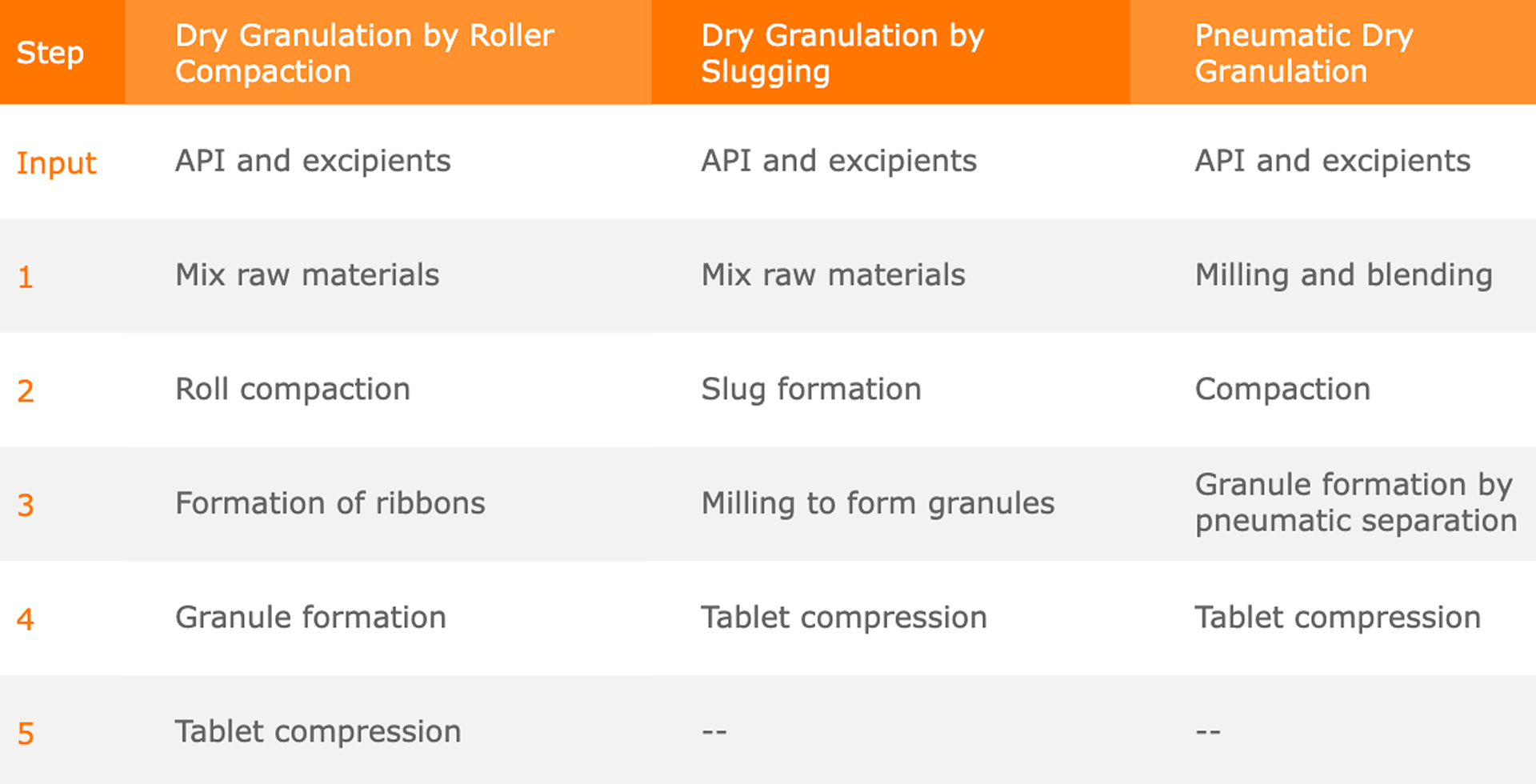
 Figure 1. Summary of Granulation Methods
 DG = dry granulation; WG = wet granulation. Sources: adapted from Shanmugam[1] and Frost and Freeman Technology[3]
 Source: adapted from DiProspero[5]
 11. 3D Printing
 Source: adapted from Wang et al.[21]