Key Takeaways
Site-specific conjugation technologies can improve ADC homogeneity, DAR control, and product consistency.
Engineered cysteines, enzymatic conjugation, noncanonical amino acids, and glycan engineering each create distinct manufacturing and CMC tradeoffs.
ADC conjugation strategy affects analytical characterization, including DAR measurement, positional-isomer analysis, impurity profiling, and stability testing.
The most practical ADC conjugation platform is not always the most precise, but the one that can be robustly controlled, scaled, and validated.
CDMOs supporting ADC development must integrate biologics manufacturing, conjugation chemistry, high-potency handling, purification, analytics, and GMP readiness.
From Conjugation Chemistry to Manufacturing Strategy
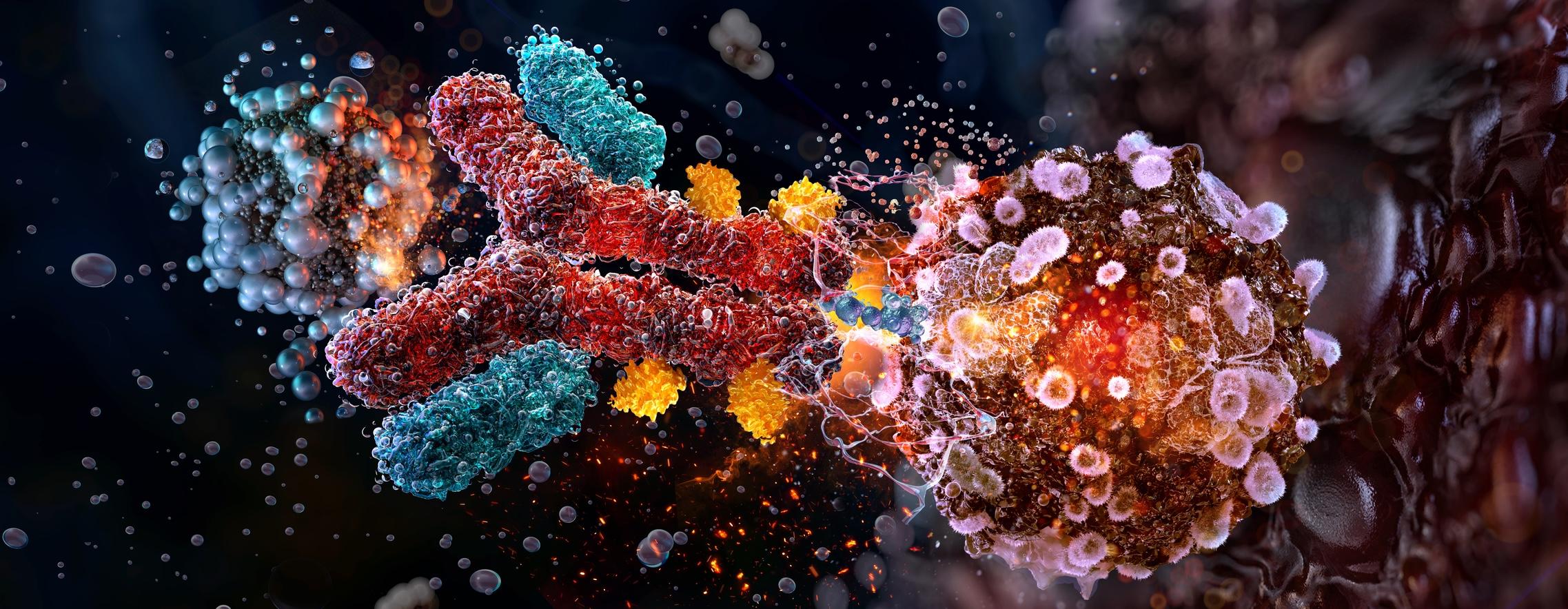
Antibody–drug conjugates (ADCs) have always depended on a delicate balance of biological targeting, linker chemistry, payload potency, and manufacturability. The antibody must selectively recognize the target cell, the linker must remain stable until the intended point of release, and the payload must be potent enough to deliver the desired effect at low exposure. The way the payload is attached to the antibody has become one of the most important variables shaping the final product. Recent reviews describe conjugation method as a critical ADC design parameter alongside the antibody, linker, payload, attachment site, and drug-to-antibody ratio (DAR), because each of these variables can influence the properties and performance of the resulting conjugate.1
That shift reflects a broader evolution in ADC development. Earlier conjugation approaches often produced heterogeneous mixtures, with payloads attached at multiple positions and in varying numbers across the antibody population. Site-selective strategies emerged in response to that challenge, with the goal of producing more homogeneous ADCs through chemical, enzymatic, or combined methods that modify specific amino acid or sugar residues.2
For manufacturers, this evolution matters because heterogeneity is not only a pharmacological concern. It affects process development, analytical characterization, lot release, stability testing, comparability, and the broader chemistry, manufacturing, and controls (CMC) package. ADCs are more complex than unconjugated monoclonal antibodies, and their characterization depends on the linker, payload, and attachment site. Analytical methods must support product and process characterization as well as routine lot release and stability testing.3,4
Site-specific conjugation therefore represents more than a refinement in molecular architecture. It is a manufacturing strategy. The central question is not simply whether a technology can place a payload at a defined site but whether that technology can do so reproducibly, scalably, and within a control strategy that supports development, transfer, validation, and eventual commercial supply.
The Manufacturing Burden of Heterogeneity
The appeal of site-specific conjugation begins with the burden created by heterogeneous products. When a conjugation process generates multiple DAR species, positional isomers, or partially modified antibody populations, the final ADC becomes more difficult to characterize and control. Analytical packages must account not only for the intact molecule but also for the distribution of payload loading and the location of payload attachment.
This is particularly important because ADC quality cannot be understood from any single attribute. DAR, aggregation, free payload, linker-related impurities, unconjugated antibody, positional variants, and stability behavior all contribute to the product profile. Characterization methods may include mass spectrometry, chromatography, capillary electrophoresis, peptide mapping, and other orthogonal approaches, depending on the molecule and conjugation strategy. The structure of an ADC CMC package must also reflect the multiple production processes that come together in the final product, including antibody production, linker–payload preparation, conjugation, purification, and drug product manufacturing.3,4
Positional isomers illustrate this challenge clearly. A 2015 study reported the use of peptide mapping coupled with liquid chromatography–mass spectrometry (LC–MS) to characterize drug-loaded peptides in a cysteine-linked ADC.5 The study focused on brentuximab vedotin, a commercial ADC with an average of four drugs linked to interchain cysteine residues. For manufacturers, this kind of analysis underscores a practical reality: even when a product’s average DAR is known, understanding where payloads are attached may still require detailed analytical work.
Site-specific conjugation can reduce some of this complexity by narrowing the product distribution and defining the attachment site. However, it does not eliminate the need for rigorous characterization. Instead, it changes what must be controlled. A more precise conjugation strategy may reduce ambiguity around payload location, but it may also introduce new controls related to engineered residues, enzymes, glycan remodeling, expression systems, or site occupancy. The manufacturing value of site specificity depends on whether the cleaner molecular design translates into a process that is robust, scalable, and analytically defensible.
Engineered Cysteines: Defined Attachment with Protein-Engineering Tradeoffs
Engineered cysteine approaches were among the foundational strategies for making site-specific ADCs. Rather than relying on naturally available lysines or reduced interchain cysteines, developers can introduce or engineer cysteine residues at selected positions to create defined conjugation handles. This approach helped establish the principle that controlling the site and stoichiometry of drug attachment could meaningfully alter ADC properties.
A 2006 publication reported engineered antibody–drug conjugates with defined sites and stoichiometries of drug attachment. In that work, cysteine-to-serine antibody variants were conjugated to monomethyl auristatin E in near-quantitative yield, with defined stoichiometries of either two or four drugs per antibody, and the engineered ADCs retained comparable antigen-binding affinities and in vitro cytotoxic activities relative to corresponding purified parental ADCs.6 Another group later framed site-specific conjugation of a cytotoxic drug to an antibody as a way to improve therapeutic index, helping establish engineered cysteine conjugation as a key proof point for the value of more controlled ADC architectures.7
From a manufacturing perspective, engineered cysteines offer an intuitive advantage: the attachment site is designed into the antibody. This can support better control over DAR and reduce the complexity associated with random conjugation. It also fits within a broader biologics development framework in which antibody engineering, cell line development, expression, purification, and conjugation are connected decisions rather than isolated steps.
At the same time, engineered cysteine approaches move part of the conjugation challenge upstream. The antibody must be designed to include suitable conjugation sites, and those sites must be selected with developability, stability, expression, and conjugation efficiency in mind. Manufacturing teams must also control reduction and conjugation conditions carefully, because cysteine chemistry can be sensitive to the redox state of the antibody and to the balance between desired site-specific modification and unwanted side reactions.
That makes engineered cysteine conjugation a useful example of the broader site-specific paradigm. The technology can produce a more defined ADC, but it does not remove process complexity. It redistributes complexity across antibody engineering, conjugation chemistry, and analytical confirmation.
Enzymatic Conjugation: Specificity Under Mild Conditions
Enzymatic conjugation approaches seek to use biological specificity to control where payloads are attached. Rather than depending solely on chemical reactivity, these methods use enzymes to modify defined sites or sequence motifs. Enzymatic methods are part of the broader toolbox for generating homogeneous ADCs and are often valued because they can operate under mild conditions compatible with antibody stability.2
This has clear manufacturing appeal. ADC conjugation reactions must generally be conducted under conditions that preserve the antibody’s structure and function. Conjugation reactions are constrained by the vulnerability of biomacromolecules, including limits on aqueous conditions, organic solvent, pH, and temperature.1 Enzymatic systems may therefore offer a way to introduce specificity without exposing the antibody to harsh reaction environments.
However, enzymatic conjugation also introduces its own manufacturing questions. Enzymes become process materials that must be sourced, qualified, controlled, and, where appropriate, removed or shown to be cleared. Reaction monitoring becomes important, because incomplete enzymatic conversion may generate partially modified species. Additional purification steps may be needed to remove residual enzyme, unreacted substrate, or process-related impurities. The resulting process can be elegant from a molecular standpoint but more complex as a unit-operation sequence.
For contract development and manufacturing organizations (CDMOs) and manufacturing partners, enzymatic conjugation highlights the importance of process integration. The value of high specificity depends on whether the enzymatic step can be incorporated into a scalable workflow with acceptable reaction time, impurity control, analytical monitoring, and downstream purification. In that sense, enzymatic conjugation may shift complexity away from nonspecific chemical reactivity and toward enzyme control, raw-material strategy, and process validation.
Noncanonical Amino Acids: Molecular Precision with Expression-System Complexity
Noncanonical amino acid approaches offer one of the most precise forms of site-specific conjugation. These methods use genetic code expansion to introduce an unnatural or noncanonical amino acid at a defined position in the antibody or antibody fragment. The introduced residue then provides an orthogonal chemical handle for payload attachment.
Genetically encoded unnatural amino acids with orthogonal chemical reactivity have been used to synthesize homogeneous ADCs with precise control over conjugation site and stoichiometry.8 This is the central advantage of the platform: the conjugation handle is built into the protein at a defined location, and the chemistry used to attach the payload is designed to react selectively with that handle rather than with native amino acid residues.
The manufacturing implications are significant. On the positive side, noncanonical amino acids can provide a high degree of molecular definition. The approach can reduce ambiguity around attachment site, support controlled stoichiometry, and enable conjugation chemistries that are orthogonal to the native antibody structure.
The precision of ncAA-based conjugation can come with added production complexity. These approaches have faced production challenges, although improvements have been reported in expression and reaction kinetics.2 In practical terms, developers must consider expression systems, incorporation efficiency, yields, raw materials, and the robustness of the expanded genetic code platform. These issues are not peripheral; they determine whether a precise conjugation concept can become a viable GMP process.
For manufacturing teams, noncanonical amino acids raise a familiar question: how much upstream complexity is acceptable in exchange for downstream precision? A highly defined molecule may be attractive from a product-characterization perspective, but if the expression system is difficult to scale, transfer, or standardize, that precision may come with operational cost. The platform’s promise therefore depends on aligning molecular control with reproducible production.
Glycan Engineering: Using Native Antibody Architecture as a Conjugation Handle
Glycan engineering offers a different route to site specificity by targeting native antibody glycosylation. Instead of adding a new amino acid handle or engineering cysteine residues, glycan-directed approaches exploit conserved glycan structures on the antibody as sites for modification.
Site-specific antibody–drug conjugation can also be achieved through glycoengineering by targeting the native glycosylation site on antibodies.9 In one chemoenzymatic approach, a native, nonengineered monoclonal antibody was enzymatically remodeled and then ligated to the payload through the N-glycan at asparagine-297. This approach was described as robust, generally applicable, nongenetic, and capable of converting monoclonal antibodies into stable and homogeneous ADCs.10
This gives glycan engineering a compelling manufacturing logic. Because it can begin with a native antibody, it may avoid some of the sequence-engineering requirements associated with engineered cysteines or noncanonical amino acids. It also uses a naturally occurring antibody feature as the conjugation handle, potentially aligning site-specific conjugation with established antibody production.
At the same time, glycan engineering brings glycan biology into the manufacturing control strategy. Glycan remodeling must be consistent. Enzymatic steps must be controlled. Glycoform distribution, remodeling efficiency, site occupancy, and residual intermediates may all require analytical attention. The product may be more homogeneous with respect to payload placement, but the path to that product depends on controlling a biologically derived structural feature that is already important in antibody manufacturing.
The manufacturing value of glycan engineering therefore lies in balance. It can support site-specific conjugation without extensive antibody sequence modification, but it requires a strong understanding of glycan structure, enzymatic remodeling, and glycoform-related analytics. For developers and CDMOs, the key question is whether the platform can be made consistent enough to support process transfer and GMP manufacturing.
Comparing the Platforms Through a Manufacturing Lens
The four site-specific strategies differ not only in chemistry but also in where they place the manufacturing burden.
Engineered cysteines place the key design decision in the antibody sequence. They can support defined stoichiometry and attachment sites, but they require careful site selection and control of conjugation conditions. Noncanonical amino acids offer even more precise genetic encoding of the conjugation handle, but the expression system and incorporation efficiency become central manufacturing considerations. Enzymatic conjugation uses biological specificity to drive selective modification under mild conditions, but enzymes introduce process-material and clearance questions. Glycan engineering uses native antibody architecture but requires control of glycan remodeling and glycoform-related analytical complexity.
Fan and colleagues classify ADC conjugation strategies into nonspecific, site-specific but nonselective, and fully site-specific and selective methods, and compare technologies by characteristics, advantages, shortcomings, CMC potential, and clinical status.1 That kind of framework is useful because it avoids treating “site-specific” as a single category. Technologies that all aim to improve control may differ substantially in manufacturability, scalability, impurity profile, and analytical requirements.
A practical comparison should therefore focus less on which platform is conceptually most elegant and more on what must be controlled. For engineered cysteines, the control strategy must connect protein engineering with conjugation-site behavior. For enzymatic methods, it must account for enzyme performance and removal. For noncanonical amino acids, it must include expression-system robustness. For glycan engineering, it must incorporate glycan remodeling consistency and glycoform characterization.
Across all platforms, the manufacturing objective is the same: produce a well-characterized ADC with reproducible DAR, controlled impurities, acceptable stability, and a defensible process history. Site specificity may help achieve that goal, but it is not a substitute for process understanding.
Analytical Characterization as the Bridge Between Design and Control
Analytical characterization is the bridge between molecular design and manufacturability. A site-specific conjugation strategy only matters if the developer can demonstrate that the product is, in fact, modified at the intended site, at the intended loading level, and with acceptable impurity and stability profiles.
This is especially important for ADCs because they combine biologics and small molecule attributes. The antibody, linker, and payload each bring their own quality concerns, and the conjugation step creates new product-related species. CMC regulatory discussions emphasize that ADC module 3 content must reflect the multiple production processes that contribute to the final product and the combined approach to quality.4
Analytical methods must therefore be selected based on the specific ADC architecture. For some cysteine-linked ADCs, peptide mapping and liquid chromatography–mass spectrometry (LC–MS) can be used to characterize drug-loaded peptides and positional isomers.5 For glycan-engineered ADCs, methods must confirm glycan remodeling and payload attachment. For noncanonical amino acid approaches, the analytical package must confirm incorporation of the noncanonical residue and selective conjugation at that site. For enzymatic strategies, assays may need to track conversion, residual enzyme, and process-related impurities.
This analytical burden is not a secondary concern. It directly shapes development timelines, control strategy, and tech transfer. A conjugation process that produces a simpler product distribution may still require sophisticated assays to prove consistency. Conversely, a process that appears easy to run may become difficult to justify if it produces complex mixtures that require extensive characterization.
GMP and Scale-Up: Where Platform Promise Meets Operational Reality
The final test for any site-specific technology is whether it can be translated into a robust, scalable, GMP-ready process. This is where many promising conjugation strategies face their most important development questions.
A GMP strategy has been described for site-specific ADC synthesis using first-generation AJICAP technology, a chemical conjugation platform based on IgG Fc-affinity peptides. The work supported preparation of site-specific ADCs for good laboratory practice studies, included analysis of the final ADC product using validated systems and GMP analysis, and aimed to establish a strategy for generating well-documented manufacturing data to support filings such as investigational new drug applications.11 The same source notes that establishing robust and scalable synthetic processes for site-specific ADCs remains challenging .
That point is central to the manufacturing story. A site-specific conjugation method may solve one problem — payload placement — while creating others related to raw materials, reaction control, purification, analytical testing, documentation, and scale-up. In GMP manufacturing, every process input and output must be understood well enough to support consistency and quality. The more specialized the conjugation platform, the more important it becomes to define its critical process parameters, impurity profile, and analytical controls.
For CDMOs, this creates both challenge and opportunity. ADC manufacturing already requires integration across biologics production, high-potency payload handling, conjugation chemistry, purification, and aseptic drug product manufacturing. Site-specific conjugation adds another layer of specialization. Manufacturing partners must not only execute the chemistry but also help developers understand how platform choice affects process development, CMC strategy, and long-term supply.
Conclusion: The Best Conjugation Platform Is the One That Can Be Controlled
Site-specific conjugation technologies have reshaped how ADCs are designed and manufactured. Engineered cysteines, enzymatic conjugation, noncanonical amino acids, and glycan engineering all seek to address the limitations of heterogeneous conjugation by producing more defined products. Each also carries its own manufacturing implications.
The lesson is not that one approach is universally superior. Engineered cysteines offer defined attachment but require protein-engineering and conjugation-site control. Enzymatic methods offer specificity under mild conditions but add enzyme-related process considerations. Noncanonical amino acids offer exceptional precision but depend on specialized expression systems. Glycan engineering can use native antibody architecture but requires control of glycan remodeling and glycoform-related analytics.
For ADC developers, the choice of conjugation strategy should therefore be made with CMC in mind from the beginning. A technology that looks attractive in early discovery must ultimately support reproducible manufacturing, robust characterization, scalable processing, and regulatory documentation. The future of site-specific conjugation will depend not only on molecular precision, but on whether that precision can be translated into a practical, controllable, and manufacturable ADC platform.
References
1. Fan, Qirui, et al. “A Review of Conjugation Technologies for Antibody Drug Conjugates.” Antibody Therapeutics. 8: 157–183 (2025).
2. Walsh, Stephen J, et al. “Site-Selective Modification Strategies in Antibody–Drug Conjugates.” Chemical Society Reviews. 50: 1305–1353 (2021).
3. Wakankar, Aditya, et al. “Analytical Methods for Physicochemical Characterization of Antibody Drug Conjugates.” mAbs. 3: 161–172 (2011).
4. Bechtold-Peters, Karoline, et al. “CMC Regulatory Considerations for Antibody-Drug Conjugates.” Journal of Pharmaceutical Sciences. 112: 2965–2980 (2023).
5. Janin-Bussat, Marie-Claire, et al. “Characterization of Antibody Drug Conjugate Positional Isomers at Cysteine Residues by Peptide Mapping LC–MS Analysis.” Journal of Chromatography B. 981–982: 9–13 (2015).
6. McDonagh, Charlotte F, et al. “Engineered Antibody–Drug Conjugates with Defined Sites and Stoichiometries of Drug Attachment.” Protein Engineering, Design and Selection. 19: 299–307 (2006).
7. Junutula, Jagath R, et al. “Site-Specific Conjugation of a Cytotoxic Drug to an Antibody Improves the Therapeutic Index.” Nature Biotechnology. 26: 925–932 (2008).
8. Axup, Jun Y, et al. “Synthesis of Site-Specific Antibody-Drug Conjugates Using Unnatural Amino Acids.” Proceedings of the National Academy of Sciences of the United States of America. 109: 16101–16106 (2012).
9. Zhou, Qun, et al. “Site-Specific Antibody–Drug Conjugation through Glycoengineering.” Bioconjugate Chemistry. 25: 510–520 (2014).
10. van Geel, Remon, et al. “Chemoenzymatic Conjugation of Toxic Payloads to the Globally Conserved N-Glycan of Native mAbs Provides Homogeneous and Highly Efficacious Antibody–Drug Conjugates.” Bioconjugate Chemistry. 26: 2233–2242 (2015).
11. Matsuda, Yukata, et al. “Good Manufacturing Practice Strategy for Antibody–Drug Conjugate Synthesis Using Site-Specific Chemical Conjugation: First-Generation AJICAP.” ACS Omega. 4: 20564–20570 (2019).