Key Takeaways
Modern treatments for hematological cancers leverage approaches that support selective delivery of cytotoxic agents to cancerous cells (targeted therapies), and in many cases also boost the ability of the immune system to collaborate in their destruction while minimizing damage to healthy cells.
Targeted therapies against liquid tumors include tyrosine kinase, BTK, and menin inhibitors, as well as various monoclonal antibodies (mAbs) and antibody–drug conjugates (ADCs).
Immunotherapies changing the paradigm for hematologic cancer treatment include immune checkpoint inhibitors, chimeric antigen receptor T cell therapies, and bispecific T cell engagers.
Combination therapies leveraging both traditional (chemotherapy and radiotherapy) and novel treatments are helping overcome resistance mechanism and achieve higher remission and disease survival rates.
Advanced, precision diagnostic tests based on next-generation sequencing (NGS), digital PCR for minimal residual disease (MRD) detection, and simpler, non-invasive liquid biopsies that detect circulating tumor DNA (ctDNA) in blood samples are uncovering new therapeutic targets and enabling earlier and more specific disease identification, personalized treatment regimen selection, and disease progression monitoring, all of which are contributing to improving patient outcomes.
Real Progress Fighting a Serious Cancer Foe
Hematological cancers, including various forms of leukemia, lymphoma, and myeloma, affect people of all ages and are responsible for a large portion of global oncology-related deaths due to their genetic and molecular heterogeneity, treatment resistance, and systemic toxicities associated with traditional therapies (chemotherapy, radiation therapy).1–4 Newer targeted approaches made possible by advances in understanding disease mechanisms that allow the identification of novel drug targets, improved diagnostic capabilities that enable more precise identification of genetic abnormalities and prognosis prediction, and the introduction of novel modalities have led to significant improvement in patient outcomes.
Modern treatments for hematologic cancers leverage approaches that support the selective delivery of cytotoxic agents to cancerous cells (targeted therapies) and in many cases also boost the ability of the immune system to collaborate in their destruction while minimizing damage to healthy cells. The result is better survival rates with more durable remission and fewer adverse side effects.
Identification of specific molecular and genetic abnormalities present in different malignant cancer cells has enabled the development of targeted therapies, such as tyrosine kinase inhibitors and monoclonal antibodies (mAbs), including antibody–drug conjugates (ADCs), and immunotherapies, such as chimeric antigen receptor (CAR)-T cell treatments, radioimmunoconjugates, and T cell–redirecting bispecific antibodies.1–3 The BCR-ABL fusion gene and JAK2, FLT3, BTK, and BCL-2 mutations are important examples. Combination therapies are also being introduced to leverage synergisms between different targeting approaches, while theranostic strategies seek to tackle diagnosis, disease monitoring, and treatment with multifunctional agents.4
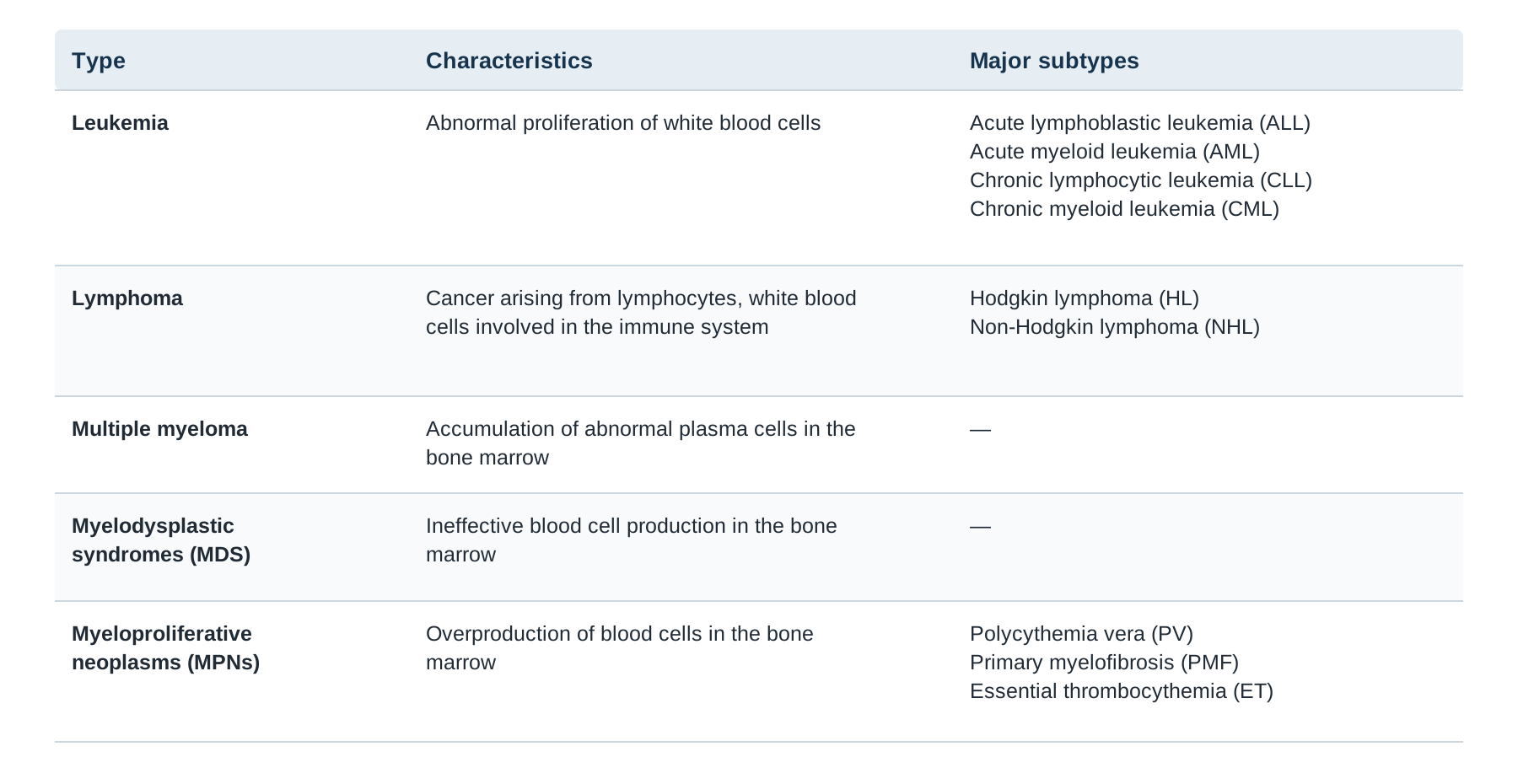
Table 1. Types of Hematologic Malignancies2
 Targeted Therapies
Targeted therapies against hematologic cancers function in a variety of ways.2 Some inhibit signaling pathways by interacting with specific molecules, while others bind to specific receptors on cancer cells to prevent their activity. Still others disrupt the formation of new blood vessels intended to supply cancer cells with nutrients and oxygen. Causing programmed cell death (apoptosis) is another important mechanism for some targeted therapies, which can be achieved through direct activation of relevant pathways or by blocking proteins that protect cancer cells.
Tyrosine kinase inhibitors inhibit the activity of dysregulated enzymes that lead to rapid cancer cell growth and proliferation.2 BTK inhibitors have evolved over time in response to the development of resistance to initial treatments, such as ibrutinib.4 Second-generation BTK inhibitors function via non-covalent binding, which helps maintain their activity. Newer BTK inhibitors are also more selective and cause fewer unwanted side effects. BTK degraders that degrade the entire BTK protein are under development, showing particular promise against mutated forms of BTK.
Menin inhibitors represent a new class of small molecule targeted therapies for treatment of AML patients with mutations in KMT2A and NPM1.4 They interrupt interactions between menin and the KMT2A protein complex, inhibiting production of transcription factors required for survival of leukemia cells. Revumenib and ziftomenib are two examples.
Targeting can be challenging for many small molecule inhibitors unless specialized delivery technologies are used. Formulation as ligand-functionalized nanoparticles engineered to recognize specific cancer cell-surface markers/receptors is one approach.2
In addition to disrupting signaling pathways through interaction with antigens on cancer cell surfaces (e.g., CD20, CD30, CD38, and CD52 in B cell malignancies, lymphomas, multiple myeloma, and CLL, respectively), mAbs can attack cancer cells with the help of the immune system by leveraging the antibody-dependent cellular cytotoxicity (ADCC) and complement-dependent cytotoxicity (CDC) mechanisms.2 ADCs comprising an antibody linked to a cytotoxic payload also enable target delivery and release of the cancer-killing agent through binding of the antibody to receptors found on cancer cells.3 Targets of pipeline and approved ADCs include CD22, CD38, SLAMF7 (signaling lymphocytic activation molecule family member 7), CD30, CD33, CCR4, and CD123.
Immunotherapies
Immunotherapies have dramatically improved treatment outcomes for many patients with hematologic cancers. Immune checkpoint inhibitors (ICIs), CAR therapies, and bispecific antibody treatments exhibit greater cancer killing ability for liquid tumors through influencing the behavior of the immune system.
ICIs block immune system pathways that inhibit immune system responses by binding to proteins known as immune checkpoints.2 Major targets include programmed cell death protein 1 (PD-1), programmed cell death ligand-1 (PD-L1), and cyto-T-lymphocyte-associated protein 4 (CTLA-4).
The CAR-T cell therapies approved to date (seven by the U.S. Food and Drug Administration (FDA)) are autologous treatments produced from patient cells. Following apheresis, T cells are isolated and genetically modified to introduce a CAR protein targeting the cancer cells. Initial CAR-T approvals were for last-line treatments, but recently attention has been paid to their potential effectiveness at earlier stages of disease progression.6 Axicabtagene ciloleucel (axi-cel) and lisocabtagene maraleucel (liso-cel), for instance, have been approved by the FDA as second-line treatments for large B cell lymphoma.
Issues with adverse reactions, including cytokine release syndrome (CRS) and immune effector cell–associated neurotoxicity syndrome (ICANS), continue to challenge CAR therapy developers.4 Approximately 40–50% of patients experience some level of CRS, although less than 10% of cases are extremely serious (grade 3–4). Gene-editing technologies, such as CRISPR, are being used to engineer CAR-T cells with improved safety profiles. Meanwhile, dual- or triple-targeted CAR-T therapies are being developed to overcome the challenge of antigen escape, which has been observed with original CAR-Ts, and minimize on-target/off-tumor toxicities.6
Access challenges due to the high cost, complex logistics, and variability of patient-derived raw materials associated with autologous CAR-Ts are also being tackled. Decentralized manufacturing with point-of-care production can eliminate the complex logistics and reduce treatment costs. In vivo therapies in which patients are administered mRNA or a viral vector to generate CAR-T cells inside the body also eliminate the need for apheresis, as well as the complex logistics and all processing and manipulation steps, potentially making CAR-T therapy more like traditional biologic treatments.7 Allogeneic therapies, or off-the-shelf treatments derived from healthy donor cells, have a similar aim, but still require extensive genetic modification of cells (to introduce the CAR and eliminate the risk of graft-versus-host disease (GvHD) and immune rejection), as well as expansion to large volumes, which present their own challenges.8
Bispecific antibodies (bsAbs) represent another important class of immunotherapies achieving significant results for patients with hematological cancers. BsAbs bind to a target cancer cell and specific immune cells, bringing the two in close proximity so the immune cells can more easily attack and destroy the cancer cells. This can occur via several different mechanisms. The bsAb can cause the immune cells to release cytotoxic molecules (redirected cytotoxicity), promote activation of NK cells (ADCC), or engage with and activate T cells, resulting in cytokine release.
Many bsAbs (and mAbs) target B cell maturation antigen (BCMA), which is mainly expressed on plasma cells. Others target the orphan G-protein–coupled receptor GPRC5D, which is highly expressed on malignant plasma cells but not observed in most normal tissue.3 By the end of 2025, three BsAbs had been approved by the FDA for the treatment of MM patients that have been heavily pretreated.4 These therapies successfully redirect T cells to myeloma cells, with overall and complete response rates in clinical trials reaching 60–74% and 25–50%, respectively.
Finally, epigenetic modulators are a newer class of immunotherapies against hematologic malignancies.2 These treatments modify abnormal epigenetic mechanisms in cancer patients that lead to cancer progression. Strategies include reversing abnormal DNA modification, inducing cancer cell differentiation to more mature and functional cell types, inhibiting angiogenesis (blood vessel formation), and increasing immune cell recognition of cancer cells and activation. The most common epigenetic modulators for blood cancer treatment include DNA methyltransferase inhibitors (DNMTis) and histone deacetylase inhibitors (HDACis).
Theranostic Approaches
Theranostic radionuclide therapy (TRT) combines diagnostic and therapeutic capabilities together in the form of radiolabeled agents/radiopharmaceuticals that can be used for both imaging and targeted cancer-cell killing. This approach enables the tailoring of delivery based on real- or near-real-time information about the condition of the patient.
For hematologic malignancies, theranostics such as 90Y-ibritumomab tiuxetan and 131I-tositumomab, which target CD20 in NHL, have been shown to be effective. Additional targets that have been explored include CD22, CD37, CD38, CXCR4, and SLAMF7, with positron emission tomography (PET) imaging to assess body-wide cancer cell burden and detecting MRD. Initial theranostic candidates leveraged β-emitting radionuclides, but there is growing interest in α-emitters due to their high cytotoxicity and minimal side effects. Actinium-225 (225Ac), astatine-211 (211At), and (212Pb) are leading options. Access to α-emitters is limited, though, which is hindering widespread adoption. Lead-212 is promising, though, because it is a β-to- α generator. Another promising option not yet used in hematologic applications, is 161-terbium (161Tb), which emits β− particles, γ-rays, and Auger electrons and is suited for SPECT (single-photon emission computed tomography) imaging.
Because TRT delivers cytotoxic radiation rather than chemically attack cancer cells, it does not suffer many of the challenges faced by traditional targeted therapies and immunotherapies. DNA damage affects all types of targeted cells without inducing undesired excess immune responses or other unwanted damage to healthy cells and tissues.
Recent theranostics attracting attention include 177Lu-labeled antibodies such as 177Lu-DOTA-rituximab and α-emitting 225Ac-ofatumumab, both of which target CD20. Integration with PET imaging has been found to enable improved selection and monitoring of patients and their responses. In some cases, radioimmunotherapies (RITs) are used in combination with separate imaging agents to predict targeting and biodistribution of RITs. Radioimmunoconjugates targeting CD22 and dual-antigen targeting radioimmunoconjugates are also being investigated. Researchers are also looking at combining RIT/TRT with other anti-cancer treatments, including CAR-T cell therapies and bsAbs.
Combination Therapies
The advances in individual therapeutic technologies are proving to be beneficial when used in combination with one another and with more traditional chemotherapy. In some cases, combination therapy approaches allow for lower doses and thus reduce the side effects that can occur with higher-dose treatments, particularly traditional chemotherapy agents. Of particular note is the triple combination treatment including BCL-2 inhibitor venetoclax, gilteritinib, and azacitidine in FLT3-mutated AML, which achieved a complete remission rate of 90% in newly diagnosed patients, with 65% of evaluable patients achieving MRD negativity.4 These results raise the potential for curing patients even in high-risk subgroups. A recent trial has also shown that outcomes are similar in patients with chronic lymphocytic leukemia for continuous treatment with a single agent and treatment for a set duration.9
Addressing multiple targets also helps overcome tumor immune evasion when using a single treatment and can also result in greater cancer cell killing and even lead to long-term immune memory when using immunotherapy combinations.2 Examples have included combinations of checkpoint inhibitors, checkpoint inhibitors with other targeted therapies, and CAR-T cell therapies with checkpoint inhibitors, bispecific antibodies, targeted therapies, or radiation therapy.
TRT combined with other modalities has also been shown to be a promising approach for the treatment of hematologic cancers. In particular, TRT approaches, such as CS1-directed radioligand therapy that leads to increased CD8⁺ T cell infiltration and PD-L1 expression, have the potential to provide greater tumor killing when combined with immunotherapies. Studies are underway exploring combination treatments with ICIs, CAR-T therapies, and bsAbs in patients with relapsed/refractory diseases resulting from antigen escape.5
Transplant-Related Advances
Many patients with certain bloodborne cancers receive hematopoietic stem cell transplantation (HSCT) therapy to replace diseased cells with healthy blood-producing stem cells from various sources, including peripheral cells from the bloodstream, stem cells extracted from bone marrow, and stem cells found in umbilical cord blood. Some are patient-derived (autologous) and others are manufactured from healthy donor cells (allogeneic). For the latter, matching human leukocyte antigen (HLA) markers is crucial to minimizing the potential for development of GvHD and immune rejection. Recent clinical studies have shown that treatment of patients with cyclophosphamide following transplantation can help reduce the risk of GvHD even with only partial HLA matching. This advance creates the possibility of greatly expanding access to stem cell transplantation.9
Progress in Diagnostic Technologies
Greater understanding of the wide variety of genetic variations within different types of hematologic malignancies has driven researchers to develop precision diagnostic tests that can be used to direct therapy selection and track treatment process. Of particular note are advances in next-generation sequencing (NGS), digital PCR for MRD determination, and simpler, non-invasive liquid biopsies that detect circulating tumor DNA (ctDNA) in blood samples for easier real-time monitoring of patients.1,2,4
Unlike traditional diagnostic methods, such as morphological analysis and cytogenetics, NGS immunophenotyping and fluorescence in situ hybridization (FISH) techniques help researchers identify specific genetic mutations associated with specific cancer subtypes. With this knowledge, therapeutic regimens can be established that are designed for the specific subclass, resulting in better outcomes with fewer side effects. Knowledge of genetic mutations obtained using these advanced methods also enables clinicians to better predict disease progression and potential disease response, thus allowing even further treatment tailoring. NGS is also highly valuable because it also allows for detection of unknown mutations.
HemeSight® (Otsuka Pharmaceuticals) is a noteworthy example of a comprehensive genomic profiling assay.3 This test was approved in March 2025 for national health insurance (NHI) coverage in Japan.10 It is performed on Illumina’s next-generation sequencer NextSeq™ 550Dx and can be used for diagnosis, treatment selection, and prognosis prediction for patients with hematologic malignancies.
Quantitative PCR (qPCR), meanwhile, is a rapid and cost-effective method for detecting known mutations as indicators of MRD, which allows prediction of relapse potential and adjustment of treatment approaches, which can be highly beneficial during early stages of disease. Flow cytometry and immunophenotyping also allow for rapid detection of MRD.
Multi-omics technologies (e.g., genomics, proteomics, and metabolomics), meanwhile, are providing ever-greater knowledge of tumor biology, particularly the identification of novel biomarkers that support earlier detection and identification of hematologic malignancies, again allowing for personalized treatment based on more detailed tumor information.
As the quantity and diversity of generated data increases, researchers are turning to artificial intelligence (AI) and machine learning (ML) for integrated analysis of complex data sets. These technologies help with identification of patterns and trends that humans cannot see, which supports more optimized prediction of disease behavior and development of more optimized treatment plans.
More Progress Needed to Overcome Continuing Challenges
Even with so many technological advances, successful treatment of hematologic cancers remains challenging.1,2,4–6 The diversity of tumors that cause blood cancers continues to pose a significant challenge to their treatment. Some blood cancers exhibit resistance to various modalities, and relapse following certain therapeutic regimens can be all too common. Some therapies also have associated treatment-related toxicities that pose significant risk for patients. Access to many advanced therapies remains an issue as well. There is also a continued need for better diagnostic tests for reliable identification of clinically relevant biomarkers that support effective patient stratification, treatment response prediction, and monitoring of disease progression.
Resistance development is a particular concern for targeted therapies. It can occur via several mechanisms, including the mutation of protein binding sites, development of alternative signaling pathways, and antigen escape. For CAR-T cell therapies, T cell exhaustion can be a problem for patients that have already received multiple lines of therapy, as can antigen loss or downregulation.
Other concerns include the development of secondary malignancies and quality-of-life considerations for patients that are living longer with these diseases. Theranostic treatments for hematologic malignancies face additional hurdles, including limited availability of radionuclides, the need for specialized infrastructure, and the often-short half-lives of these therapeutic/diagnostic agents. One challenge that reflects the great advances made in the overall hematologic cancer field is the increasing difficulty associated with determining the best course of treatment given the much greater choice of therapies now available.
Success to Date Portends Well for Continued Future Improvements
The high level of development activity in the field of hematologic cancer therapy over recent years bodes well for a future full of additional innovative solutions. In just the five years from 2019 to 2024, the FDA approved 66 novel treatments for hematologic malignancies.4 Notably, slightly over half received approval after completion of early-phase studies. Tremendous additional advances in technologies for targeted therapy and immunotherapy have been achieved since then.
Patients today have a much higher likelihood of receiving treatments tailored to the specific genetic makeup of their hematologic malignancies. New diagnostic tools are being continually introduced that allow for earlier detection and better identification of specific disease drivers. Prediction and monitoring capabilities also continue to improve.
Novel approaches that support more targeted therapies and new strategies for realizing safer and more effective immunotherapies are announced on a frequent basis. Researchers are exploring new combination therapies designed to overcome resistance mechanisms. The pace of innovation is being further accelerated through the use of AI and ML approaches.
For all these reasons, there is great hope that the significant successes seen in recent years represent only the first steps towards increasing remission and disease-free survival rates for patients with hematologic cancers.
References
1. Mandefro, Befikad, et al. “The role of advanced diagnostics on precision medicine in hemato oncology.” Discover Oncology. 16: 1525 (2025).
2. Ghaffari, Kazem, et al. “Hematologic malignancies and an overview of emerging therapies for hematologic malignancies: a systematic review.” Cancer Treatment and Research Communications. 46: 101074 (2026).
3. Yasui, Hiroshi, et al. “Therapeutic Antibodies in Hematology: Advances in Malignant and Non-Malignant Disorders.” Cells. 15: 46 (2026).
4. Mansour, Ghaith K, Ahmad W Hajjar, and Muhammad Raihan Sajid. “The Precision Revolution in Hematologic Malignancies: A Decade of Transformative Immunotherapies and Targeted Agents.” Journal of Clinical Medicine. 14: 8896 (2025).
5. Bogdanovic, Bojana, Florent Hugonnet, and Christopher Montemagno. “Theranostics in Hematological Malignancies: Cutting-Edge Advances in Diagnosis and Targeted Therapy.” Cancers. 17: 1247 (2025).
6. Amirmokhtari, Neda, and Forat Lutfi. “Review of advances in CAR-T therapies in malignant hematology.” Frontiers in Oncology. 16: 1768614 (2026).
7. Alvaro, David. “In Vivo CAR-T Arrives: Early Signals from a New Generation of Cell Therapies.” Pharma’s Almanac. 10 Dec. 2025.
8. Challener, Cynthia A. “Allogeneic CAR Cell Therapies: The Rise of Off-the-Shelf Immunotherapy.” Pharma’s Almanac. 19 Feb. 2026.
9. “Advances in Technology Help Improve Safety and Access to Blood Cancer Therapies.” American Society of Hematology. 6 Dec. 2025.
10. “Otsuka Pharmaceutical Launches the First-in-Japan, Insurance-Covered, Blood Cancer Gene Panel Test.” Illumina. 5 Mar. 2025.