
Key Takeaways
An August 2026 draft guidance from the FDA establishes a product-specific, risk-based framework for container-closure systems used with drugs, biologics, and relevant combination products.
For biologics and high-concentration formulations, packaging materials and delivery interfaces can intersect with viscosity, stability, aggregation, particulate formation, and injectability.
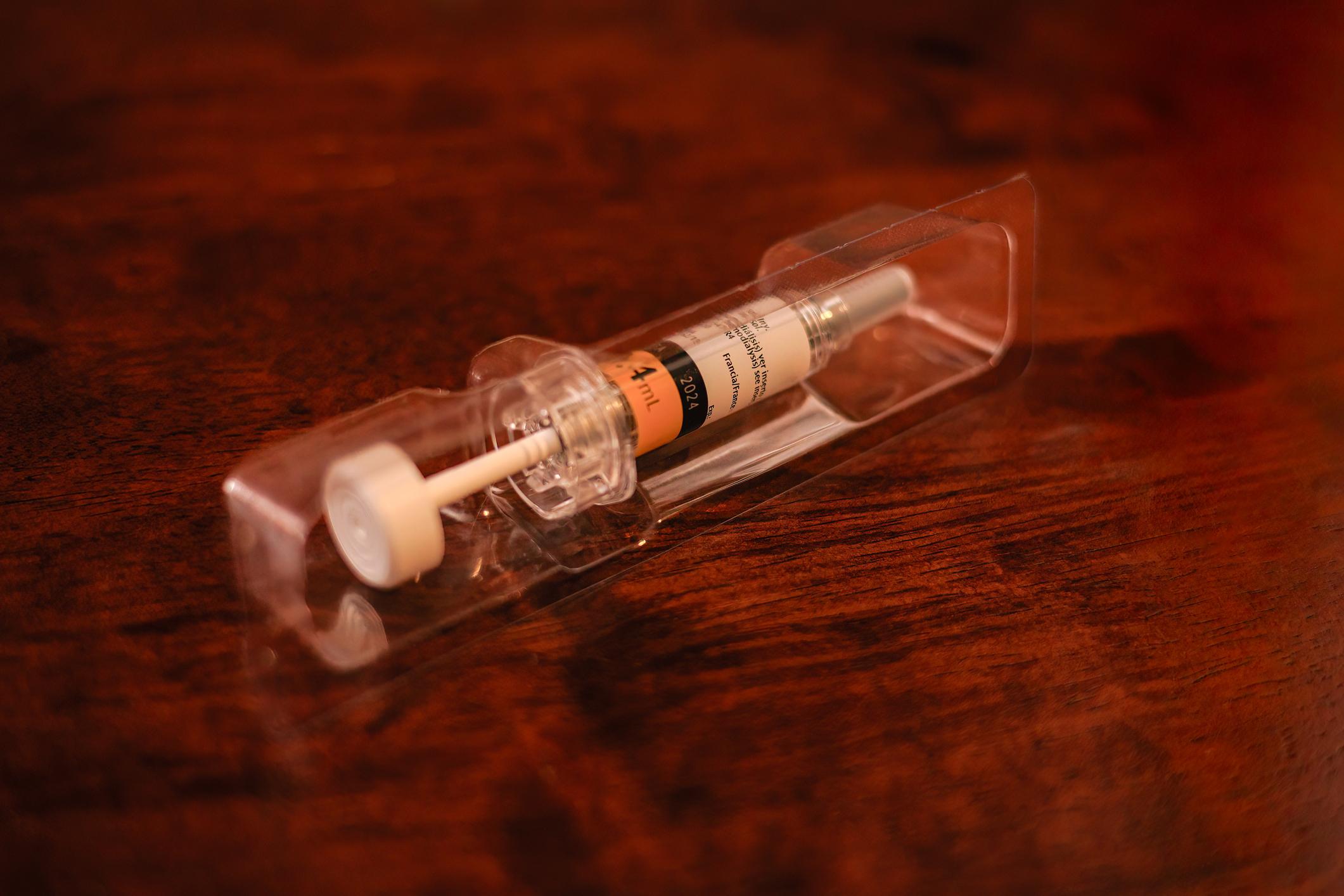
Prefilled syringes and other combination-product presentations blur the boundary between packaging and delivery performance, making some component changes relevant to the performance of the finished product.
Extractables and leachables are increasingly being framed as an integrated, risk-based program connecting materials selection, analytical testing, toxicology, formulation compatibility, and change control.
Even nominally similar packaging-component changes can affect manufacturing performance, reinforcing the importance of understanding critical material and component attributes before lifecycle changes become necessary.
Packaging Is No Longer the Last Step
Primary packaging is often treated as something selected for a drug product. For many contemporary products, that description is too narrow. The materials surrounding a product can interact with the formulation, influence manufacturing performance, affect stability, and, when the package also serves as a delivery system, contribute directly to how the product performs in use.
A new draft guidance from the U.S. Food and Drug Administration (FDA) makes those connections more explicit.1 Issued in August 2026, the guidance proposes a risk-based framework for assessing and controlling container-closure systems (CCSs) used with human drugs and biological products, including systems that are device constituent parts of combination products. The framework applies across development and the commercial lifecycle, including amendments and supplements to approved applications. The FDA has also indicated that additional guidance is planned for novel CCSs and for more specific quality and testing considerations, including extractables and leachables (E&L) and associated toxicological risk assessments.2
The underlying science is familiar, but the regulatory framing gives those interactions greater strategic weight. For biologics, high-concentration formulations, prefilled systems, combination products, and other complex presentations, CCS decisions can intersect with formulation development, fill–finish, analytical strategy, device engineering, supplier qualification, and life cycle change management.
Packaging therefore warrants consideration earlier in CMC strategy than a purely downstream packaging-selection model would suggest.
From Packaging Category to Product-Specific Risk
A central feature of the FDA’s proposed framework is its emphasis on product-specific risk. CCS suitability cannot be established simply by assigning a package to a broad category or relying on route of administration. The draft identifies multiple variables that can affect risk, including dosage form, materials of construction, CCS design, formulation, and route of administration. Formulation-specific considerations can include drug load, pH, surfactants, chelating agents, preservatives, stabilizers, lipids, and other physicochemical characteristics.1
Suitability also encompasses several distinct functions. The CCS must provide appropriate protection, remain compatible with the drug product, avoid unacceptable safety risks, and perform as intended when the system has a functional or delivery role. For sterile products, it must maintain sterility.
A syringe, vial, or cartridge therefore does not carry a fixed technical or regulatory risk profile independent of the product it contains. The same nominal package can present different questions depending on formulation characteristics, manufacturing conditions, route of administration, and whether it simply contains the product or also participates in delivery.
Each function draws on different areas of development knowledge. Protection may depend on barrier properties and closure integrity. Compatibility can depend on interactions between materials and formulation components. Safety can depend on E&L. Performance can extend into delivery mechanics when the container forms part of the administration system.
The result is a CCS assessment that can span materials science, formulation science, analytical development, sterility assurance, manufacturing, and device engineering rather than remaining a discrete packaging exercise.
Biologics Make the Package–Product Interface Harder to Ignore
Biologics provide a clear example of why CCS selection can become part of product design. The draft guidance specifically recognizes that incompatibility between a CCS and a biologic can affect product safety or effectiveness, including through interactions between leachables and proteins that alter protein structure.1
The challenge can become more pronounced for high-concentration biological products intended for subcutaneous (SC) administration. Current research describes interrelated difficulties involving viscosity, protein stability, aggregation, particulate formation, processing, injectability, and delivery-system performance. Increasing concentration can therefore change the demands placed on formulation, manufacturing, and delivery simultaneously.3–5
The packaging and delivery interfaces consequently become additional variables that must be characterized during product development.
Silicone oil in prefilled syringes (PFSs) illustrates the point. Silicone oil supports syringe functionality, but migration into a protein formulation can create an interface associated with protein adsorption, aggregation, and particle generation.6 PFS suitability depends on the interaction between a specific formulation and the materials and functions of the system.
For high-concentration biologics, the variables emphasized in the FDA’s product-specific framework can become particularly interdependent as concentration and delivery demands rise.
When the Container Also Delivers the Drug
The distinction between packaging and product performance narrows further when the CCS also participates in drug delivery.
Existing FDA guidance for glass syringes recommends evaluating the final assembled product filled with the intended drug or biological product and considering variables such as viscosity, resistance through the fluid path, back pressure, shear, system integrity, and connectivity.7 More recent FDA work on essential drug delivery outputs similarly focuses on the device characteristics needed to establish reliable delivery performance and considers how those outputs should be evaluated across development and postmarket changes.8
The agency’s July 2026 draft guidance for biosimilar and interchangeable biosimilar products reinforces the same direction by defining the product “presentation” to encompass both the CCS and any device constituent parts.9
Once the container also helps deliver the dose, a packaging change can become a product-performance change.
The new CCS draft makes that connection explicit. A change to a device constituent part can affect container-closure function, device performance, and the performance or labeling of the combination product as a whole.1
For developers of PFSs, autoinjectors, and other integrated systems, the question is therefore broader than whether the container safely holds the product. The relevant attributes may also influence whether the finished presentation consistently delivers the intended dose under the conditions in which it will be used.
E&L Moves From a Packaging Test to a Risk Program
The FDA’s decision to signal additional guidance specifically addressing E&L and toxicological risk assessment is particularly significant. E&L studies have long been associated with packaging qualification, but the emerging regulatory framework places them more squarely within product and materials risk management.2
The proposed ICH Q3E framework points in the same direction through a holistic, risk-based approach to identifying, assessing, and controlling E&L across pharmaceutical products.10 Potential leachables can originate from more than the final primary package. Sources can include materials used during manufacturing as well as components involved in storage and administration. Their relevance depends on factors including chemical identity, quantity, exposure, and toxicological properties.11
For biologics, the concern extends beyond direct toxicological risk. Leachables can also affect drug-product quality or stability, including through interactions with the active molecule. The new CCS guidance places E&L within the suitability assessment and identifies locations within the regulatory submission for supporting toxicological risk assessments.
This supports treating E&L as an integrated risk program rather than primarily as an end-stage qualification exercise. Work examining biotechnology products in PFSs has described an approach that combines knowledge of materials, prior information, risk assessment, and experimental testing to support E&L evaluation across different syringe systems.12
E&L consequently becomes a bridge among materials selection, analytical chemistry, toxicology, formulation compatibility, supplier knowledge, and change control. A material choice made during development can influence which compounds must later be evaluated. A supplier or component change can alter that profile. A formulation change can affect which leachables become relevant or how they interact with the product.
A Material Change May Be a Process Change
The life cycle implications become clearest when a CCS or one of its components changes.
The new draft states that changes to a CCS should be evaluated through a risk assessment for potential effects on the identity, strength, quality, purity, or potency of the drug product. It also notes that continued conformity with an approved component specification does not necessarily eliminate the possibility that a packaging change could have a substantial adverse effect. Supplier qualification forms part of this control strategy, and component specifications can vary among suppliers.1
The FDA had already begun developing more explicit risk-based approaches to these questions before the new framework. Its 2024 guidance on glass vials and stoppers addresses postapproval changes to those components for sterile drugs and biologics and provides tools for assessing how such changes should be implemented and reported.13
Experimental work on lyophilized drug products demonstrates why a nominally similar component change may still matter. When vials from two manufacturers with similar nominal dimensions were compared, differences in heat-transfer behavior affected primary drying performance, with the potential consequences depending on the formulation and process.14
That finding extends the issue beyond conventional compatibility. Changing a packaging component can alter a process parameter central to manufacturing performance, and the significance of the change may not be evident from the component specification alone.
This is where packaging strategy and life cycle CMC strategy converge most clearly. ICH Q12 provides a broader framework for making postapproval changes more predictable and efficient through stronger scientific and risk-based understanding of the product and process.15 Applied to CCSs, the same principle supports identifying which component and material attributes actually matter before a change becomes necessary.
Alternate suppliers, component substitutions, and changes in materials of construction are easier to assess when their relationship to product and process performance is already understood. A packaging decision made today can therefore influence the amount and type of evidence needed to preserve manufacturing flexibility later.
Designing for Change Before Change Is Necessary
The strategic question for developers is whether the development program creates enough understanding of the CCS to distinguish a genuinely low-risk change from one that could propagate through product quality, manufacturing, or delivery performance.
For combination products, those consequences can extend beyond traditional CMC comparability. Risk-based approaches have been proposed that evaluate both CMC effects and the possibility that device-related changes could alter drug delivery and exposure.16
The FDA draft does not prescribe that every packaging choice must be finalized early in development, and different products will require different levels of characterization. Packaging choices can, however, create formulation, process, and device dependencies that require additional characterization if they are revisited later in development.
Building life cycle flexibility into development can help address that challenge. Developers can identify which component attributes appear critical, understand what information suppliers can provide, characterize relevant interactions between the formulation and the system, and consider what evidence would be needed if an alternate component or supplier were introduced later.
For fill–finish providers, device teams, materials suppliers, and drug developers, that knowledge creates a stronger scientific basis for evaluating substitutions when they arise.
The Next Guidance May Matter as Much as This One
The August 2026 draft provides a broad framework, but the FDA has already indicated that more detailed guidance is expected. Planned topics include novel CCSs, specific quality attributes and testing, E&L evaluations, and associated toxicological risk assessments.2
Those documents will emerge alongside related regulatory work on E&L, device performance, combination products, and lifecycle management. The proposed ICH Q3E framework is advancing a risk-based approach to E&L, while FDA initiatives are addressing how drug-delivery performance and device constituent parts fit within product development and postapproval change management.9–10
The direction is already relevant to CMC planning. As formulations, primary packages, and delivery systems become more interdependent, container-closure decisions can shape both the scientific questions that must be answered during development and the options available later in the product life cycle.
For complex products, packaging now sits squarely within CMC strategy, with implications that extend across product quality, process performance, delivery, and lifecycle change management.
References
1. Container Closure Systems for Human Drugs and Biological Products. U.S. Food and Drug Administration. 13 Aug. 2026.
2. “Container Closure Systems for Human Drugs and Biological Products; Draft Guidance for Industry; Availability.” Federal Register. 91: 52700–52702 (2026). y
3. Hu, Guangli, et al. “High concentration subcutaneous biological drug products: challenges and advancements.” Advanced Drug Delivery Reviews. 232: 115793 (2026).
4. Zheng, Zhaoxi, et al. “Protein stability and viscosity in molecularly crowded high-concentration biologics.” Advanced Drug Delivery Reviews. 233: 115854 (2026).
5. Prajapati, Rama, et al. “Manufacturing process development strategies for high concentration biologic drug products: from downstream processing to fill-finish.” Advanced Drug Delivery Reviews. 234: 115877 (2026).
6. Tripathi, Deepak Kumar, et al. “Silicone oil in protein drug products and its implications for formulation stability.” Advanced Drug Delivery Reviews. 237: 115926 (2026).
7. “Glass Syringes for Delivering Drug and Biological Products: Technical Information to Supplement International Organization for Standardization (ISO) Standard 11040-4.” U.S. Food and Drug Administration. Apr. 2013.
8. “Essential Drug Delivery Outputs for Devices Intended to Deliver Drugs and Biological Products.” U.S. Food and Drug Administration. 28 Jun. 2024.
9. “Biosimilar and Interchangeable Biosimilar Products: Considerations for Container Closure Systems and Device Constituent Parts.” U.S. Food and Drug Administration. 31 Jul. 2026.
10. “Q3E Guideline for Extractables and Leachables.” U.S. Food and Drug Administration. 28 Nov. 2025.
11. Kuzmič, Samo, et al. “Extractables and Leachables in Pharmaceutical Products: Potential Adverse Effects and Toxicological Risk Assessment.” Toxics. 14: 92 (2026).
12. Ronk, Michael, et al. “Holistic Extractables and Leachables Program: Evaluations of Prefilled Syringe Systems for Biotechnology Products.” PDA Journal of Pharmaceutical Science and Technology. 74: 627–643 (2020).
13. “Container Closure System and Component Changes: Glass Vials and Stoppers.” U.S. Food and Drug Administration. 24 Jul. 2024.
14. Korang-Yeboah, Maxwell, et al. “Changing the container closure system of lyophilized products: Real or perceived risk to process efficiency and product quality?” Journal of Pharmaceutical Sciences. 115: 104187 (2026).
15. Q12 Technical and Regulatory Considerations for Pharmaceutical Product Lifecycle Management: Guidance for Industry. U.S. Food and Drug Administration. 11 May 2021.
16. Nøhr, Mark Klitgaard, et al. “A Risk-Based Assessment for Determining the Pharmacokinetic Comparability Requirements of Biologic-Device Combination Products Administered by Subcutaneous Injection.” The AAPS Journal. 26: 100 (2024).