Antibody–drug conjugates (ADCs) introduce formulation risks that go beyond those of conventional monoclonal antibodies (mAbs). Their sensitivity to buffer exchange, pH, excipients, process stresses, and light requires a molecule-specific development strategy supported by orthogonal analytics. An effective CDMO, by connecting early formulation studies to scale-up and manufacturing controls, may reduce redevelopment risk and build more robust ADC processes.
A Different Formulation Mindset
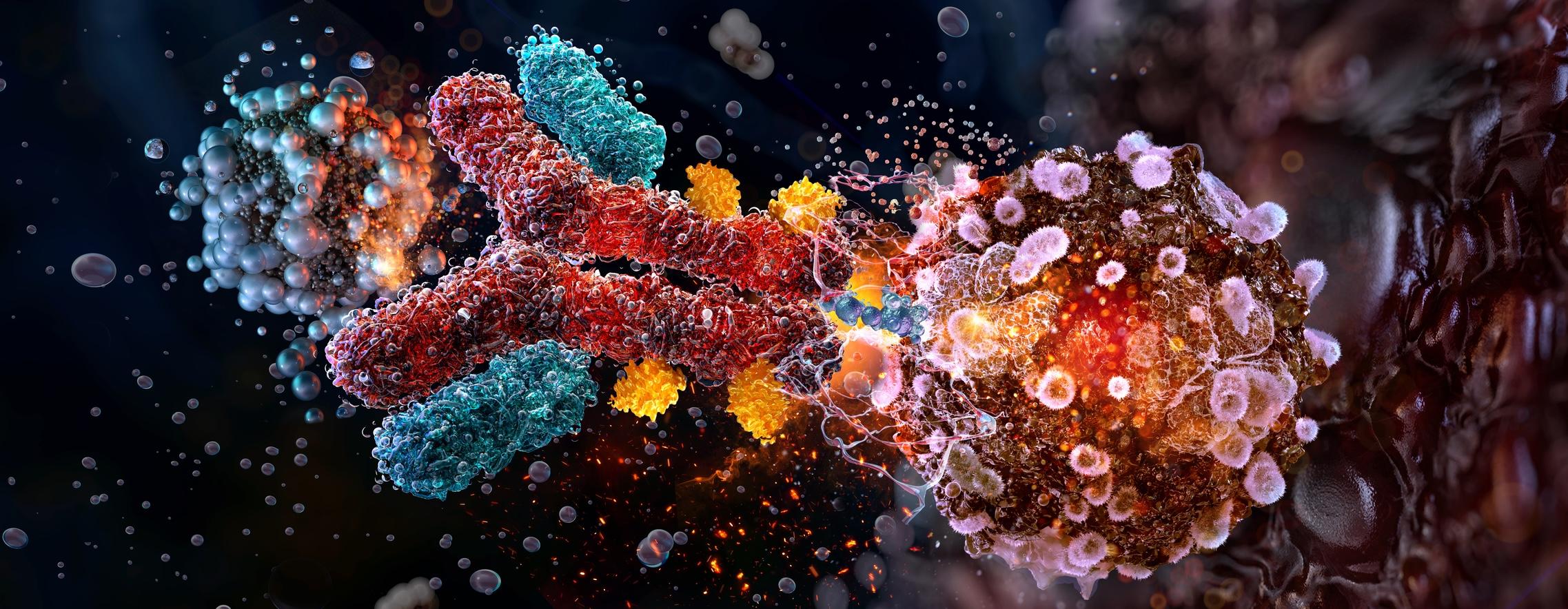
ADCs combine the target specificity of mAbs with the potency of cytotoxic small molecules, creating a therapeutic modality that selectively delivers highly active payloads to tumor cells.1,2 However, this molecular architecture also creates formulation challenges beyond those of mAbs. An ADC contains an antibody, a linker, and a payload, each contributing physical and chemical stability risks (Figure 1).
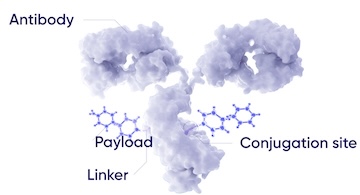 Figure 1. Complex structure of an antibody–drug conjugate
Several factors need to be considered:
Conjugation may alter the physicochemical properties of the parent antibody, including its hydrophobicity, conformational stability, solubility, and tendency to aggregate.3,4
Linkers must remain sufficiently stable during manufacturing, storage, and administration while still releasing the payload under the intended biological conditions.
Payloads may add hydrophobicity, photosensitivity, or chemical reactivity.4,5
Because these elements interact, formulation decisions cannot rest on the behavior of the unconjugated antibody alone.
ADC formulation development, therefore, starts with understanding the specific molecule rather than applying a standardized process. The formulation team must assess how the conjugated product responds to pH, buffer composition, concentration, excipients, temperature, interfaces, light, dosage forms, and process operations (Figure 2). These studies lay the foundation for a control strategy that preserves product quality from early development through to manufacturing and storage.
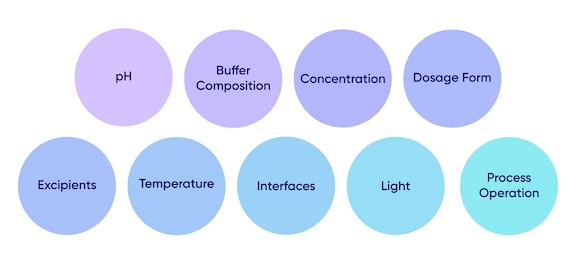 Figure 2. Key factors for antibody–drug conjugate formulation development
Why ADCs Are Difficult to Formulate
The antibody component of an ADC must retain its structural integrity, antigen-binding activity, and biological function after conjugation. However, conjugation can generate product heterogeneity. Conventional lysine- and cysteine-based approaches may produce species with various drug-to-antibody ratios (DARs), conjugation sites, and charge profiles.6 This heterogeneity can influence antigen binding, potency, solubility, pharmacokinetics, and manufacturing consistency.6
The DAR is particularly important because it affects both therapeutic activity and molecular stability: if it is too low, it may limit potency, but if it is too high, it can increase hydrophobicity and susceptibility to physical degradation. Hydrophobic payloads may expose or create hydrophobic regions on the ADC surface, promoting intermolecular interactions and aggregate formation.3–6 Even when conjugation does not substantially change overall protein conformation, it may lower the energetic barrier to unfolding or alter local structural stability.4,5
The linker introduces a competing set of requirements. It must secure the payload during manufacturing and circulation but release it efficiently once the ADC reaches its target. Cleavable linkers respond to conditions such as pH, enzymes, or reducing environments, while non-cleavable linkers depend on antibody degradation within the target cell.6–9 These mechanisms are essential to ADC function but also create routes for premature payload release during processing or storage.
Linker chemistry may also influence DAR distribution, plasma stability, thermal behavior, and the overall stability of the conjugated product.10,11 A formulation condition that protects the antibody may not optimally protect the linker or payload. Conversely, a condition chosen to preserve linker integrity may increase aggregation, deamidation, oxidation, or another antibody-related degradation pathway.
This interplay explains why the parent mAb serves as a useful reference but cannot fully substitute for the ADC. Conjugation creates a new molecular entity with its own stability profile. Formulation development must therefore evaluate the ADC directly under conditions that reflect the intended presentation and the manufacturing process
Buffer Exchange as a Critical Development Step
Buffer exchange is often viewed as a routine step for moving a protein into a preferred formulation environment. For ADCs, however, it can be a source of process stress. During the exchange, the molecule may experience changes in concentration, pH, ionic strength, excipient composition, temperature, surface exposure, and processing time. Depending on the method, it may also encounter shear, repeated concentration and dilution cycles, or prolonged contact with membranes and device surfaces.
These effects can become significant when the ADC already has elevated hydrophobicity or limited conformational stability. Local concentration at a membrane surface, extended hold times, or changes in the surrounding buffer may promote aggregation or product loss. Linker or payload stability may also suffer when the molecule passes through transient conditions outside its preferred pH or solvent environment.
The choice of buffer exchange method should therefore weigh more than throughput and recovery. Tangential flow filtration (TFF), Unagi, and centrifugal devices, such as Amicon units, each offer advantages and impose process conditions. TFF provides a scalable, manufacturing-relevant approach, but membrane selection, transmembrane pressure, shear, concentration factor, diafiltration volume, and recirculation time may all affect product quality. Unagi uses small-volume ultrafiltration/diafiltration to process multiple samples in parallel while conserving material during early formulation screening. Centrifugal devices can also support small-volume studies, though they may expose the molecule to different surface-area-to-volume ratios, concentration profiles, and handling conditions.
Because early formulation studies often use limited material and small sample volumes, small-volume buffer exchange methods are common in early development. Even so, comparing these approaches early can be valuable. Evaluating method-related effects before broader screening begins helps avoid misattributing quality changes, such as aggregation, fragmentation, or recovery loss, to the formulation when they actually stem from the buffer exchange process.
Comparative evaluation can reveal whether the method itself alters aggregation, fragmentation, DAR distribution, recovery, or other critical quality attributes. It can also show whether a method that performs well at a small scale remains suitable for later development. This assessment is particularly useful when formulation screening and process development occur in parallel because the preferred formulation must ultimately be compatible with a scalable exchange strategy.
Defining the pH and Buffer Stability Window
pH is one of the most influential variables in ADC formulation because it can affect the antibody, linker, and payload simultaneously. The challenge is not simply to avoid extreme conditions. Different degradation pathways may dominate at different points in the pH range, creating trade-offs that must be evaluated experimentally.
Acid-labile linkers provide a clear example. Hydrazone linkers are designed to hydrolyze under acidic conditions, releasing the payload in the target environment.6,12 But the same mechanism risks premature cleavage if the formulation or process exposes the ADC to an unfavorable pH. Hydrazone-based systems have shown how difficult it is to separate stability at physiological pH from cleavage in a more acidic environment.7,13
Moving to a higher pH does not necessarily resolve the problem. Increasing pH can accelerate asparagine deamidation and succinimide hydrolysis, while lower pH may increase aspartate isomerization.14 Studies comparing trastuzumab with trastuzumab emtansine show that the conjugate can degrade more than the parent antibody across multiple pH conditions, suggesting that conjugation may narrow the acceptable stability range.15,16
Beyond nominal pH, buffer identity matters, particularly for ADCs intended for lyophilization. Because many approved ADCs are supplied as lyophilized solids, formulation development must consider how buffer components behave during freezing and drying, not only in solution. Some buffers undergo selective crystallization during freezing, shifting the freeze-concentrated phase; sodium phosphate, for example, may drop in pH on freezing as the basic component crystallizes selectively.17 Similar concerns arise with other crystallizing buffers, such as succinate. Others carry lyophilization-specific risks for different reasons; carbonate buffers may release carbon dioxide and acetate buffers may release acetic acid during drying. Buffer components may also interact with particular linker chemistries.18
A useful screening program evaluates several pH values and buffer species while monitoring multiple stability attributes. Physical stability can be tracked through aggregation, particle formation, turbidity, and fragmentation. Thermal methods can identify changes in conformational stability or unfolding behavior. Chemical and conjugate-specific assays may be needed to monitor linker integrity, payload loss, DAR distribution, and charge variants.
The objective is to define a stability window, not to identify the single condition that performs best in one assay. A buffer may provide strong thermal stability but poor resistance to aggregation. Another may protect the antibody but accelerate a linker-related degradation pathway. The chosen condition must also remain practical during concentration, filtration, filling, storage, and other downstream operations.
Managing Excipient and Process Sensitivities
Excipients are meant to improve formulation stability, but their effects do not necessarily carry over from mAbs to ADCs. The conjugated molecule may respond differently to salts, sugars, amino acids, surfactants, and other stabilizers because of changes in hydrophobicity, surface properties, and conformational behavior.
Ionic strength is an important variable. Elevated salt concentrations can reduce electrostatic repulsion between molecules and increase aggregation in some ADC systems.19 Organic solvents may be needed during conjugation to manage the low solubility of hydrophobic linker-payload components, but they can also destabilize the antibody and promote aggregate formation.20,21
Surfactants present another balance of benefits and risks. Polysorbates are commonly used to reduce interfacial stress, particularly during agitation, pumping, filtration, and contact with container surfaces. However, they can undergo oxidative and hydrolytic degradation, producing species that may reduce surfactant effectiveness or contribute to product instability.22,23 The performance of these surfactants must therefore be evaluated in the context of the complete formulation, manufacturing process, and expected storage period.
Research on lyophilized ADC formulations further illustrates the need for molecule-specific excipient selection. Formulations containing mannitol or polysorbate 80 have shown greater formation of high-molecular-weight species and higher deuterium incorporation than several other tested formulations (Figure 3).24 These findings were specific to the formulations studied, but they show that excipients widely used in biologic products may not deliver the expected benefit in every ADC system.
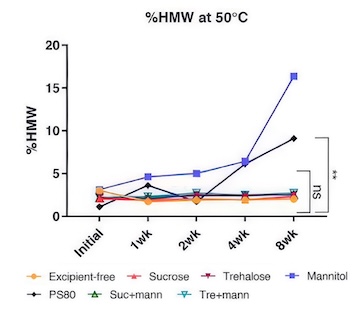 Figure 3-1. Formation of high-molecular-weight species (%HMW) during storage
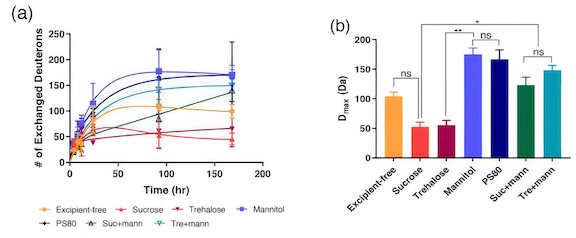 Figure 3-2. Solid-state hydrogen–deuterium exchange of lyophilized antibody–drug conjugate samples showing (a) deuterium incorporation kinetics among the various formulations and (b) maximum deuterium uptake values (Dmax)
For lyophilized products, the physical state of the excipient matrix also matters. Lyoprotectants must support molecular stability while remaining compatible with the freezing and drying processes. Partial crystallization of mannitol, for example, may reduce its ability to stabilize the ADC during storage, and mannitol may also form hydrates during lyophilization. Excipients must therefore be selected for both their stabilizing effect on the molecule and their behavior during lyophilization — crystallinity, phase behavior, and compatibility with the intended cycle.
Lyophilization may improve ADC stability by removing water, lowering molecular mobility, and reducing hydrolysis and oxidation.25–29 Sugars, such as sucrose and trehalose, may preserve protein structure by replacing interactions with water and forming a glassy matrix that restricts molecular motion.27,29–31 However, the process also exposes the product to freezing, ice interfaces, freeze concentration, pH shifts, and potential phase separation.17,32,33
The formulation and lyophilization cycle must therefore be developed together. A composition that appears stable in solution may behave differently during freezing or drying. Crystallization of a buffer or bulking agent may change the local environment around the ADC, while the presence of residual moisture or solid-state structures can affect long-term stability. The limited published understanding of solid-state ADC behavior makes direct characterization especially important.24
Process-stress studies extend beyond lyophilization. Concentration, filtration, agitation, freeze/thaw cycles, and intermediate holds can reveal vulnerabilities that static stability testing may miss. These studies are most valuable when they reproduce the sequence and duration of stresses expected during manufacturing.
Photostability as a Manufacturing Control Issue
Light exposure is a recognized stability risk for proteins, and ADCs may be more susceptible because of the linker, payload, or conjugated structure.34–37 Aromatic and sulfur-containing amino acids, including tryptophan, tyrosine, phenylalanine, histidine, and cysteine, can participate in photo-oxidation and other photolytic reactions.34,38 The payload or linker may add chromophores that change how the ADC absorbs light or generates reactive species.
Conjugation may change photostability even when the individual components appear resistant. In one study, the parent mAb and unconjugated linker did not respond in the same way as the conjugated ADC, which developed photoinduced aggregation.37 Disulfide-containing linkers may also undergo light-related degradation.39
The practical implications extend beyond final packaging. A photosensitive ADC may be exposed to light during formulation preparation, buffer exchange, sampling, filtration, filling, visual inspection, analytical testing, and storage (Figure 4). The cumulative exposure across these steps may matter more than any single event. Photostability testing should therefore reproduce plausible manufacturing and handling conditions whenever possible.
 Figure 4. Process flow of the antibody–drug conjugate manufacturing
Photostability results can guide the choice of primary and secondary packaging, but they can also support controls for room lighting, equipment shielding, open-container exposure, in-process holds, sample handling, and inspection duration. Some marketed ADCs already require light-protective packaging, showing that photostability can become an important part of the product control strategy.4
Translating Formulation Data into a Control Strategy
Formulation studies deliver the most value when their results guide how the ADC is processed, handled, stored, and protected. A pH screen should establish more than a preferred laboratory condition; it should help define acceptable operating ranges for buffer exchange, concentration, filtration, and filling. A photostability study should inform more than the choice of vial; it should determine whether controls are needed during sampling, inspection, and intermediate holds.
The same principle applies to process-stress data. If agitation or membrane exposure increases aggregation, the development team may adjust pumping conditions, mixing intensity, filter selection, or allowable processing time. If freeze/thaw studies reveal sensitivity to repeated cycles, the control strategy can specify aliquoting, storage, and handling requirements that reduce unnecessary exposure. Hold-time studies can set limits that preserve product quality while allowing operational flexibility.
An effective analytical strategy supports these decisions by combining complementary methods. Size-exclusion chromatography monitors aggregation and high-molecular-weight species, while additional assays can assess fragmentation, charge variants, DAR distribution, free payload, particle formation, thermal behavior, binding, and potency. No single method captures every relevant degradation pathway.
The study above explored solid-state hydrogen–deuterium exchange coupled with mass spectrometry (ssHDX-MS) as an early predictor of stability in lyophilized ADC formulations (Figure 5).24 Hydrogen–deuterium exchange can probe protein conformation and molecular interactions, and its solid-state application enables the analysis of lyophilized formulations.40,41 In the study, ssHDX-MS distinguished poorly performing formulations within about one week, while the same differences took substantially longer to appear in accelerated stability studies.24 Conventional Fourier-transform infrared spectroscopy did not predict high-molecular-weight species in the same formulation set.24
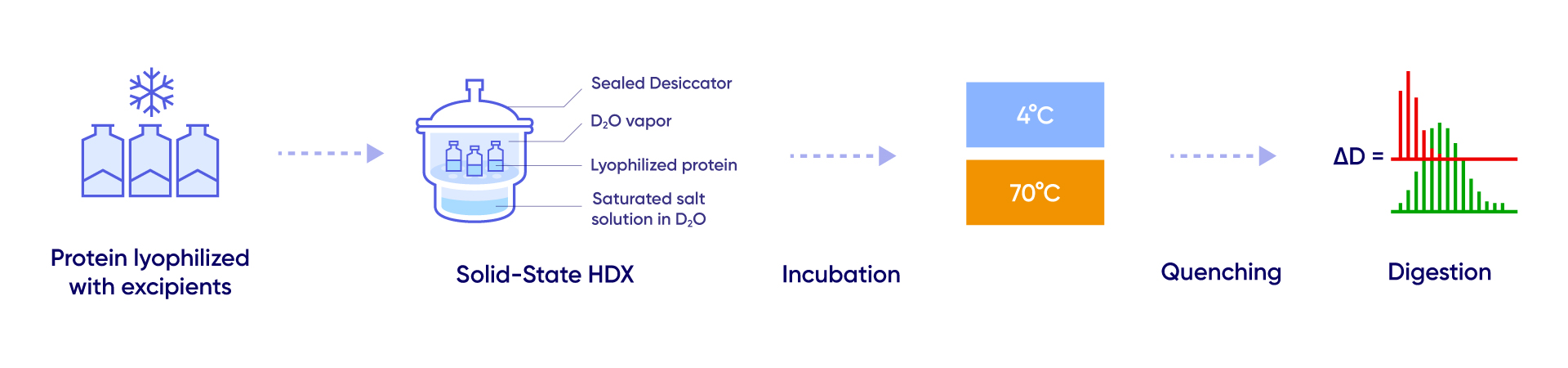 Figure 5. Experimental scheme of solid-state HDX-MS.
These findings show the value of analytical tools that can detect meaningful differences early enough to guide formulation selection. Accelerated and long-term stability studies remain essential, but earlier indicators can help narrow the candidate set, conserve material, and focus development resources on the most promising conditions.
This approach depends on coordination among the formulation, analytical, process development, and manufacturing functions.
Breaking Through ADC Formulation Challenges
ADC formulation programs often begin with limited material, compressed timelines, and incomplete knowledge of stability risks. An integrated development approach can address these constraints by identifying the most consequential risks early and prioritizing the studies that will inform later formulation, process, and product decisions.
The initial assessment should consider the properties of the antibody, linker chemistry, payload, DAR distribution, target concentration, intended dosage form, and anticipated manufacturing operations. These factors determine which degradation pathways and process sensitivities require the greatest attention and guide the design of buffer exchange comparisons, pH and buffer screens, excipient studies, and stress testing. As different ADCs present different combinations of risks, the resulting development program should reflect the needs of the specific molecule rather than follow a fixed sequence of platform studies.
Material-efficient screening may then be used to narrow the formulation space. Buffer exchange approaches, including TFF, Unagi, and Amicon-based methods, can be compared for recovery, stability impact, material requirements, process time, and scalability. Candidate pH and buffer systems can be evaluated using physical, thermal, and conjugate-specific assays, while excipient and surfactant screens may identify compositions that support stability without introducing new vulnerabilities. Small-scale methods are particularly valuable at this stage because they allow for broader exploration while conserving limited ADC material.
Promising conditions must be challenged under stresses that reflect the intended process. Concentration, filtration, agitation, freeze/thaw exposure, intermediate holds, light exposure, and lyophilization, where applicable, may reveal liabilities that are not apparent during static screening. These studies establish whether a formulation remains suitable as the process progresses from small-volume evaluation toward scalable buffer exchange, filtration, filling, storage, and handling.
Because Samsung Biologics integrates formulation, analytical, process development, and manufacturing capabilities, findings from these studies are assessed against scale-up and execution. Formulation data are translated into practical controls for pH, temperature, light exposure, hold times, filtration, buffer exchange, and storage. Identifying these requirements early reduces the risk of choosing a formulation that performs well in an initial screen but later needs substantial redevelopment.
This integrated model supports technology transfer. The scientific rationale for each control moves forward with the process, letting development knowledge inform manufacturing instructions, operating ranges, and handling requirements. The resulting strategy is easier to apply consistently because it is grounded in data generated with both the molecule and intended operations in mind.
Making ADC Complexity Controllable
ADC formulation development requires coordinated attention to the antibody, linker, payload, formulation composition, and manufacturing processes. Conjugation may change hydrophobicity, conformational stability, aggregation propensity, pH sensitivity, and response to light or interfaces. These effects make direct, molecule-specific evaluation essential.
Buffer exchange, pH and buffer selection, excipient screening, process-stress studies, lyophilization development, and photostability assessment each address a different part of the stability landscape. When connected, these activities define the operating ranges and handling conditions needed to protect product quality.
An integrated CDMO partner translates those findings into a practical development and manufacturing strategy. By identifying vulnerabilities early, testing them under relevant conditions, and connecting analytical results to process controls, this approach makes ADC formulation complexity more manageable and supports a more robust path to manufacturing.
References
1. Carter, Paul J, and Greg A Lazar. “Next generation antibody drugs: pursuit of the ‘high-hanging fruit.’” Nature Reviews Drug Discovery. 17:197–223 (2018).
2. Coats, Samuel, et al. “Antibody-drug conjugates: future directions in clinical and translational strategies to improve the therapeutic index.” Clinical Cancer Research. 25:5441–5448 (2019).
3. Buecheler, Johannes W, et al. “Alteration of physicochemical properties for antibody-drug conjugates and their impact on stability.” Journal of Pharmaceutical Sciences. 109:161–168 (2020).
4. Duerr, Christian, and Wolfgang Friess. “Antibody-drug conjugates: stability and formulation.” European Journal of Pharmaceutics and Biopharmaceutics. 139:168–176 (2019).
5. Jain, Nareshkumar, et al. “Current ADC linker chemistry.” Pharmaceutical Research. 32:3526–3540 (2015).
6. Tang, Haichao, et al. “The analysis of key factors related to ADCs structural design.” Frontiers in Pharmacology. 10:373 (2019).
7. Bargh, Jonathan D, et al. “Cleavable linkers in antibody-drug conjugates.” Chemical Society Reviews. 48:4361–4374 (2019).
8. Beck, Alain, et al. “Strategies and challenges for the next generation of antibody drug conjugates.” Nature Reviews Drug Discovery. 16:315–337 (2017).
9. Lu, Jun, et al. “Linkers having a crucial role in antibody-drug conjugates.” International Journal of Molecular Sciences. 17:561 (2016).
10. Birrer, Michael J, et al. “Antibody-drug conjugate-based therapeutics: state of the science.” JNCI: Journal of the National Cancer Institute. 111:538–549 (2019).
11. Lucas, Andrew T, et al. “Factors affecting the pharmacology of antibody-drug conjugates.” Antibodies. 7:10 (2018).
12. Kalia, Jeet, and Ronald T Raines. “Hydrolytic stability of hydrazones and oximes.” Angewandte Chemie International Edition. 47:7523–7526 (2008).
13. Nolting, Bernd. “Linker technologies for antibody-drug conjugates.” In Antibody-Drug Conjugates. Methods in Molecular Biology. 1045: 71–100 (2013).
14. Ji, Junyan A, Jun Liu, and Y John Wang. “Formulation development for antibody-drug conjugates.” In Antibody-Drug Conjugates: The 21st Century Magic Bullets for Cancer. AAPS Advances in the Pharmaceutical Sciences Series, vol. 17:79–95 (2015).
15. Mohamed, Hoda E, et al. “Stability assessment of antibody-drug conjugate trastuzumab emtansine in comparison to parent monoclonal antibody using orthogonal testing protocol.” Journal of Pharmaceutical and Biomedical Analysis. 150:268–277 (2018).
16. Chen, Tao, et al. “Chemical de-conjugation for investigating the stability of small-molecule drugs in antibody-drug conjugates.” Journal of Pharmaceutical and Biomedical Analysis. 117:304–310 (2016).
17. Sundaramurthi, Prashanth, Eugene Shalaev, and Raj Suryanarayanan. “‘pH swing’ in frozen solutions: consequence of sequential crystallization of buffer components.” Journal of Physical Chemistry Letters. 1:265–268 (2010).
18. Christie, Robert J, et al. “Stabilization of cysteine-linked antibody drug conjugates with N-aryl maleimides.” Journal of Controlled Release. 220:660–670 (2015).
19. Adem, Yilma T, et al. “Auristatin antibody drug conjugate physical instability and the role of drug payload.” Bioconjugate Chemistry. 25:656–664 (2014).
20. Ross, Philip Lindsay, and Janet L Wolfe. “Physical and chemical stability of antibody drug conjugates: current status.” Journal of Pharmaceutical Sciences. 105:391–397 (2016).
21. Hollander, Irwin, Arthur Kunz, and Philip R Hamann. “Selection of reaction additives used in the preparation of monomeric antibody-calicheamicin conjugates.” Bioconjugate Chemistry. 19:358–361 (2008).
22. Kishore, Ravuri S K, et al. “The degradation of polysorbates 20 and 80 and its potential impact on the stability of biotherapeutics.” Pharmaceutical Research. 28:1194–1210 (2011).
23. Borisov, Oleg V, et al. “Toward understanding molecular heterogeneity of polysorbates by application of liquid chromatography-mass spectrometry with computer-aided data analysis.” Analytical Chemistry. 83:3934–3942 (2011).
24. Cho, Eunbi. “Solid-state stability of antibody-drug conjugates.” Ph.D. dissertation, Purdue University, West Lafayette, Indiana (2021).
25. Carpenter, John F, et al. “Rational design of stable lyophilized protein formulations: some practical advice.” Pharmaceutical Research. 14:969–975 (1997).
26. Wang, Wei, et al. “Antibody structure, instability, and formulation.” Journal of Pharmaceutical Sciences. 96:1–26 (2007).
27. Wang, Wei. “Lyophilization and development of solid protein pharmaceuticals.” International Journal of Pharmaceutics. 203:1–60 (2000).
28. Kasper, Julia Christina, Gerhard Winter, and Wolfgang Friess. “Recent advances and further challenges in lyophilization.” European Journal of Pharmaceutics and Biopharmaceutics. 85:162–169 (2013).
29. Cicerone, Marcus T, Michael J Pikal, and Ken K Qian. “Stabilization of proteins in solid form.” Advanced Drug Delivery Reviews. 93:14–24 (2015). https://doi.org/10.1016/j.addr.2015.05.006
30. Prestrelski, Steven J, et al. “Dehydration-induced conformational transitions in proteins and their inhibition by stabilizers.” Biophysical Journal. 65:661–671 (1993).
31. Simon, Nina, et al. “Improved stability of polyclonal antibodies: a case study with lyophilization-conserved antibodies raised against epitopes from the malaria parasite Plasmodium falciparum.” European Journal of Pharmaceutical Sciences. 142:105086 (2020).
32. Arakawa, Tsutomu, et al. “Factors affecting short-term and long-term stabilities of proteins.” Advanced Drug Delivery Reviews. 10:1–28 (1993).
33. Minatovicz, Bruna, et al. “Freeze-concentration of solutes during bulk freezing and its impact on protein stability.” Journal of Drug Delivery Science and Technology. 58:101703 (2020).
34. Kerwin, Bruce A, and Richard L Remmele Jr. “Protect from light: photodegradation and protein biologics.” Journal of Pharmaceutical Sciences. 96:1468–1479 (2007).
35. Sreedhara, Alavattam, et al. “Effect of ambient light on IgG1 monoclonal antibodies during drug product processing and development.” European Journal of Pharmaceutics and Biopharmaceutics. 100:38–46 (2016).
36. Kang, Hui, Timothy J Tolbert, and Christian Schöneich. “Photoinduced tyrosine side-chain fragmentation in IgG4-Fc: mechanisms and solvent isotope effects.” Molecular Pharmaceutics. 16:258–272 (2019).
37. Cockrell, Gregory M, et al. “Photoinduced aggregation of a model antibody-drug conjugate.” Molecular Pharmaceutics. 12:1784–1797 (2015).
38. Davies, Michael J, and Roger J W Truscott. “Photo-oxidation of proteins and its role in cataractogenesis.” Journal of Photochemistry and Photobiology B: Biology. 63:114–125 (2001).
39. Steinmann, Daniel, et al. “Photodegradation pathways of protein disulfides: human growth hormone.” Pharmaceutical Research. 34:2756–2778 (2017).
40. Jensen, Pernille Foged, and Kasper D Rand. “Hydrogen exchange: a sensitive analytical window into protein conformation and dynamics.” In Hydrogen Exchange Mass Spectrometry of Proteins: Fundamentals, Methods, and Applications. 1–17 (2016).
41. Moorthy, Balakrishnan S, Lavanya K Iyer, and Elizabeth M Topp. “Mass spectrometric approaches to study protein structure and interactions in lyophilized powders.” Journal of Visualized Experiments. 98: e52503 (2015).