Key Takeaways
Oligonucleotide manufacturing is constrained by legacy chemistry platforms that do not scale efficiently, transferring complexity into downstream processes.
Purification has emerged as the central bottleneck, directly impacting yield, cost, and commercial feasibility.
Analytical requirements are not downstream checks but core design drivers that shape how manufacturing processes are built.
Fragmented regulatory frameworks increase uncertainty and push developers toward more conservative, resource-intensive processes.
CDMO platformization reflects the need to manage tightly coupled synthesis, purification, and analytical challenges as a unified system.
A Modality Outgrowing Its Manufacturing Foundations
Oligonucleotide therapeutics have moved beyond their origins as niche, highly specialized interventions and are now being developed across a widening range of disease areas. As this expansion accelerates, a disconnect has emerged between the pace of clinical innovation and the readiness of manufacturing systems to support it. Advances in RNA-targeting strategies and sequence-specific design have pushed the modality into broader clinical relevance, but they have also exposed the limitations of production approaches originally built for small-scale, precision applications rather than industrial throughput.
At the same time, the complexity of these molecules and their production processes has reinforced a broader industry trend toward outsourcing. The oligonucleotide contract development and manufacturing organization (CDMO) market has grown in response, as sponsors increasingly rely on specialized partners capable of handling the unique demands of synthesis, purification, and analytical characterization. This reliance reflects not only capacity constraints but also the need for technical expertise that is not easily replicated in-house, particularly as molecules increase in length, modification, and structural complexity.
The shift from early-stage development to commercial manufacturing has introduced additional pressure. Historically, oligonucleotide production operated at relatively small scales, often sufficient for clinical supply. Today, programs advancing toward commercialization require significantly larger batch sizes and more robust process control, forcing a transition to good manufacturing practice (GMP) production environments designed for consistency and repeatability. At the same time, scaling these processes is not straightforward. Established synthesis methods, particularly those based on solid-phase approaches, were originally optimized for precision rather than throughput, and their limitations become more pronounced as production volumes increase.
This convergence of expanding therapeutic demand, increasing molecular complexity, and the need for industrial-scale production has exposed a fundamental tension. The modality’s clinical promise continues to grow, but its manufacturing foundation was not built with large-scale, standardized production in mind. As a result, the path to commercialization depends not only on advances in drug design but also on the ability to adapt and, in some cases, fundamentally rethink how these molecules are produced.
The Chemistry Problem: Solid-Phase Synthesis Does Not Scale Cleanly
At the core of oligonucleotide manufacturing is a chemistry platform that has remained largely unchanged even as the therapeutic applications built upon it have evolved. Most production processes rely on phosphoramidite chemistry, a stepwise, solid-phase approach in which nucleotides are sequentially added to a growing chain anchored to a solid support. This method offers high precision and control, making it well suited for synthesizing defined sequences, but it was originally developed for laboratory-scale and early clinical applications rather than industrial throughput.
The reliance on solid-phase synthesis introduces structural limitations when processes are scaled. Reactions take place within packed columns, where reagents must flow through the solid support to reach reactive sites. As column size increases, maintaining uniform flow distribution, efficient reagent contact, and consistent reaction conditions becomes more difficult. These physical constraints limit the extent to which scale-up can be achieved by simply enlarging equipment, creating challenges in translating small-scale processes into reliable large-scale operations.1
Process efficiency presents an additional challenge. Each nucleotide addition involves multiple reaction and washing steps, and even small inefficiencies at each cycle can compound across longer sequences. As oligonucleotide length increases, the cumulative impact of incomplete reactions and side products becomes more pronounced, reducing overall yield and increasing the burden on downstream purification. These effects are intrinsic to the chemistry itself and cannot be fully eliminated through process optimization alone.
Resource intensity further complicates scaling efforts. Solid-phase synthesis requires substantial volumes of solvents and reagents at each step, leading to high material consumption relative to product output. Reports indicate that oligonucleotide manufacturing processes can require large quantities of solvent per unit of product, reflecting both the multistep nature of the chemistry and the need for repeated washing and conditioning cycles.1 This not only affects cost but also introduces environmental and operational considerations that become more significant at commercial scale.
These constraints extend beyond synthesis itself, shaping every downstream step in the manufacturing process. Inefficiencies introduced at each coupling cycle accumulate into complex impurity profiles that must be resolved later, effectively transferring the burden of chemical limitations into purification and analytical workflows. As a result, the choice of chemistry does not simply influence how oligonucleotides are made but how difficult they are to purify, characterize, and ultimately scale.
The Real Bottleneck: Purification Defines Feasibility
If synthesis sets the boundaries of what can be made, purification determines what can actually be used. In oligonucleotide manufacturing, downstream purification is widely recognized as a primary bottleneck, shaping not only process efficiency but overall feasibility at scale.2 The challenge stems from the nature of the molecules themselves: synthesis generates a complex mixture that includes truncated sequences, failure products, and chemically modified variants, all of which must be separated to achieve the purity levels required for therapeutic use.
The difficulty lies in how similar these impurities are to the target molecule. Many differ by only a single nucleotide or minor chemical modification, resulting in nearly identical physical and chemical properties. This makes separation inherently challenging, even with advanced chromatographic techniques. The problem becomes more acute as oligonucleotide length increases, since the number of potential closely related impurities grows while their differences become proportionally smaller.
These constraints force difficult tradeoffs between yield and purity. Achieving higher purity often requires more stringent separation conditions, which can reduce recovery of the desired product. At small scale, these tradeoffs may be manageable, but as production volumes increase, even modest losses translate into significant reductions in overall process efficiency. The result is a compounding effect: synthesis inefficiencies increase the impurity burden, and purification steps must work harder to resolve it, often at the expense of yield.1
At commercial scale, purification is no longer a discrete downstream step but a defining element of the entire manufacturing strategy. Decisions made upstream, such as sequence design, synthesis conditions, and process parameters, directly influence the complexity of the impurity profile and the feasibility of separation. As a result, purification challenges feed back into process development, reinforcing the need to view oligonucleotide manufacturing as an integrated system rather than a linear sequence of operations. In practical terms, purification increasingly dictates cost, throughput, and batch success rates, making it one of the most consequential determinants of commercial viability.
Analytical Complexity Drives Manufacturing Strategy
The challenges associated with synthesis and purification ultimately converge in analytical characterization, where the complexity of oligonucleotide products becomes most apparent. Analytical requirements are not simply downstream quality checks; they define what constitutes a viable manufacturing process. Impurity profiles sit at the center of this framework, establishing the boundary between acceptable and noncompliant product and driving how processes must be designed to achieve consistent, reproducible outcomes.3
Analytical methods must therefore operate at a level of resolution that matches the underlying chemical complexity. Among these, mass spectrometry has become indispensable for confirming sequence identity and detecting subtle structural differences between the target molecule and its impurities. Its ability to provide detailed molecular information makes it a cornerstone of oligonucleotide characterization, particularly when used in conjunction with separation techniques that can partially resolve complex mixtures prior to analysis.4
As molecules increase in length and incorporate more modifications, the analytical burden grows accordingly. Larger and more complex oligonucleotides generate broader and more intricate impurity profiles, placing greater demands on both instrumentation and method development. This increase in analytical complexity feeds directly back into manufacturing strategy. Processes must be designed not only to produce the desired molecule, but to do so in a way that yields impurity profiles that can be reliably characterized, controlled, and reproduced.
In practice, this means that analytical considerations are no longer confined to quality control functions. They influence decisions at every stage of development, from synthesis conditions to purification approaches and process scale. The ability to understand and manage analytical complexity has become a prerequisite for successful manufacturing, shaping how processes are designed and how confidently they can be scaled.
Regulatory Fragmentation Slows Standardization
As oligonucleotide therapeutics have advanced, regulatory frameworks have begun to take shape, but they remain fragmented across agencies and guidance documents. In the United States, the U.S. Food and Drug Administration (FDA) has issued multiple guidances addressing different aspects of oligonucleotide development, including clinical pharmacology, nonclinical safety, and chemistry, manufacturing, and controls (CMC). While these documents provide important direction, they do not yet form a single, unified framework that spans the full life cycle of oligonucleotide products. Instead, developers must navigate a patchwork of recommendations that apply to specific stages or product types.5–7
The European Medicines Agency has also taken steps to define expectations more explicitly in certain areas, particularly around impurity control. Draft guidance introduces thresholds for impurity qualification and emphasizes the need for robust analytical data to support those limits. These requirements add another layer of complexity for companies operating globally, as they must reconcile differing expectations while maintaining consistent product quality.8
At a broader level, the absence of harmonized standards remains a central challenge. Unlike small molecules or biologics, where International Council for Harmonisation (ICH) frameworks provide well-established guidelines for impurity identification and qualification, oligonucleotide therapeutics do not yet benefit from a fully aligned global approach. There is no single set of universally accepted thresholds or expectations governing impurity control across all oligonucleotide products, leaving room for interpretation and variability in regulatory review.
This fragmentation has practical implications for manufacturing. Process development must account not only for technical feasibility but also for how impurity profiles and analytical data will be evaluated by different regulatory bodies. As a result, regulatory considerations are deeply intertwined with manufacturing strategy, influencing decisions about purification rigor, analytical methods, and overall process design. In many cases, this uncertainty pushes developers toward more conservative process parameters, increasing cost and complexity in order to reduce regulatory risk. Until more harmonized standards emerge, the path to commercialization will continue to require navigating a regulatory landscape that evolves alongside the modality itself.
The CDMO Response: Platformization of Oligonucleotide Manufacturing
As the technical and regulatory demands of oligonucleotide development have intensified, contract development and manufacturing organizations (CDMOs) have adapted by shifting toward more integrated, platform-based service models. Rather than offering discrete capabilities, many providers now position themselves as end-to-end partners, supporting programs from early discovery through process development and into commercial GMP production. This approach reflects the need for continuity across stages of development, particularly given how tightly synthesis, purification, and analytical strategies are interdependent in this modality.
These platforms are built around the integration of core manufacturing functions. Synthesis capabilities are closely linked with analytical characterization and purification development, allowing processes to be designed with downstream feasibility in mind from the outset. Analytical teams play a central role in this structure, informing process decisions based on impurity profiles and characterization requirements, while GMP production capabilities ensure that methods developed at smaller scale can be translated into compliant, reproducible manufacturing processes.
The result is a model in which manufacturing is treated as a continuous, coordinated system rather than a sequence of handoffs between specialized groups. This integration helps address many of the constraints discussed earlier, including the need to balance synthesis efficiency with purification feasibility and to align analytical methods with regulatory expectations. More fundamentally, platformization reflects the interdependence of these unit operations: because challenges in one area propagate across the process, they must be solved in concert rather than in isolation. By maintaining control across these interconnected functions, CDMOs can reduce the risk of late-stage process failures and streamline the transition from development to commercial supply.
At the same time, the growing reliance on specialized CDMOs reflects broader structural shifts within the industry. As oligonucleotide therapeutics become more complex and scale requirements increase, maintaining the necessary infrastructure and expertise internally becomes less practical for many sponsors. Outsourcing is therefore driven not only by capacity considerations but also by the need for specialized knowledge in areas such as impurity control, analytical method development, and regulatory. In this context, platformization represents both a response to technical challenges and a strategic model for managing the increasing complexity of oligonucleotide manufacturing.
Industrialization Challenge: Turning Chemistry into Manufacturing
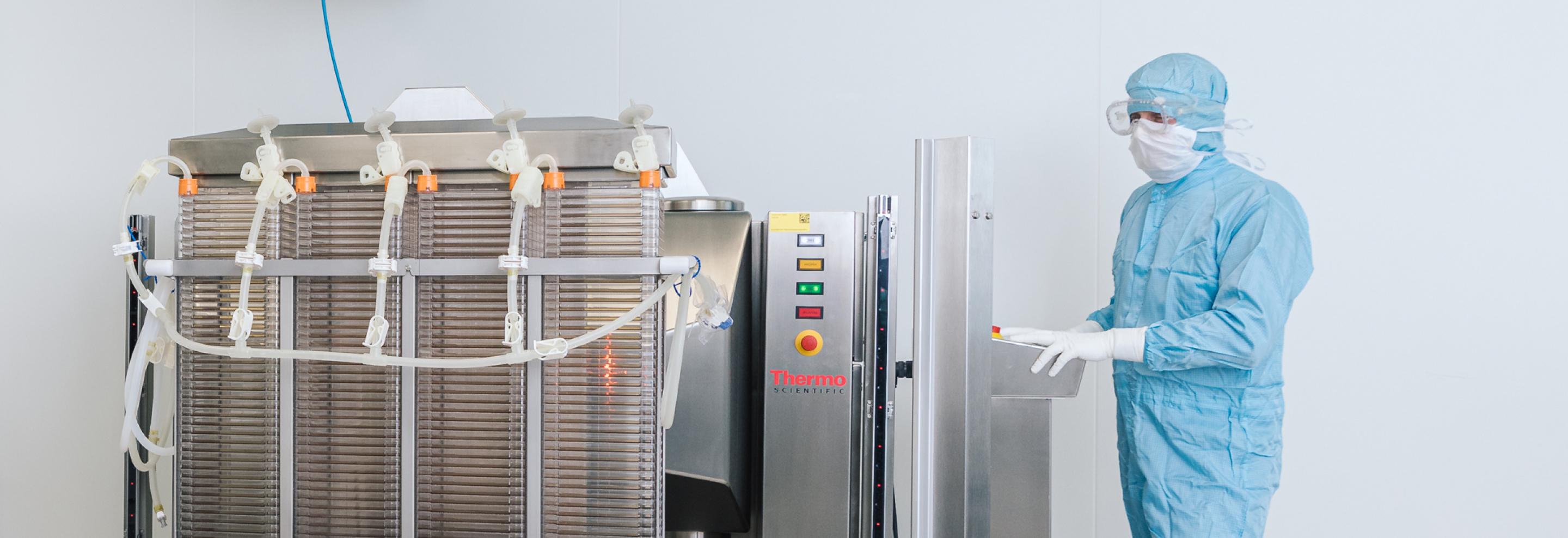
As oligonucleotide therapeutics move into commercial production, the challenge shifts from executing complex chemistry to operating that chemistry reliably at scale. At this stage, manufacturing begins to resemble a chemical production environment more than a traditional pharmaceutical operation. Processes involve hazardous reagents, large solvent volumes, and tightly controlled reaction conditions, introducing operational and safety considerations that must be managed with the same rigor as any industrial chemical facility.
This shift places new demands on facility design. Unlike fixed, single-product biologics plants, oligonucleotide manufacturing environments must accommodate a range of molecule types, scales, and process configurations. Facilities are therefore designed with flexibility in mind, enabling adjustments in equipment, flow paths, and containment strategies as programs evolve. At the same time, they must support scalability, allowing processes developed at smaller scale to be expanded without introducing variability or compromising control. Balancing these requirements requires careful planning around layout, material handling, and process integration.
A further complication arises from the need to support multiple stages of development within the same operational framework. Oligonucleotide programs often progress from early clinical supply to commercial production within a shared infrastructure, requiring manufacturing systems that can operate effectively across a wide range of batch sizes. This multiscale capability is essential for maintaining continuity as processes mature, but it also increases the complexity of scheduling, validation, and process control. Equipment and workflows must be robust enough to handle variation while still delivering consistent quality, placing additional strain on facility utilization and operational planning.
These factors underscore a broader reality: industrializing oligonucleotide manufacturing is not simply a matter of scaling existing processes. It requires translating a chemically intensive, precision-driven synthesis paradigm into a stable, repeatable production system. Doing so demands coordination across process design, facility engineering, and operational execution, with each element shaped by the underlying constraints of the chemistry itself.
The Real Constraint: Scaling Without Losing Control
As oligonucleotide therapeutics advance toward broader clinical and commercial use, the central challenge is no longer whether these molecules can be designed or synthesized, but whether they can be manufactured in a controlled, repeatable, and scalable way. The constraints discussed across synthesis, purification, analytics, and regulation converge at this stage, creating a tightly coupled system in which limitations in one area directly affect performance in others.
Synthesis inefficiency remains a persistent upstream pressure. The stepwise nature of phosphoramidite chemistry introduces cumulative losses that become more pronounced with longer or more complex sequences, increasing the burden on downstream processes. Purification, in turn, must resolve increasingly complex mixtures of closely related impurities, often forcing tradeoffs between achieving the required purity and maintaining acceptable yields. These technical challenges are compounded by regulatory expectations that demand detailed characterization and control of impurity profiles, even in the absence of fully harmonized global standards.
What emerges is a system in which control is difficult to maintain as scale increases. Small deviations in synthesis can propagate through purification and analytical workflows, while variability in impurity profiles can complicate regulatory assessment. Maintaining consistency therefore requires not only robust individual unit operations but also careful coordination across the entire manufacturing process.
Manufacturing has become the defining constraint on the expansion of the modality. The scientific and clinical potential of oligonucleotide therapeutics continues to grow, but only those programs that can be translated into controlled, scalable manufacturing processes will reach widespread use. The limiting factor is no longer the ability to design effective molecules, but the ability to produce them reliably at scale. As a result, manufacturing is not simply a supporting function. It is increasingly the determinant of which oligonucleotide therapies succeed commercially.
References
MacLeod, Claire. “Oligonucleotide Manufacturing Scaling Challenges for Undruggable Targets.” ISPE. Nov./Dec. 2025.
Abe, Aljaž and Zdenko Časar. “Overview and Recent Advances in the Purification and Isolation of Therapeutic Oligonucleotides.” Organic Process Research & Development. 29: 15–33 (2025).
Azari, Sara, et al. “Relevant factors to guarantee quality of oligonucleotide-based products.” International Journal of Pharmaceutics. 687: 126393 (2026).
Al Bardawil, Sandy, Philippe Barthélémy, Ludivine Ferey. “Advances in Analysis of Therapeutic Oligonucleotides with Chromatography Coupled to Mass Spectrometry.” Anal. Chem. 98: 10895–10912 (2026).
Clinical Pharmacology Considerations for the Development of Oligonucleotide Therapeutics: Guidance for Industry. U.S. Food and Drug Administration. Jun. 2024.
Nonclinical Safety Assessment of Oligonucleotide-Based Therapeutics. U.S. Food and Drug Administration. Nov. 2024.
IND Submissions for Individualized Antisense Oligonucleotide Drug Products for Severely Debilitating or Life-Threatening Diseases: Chemistry, Manufacturing, and Controls Recommendations Guidance for Sponsor-Investigators. U.S. Department of Health and Human Services. Dec. 2021.
Guideline on the Development and Manufacture of Oligonucleotides (Draft). European Medicines Agency. 17 Jul. 2024.