In-depth process understanding, even when using platform processes for the production of recombinant proteins and antibody-based products, is essential to implementing optimized processes at scale. The deeper process understanding garnered using artificial intelligence, machine learning, PAT, digital twin, and other advanced tools is leading to the development of more efficient and cost-effective processes that afford higher-quality products more consistently.
Evolving Toward Deeper, Data-Driven Process Understanding
The production of biologic drug substances relies on intricate upstream and downstream operations, where process and product quality are shaped by the interplay of many parameters during mammalian cell culture. These interdependencies influence not only impurity levels but also posttranslational modifications (PTMs), aggregates and charge variant profiles. Without tight control, such factors can introduce unacceptable batch-to-batch variability. As a result, comprehensive process understanding — beyond what platform approaches alone can offer — has become essential for implementing optimized processes at scale.
The need for deeper insight has grown alongside the increasing diversity of today’s pipelines. Multispecific antibodies, for example, demand far more sophisticated processes than traditional monoclonal antibodies, while biosimilars require precise control to achieve products highly comparable to branded references. Whether innovator or biosimilar, success hinges on having a well-characterized process spanning cell culture through purification and fill/finish to consistently meet yield, quality, and regulatory expectations.
Traditional empirical development is no longer sufficient to the efficient acquisition of process understanding. A quality-by-design (QbD) framework, supported by design-of-experiment (DoE) studies and predictive modeling, has become standard practice. These tools enable early identification of critical process parameters (CPPs) and critical quality attributes (CQAs), generate the data needed to define robust design spaces, and provide the evidence base for sound decision-making.
Crucially, process understanding does not end at commercialization. In the past, manufacturers relied on periodic data points: daily checks of a handful of parameters in cell culture or endpoint analysis of chromatography runs. Today, continuous monitoring through process analytical technology (PAT) tools allows real-time tracking of key variables, enabling proactive adjustments to maintain optimal conditions and providing data for long-term trending analysis. This shift from retrospective evaluation to ongoing oversight reduces the risk of undetected deviations and shortens the time needed to resolve issues.
Advances in automation and digitalization are accelerating this evolution. Artificial intelligence (AI) and machine learning, together with PAT and digital twin technologies, are opening the door to more predictive and adaptive control strategies. These capabilities allow manufacturers to interpret complex data streams that would overwhelm conventional tools, streamline development timelines, and produce higher-quality products more consistently and cost-effectively.
The Tools Behind Modern Process Understanding
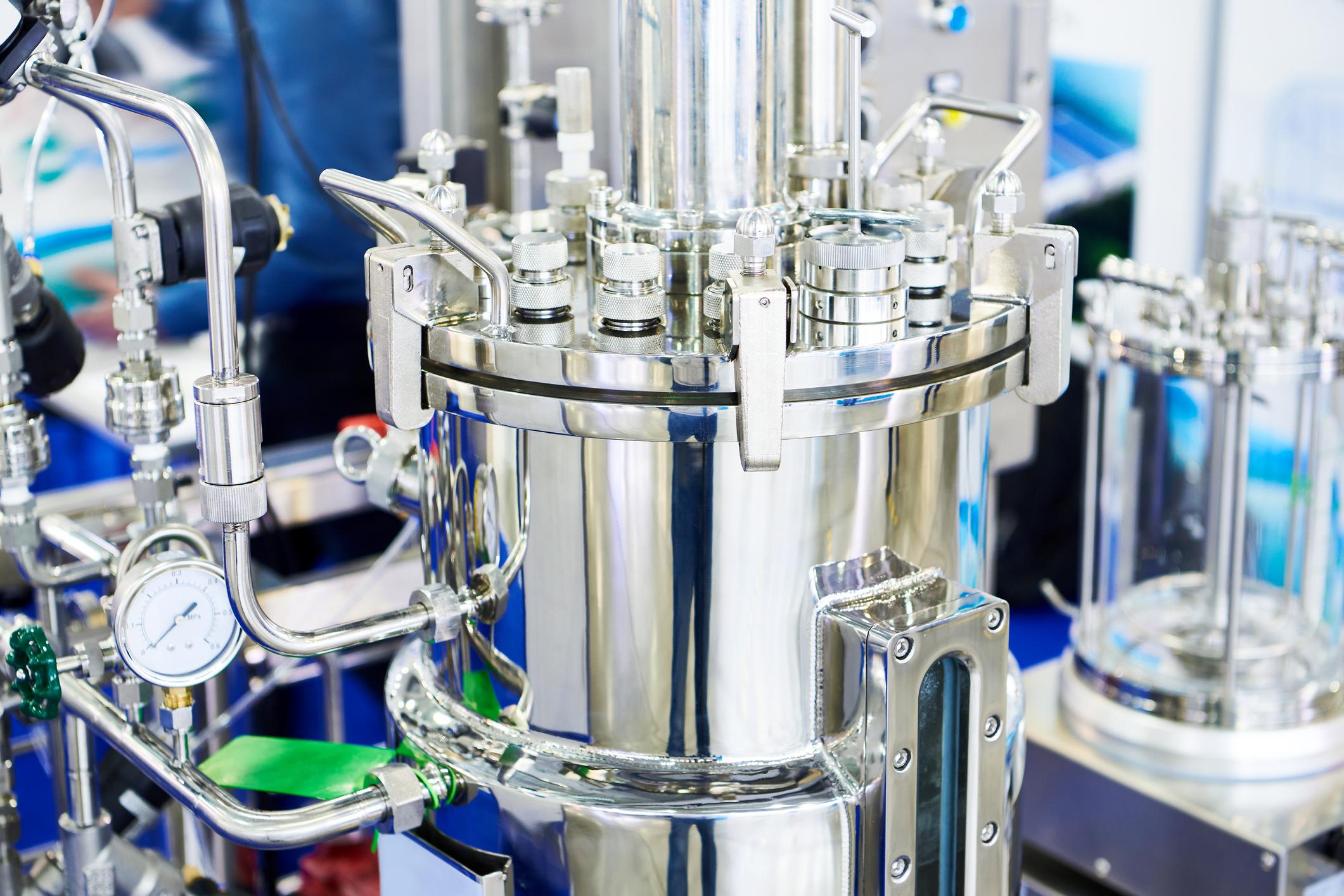
Over the past decade, new technologies have transformed how biopharmaceutical manufacturers approach process understanding. High-throughput systems now enable development programs that once required months of experimentation to be completed in weeks. Micro- and mini-bioreactor platforms, such as the popular Ambr® systems, allow dozens of conditions to be tested in parallel using minimal material. Because these systems are engineered to replicate the behavior of larger bioreactors, they not only accelerate the identification of CPPs but also reduce scale-up risks as projects move from laboratory to pilot and commercial scale.
At the same time, the development of PAT tools has shifted monitoring from occasional data points to continuous, real-time insight. For upstream processes, sensors can track glucose, pH, and viable cell density throughout a 24-hour cycle, replacing the gaps left by once-daily sampling. In downstream chromatography, inline analytics now make it possible to observe aggregation or charge variants as they emerge rather than waiting for end-pool assays. These capabilities create a more detailed picture of process behavior, enabling faster interventions and greater confidence in reproducibility.
The data generated through PAT also serve as the foundation for digital twins and predictive models. By simulating how molecules interact with cell culture conditions or purification resins, these tools help refine process control strategies and shorten the path from transfer to process performance qualification (PPQ). The result is not just better process knowledge but also smoother scale-up, more efficient technology transfer, and faster development cycles across clinical and commercial programs.
Bridging Gaps in Client Process Knowledge
Contract development and manufacturing organizations (CDMOs) transfer projects in from clients whose approaches to early development can vary dramatically. Some arrive with processes that are thoroughly characterized and supported by extensive data packages, while others transfer in with only a handful of development runs completed. Increasingly, the pressure to accelerate programs into the clinic and onto the market has led sponsors to minimize process characterization to save time, often leaving gaps that must be addressed later.
The greatest challenges arise when limited process understanding is coupled with ambitious timelines. Insufficiently defined parameters can manifest as poor yields, high variability, or purification steps that prove difficult to reproduce at scale. In some cases, CDMOs must revisit the fundamentals, designing DoE studies to identify CPPs and correct for gaps that were overlooked during early development. These efforts not only stabilize the process but also reduce the risk of costly setbacks during PPQ and commercialization.
At the same time, CDMOs must keep projects moving forward even when knowledge is incomplete. Here, access to automation and digitalization tools becomes essential. High-throughput systems, continuous monitoring, and advanced analytics make it possible to generate meaningful data quickly and keep accelerated programs on track. Just as importantly, process knowledge should be viewed as cumulative. Even after PPQ and commercialization, continuous process verification (CPV) allows sponsors and CDMOs to expand their understanding over time, turning what began as a minimally characterized process into one that is robust, efficient, and scalable.
Continuous Learning Beyond Commercialization
Process knowledge should never be treated as fixed, even after a product reaches the market. Running large-scale cell culture consistently over long periods inevitably introduces challenges: raw material variability, equipment changes, and evolving regulatory expectations all create opportunities for variation. Moreover, technologies are constantly advancing, offering new ways to probe and optimize processes that were once considered mature.
For programs that enter the clinic or even commercialization with only limited process knowledge, each new batch becomes a source of insight. Data accumulated over time can reveal previously unseen trends, helping to refine parameters that affect yield, efficiency, and cost of goods. This iterative cycle underscores that commercialization is not an end point but part of a broader continuum of learning.
CPV formalizes this mindset by embedding monitoring and data collection into routine manufacturing. With each production run, knowledge expands, risks are reduced, and productivity improves. Over time, the cumulative effect is a process that grows more robust and reliable throughout the life cycle of the drug product.
Partnerships as Engines of Innovation
Deeper process understanding is rarely achieved in isolation. Because raw materials, equipment, and enabling technologies exert such a profound influence on process performance, strong partnerships with both suppliers and customers are essential. Collaboration with vendors of media, single-use systems, sensors, and other critical tools not only improves operational efficiency but also opens access to new types of data that enrich decision-making.
These relationships often serve as the proving ground for innovation. Vendors are continually introducing technologies, such as advanced PAT sensors, high-throughput systems, and next-generation modeling software. By working closely with CDMOs and their clients, suppliers can refine these tools in real-world settings, while manufacturers gain early access to capabilities that enhance monitoring, control, and scale-up.
The industry’s conservative stance toward adopting unfamiliar technologies means that progress frequently depends on coordinated efforts. When sponsors, CDMOs, and vendors align around piloting and validating new tools, the benefits extend beyond individual programs to strengthen best practices across the sector. Such partnerships transform emerging technologies from theoretical possibilities into practical solutions that advance process understanding and manufacturing resilience.
When Media Becomes a Black Box
Even with the advances in automation and digitalization, some variables in mammalian manufacturing remain difficult to control. Chief among them is cell culture media. As a critical raw material, any inconsistency in composition or purity can have a significant impact on process performance, from cell growth to product quality.
Commercially available media formulations may contain dozens — or even hundreds — of components. While marketed as chemically defined, the precise formulations are typically proprietary, leaving manufacturers with limited visibility into their exact makeup. Suppliers often provide batch specifications, such as bioburden or basic growth tests, but these are often performed with cell lines that behave differently from those used in production. A formulation may therefore meet all specifications yet still underperform in a particular process.
This lack of transparency effectively makes media a black box for many manufacturers. In some cases, variability has led to stalled cultures and the need for costly investigations. To mitigate such risks, companies like Avid Bioservices have implemented additional in-house release checks to confirm that media lots support robust cell growth before introducing them into manufacturing runs. While such measures help reduce uncertainty, the challenge of media variability underscores the importance of continuous monitoring and strong supplier partnerships in safeguarding process performance.
Harnessing AI, PAT, and Automation for Smarter Biomanufacturing
Despite significant progress, opportunities remain to deepen process understanding in biopharmaceutical manufacturing. Unlocking that potential will require wider adoption of new tools and more innovative approaches to monitoring, control, and prediction. Expanding the range of CPPs that can be tracked in real time is particularly important, as it strengthens process robustness while improving both efficiency and cost-effectiveness from development through commercial production.
Accelerated process characterization during development reduces timelines and cost without compromising quality, while ongoing monitoring in GMP environments ensures that knowledge continues to grow with every batch. These advances enable not only better control but also faster responses when deviations occur. For such approaches to succeed, manufacturers must work closely with suppliers to evaluate emerging tools, validate their performance in real-world settings, and feed insights back to refine next-generation solutions. This cycle of adoption and feedback ultimately elevates standards across the entire industry.
As a dedicated biologics CDMO, Avid Bioservices is committed to being a part of this shift. With full life cycle capabilities from concept through commercial supply, Avid combines expertise in bioprocess optimization, analytics, and regulatory compliance and is exploring an expanding toolkit of advanced technologies. Future investments in PAT platforms, automation solutions, and data-rich digital infrastructures will be complemented by the eventual integration of AI and machine learning to interpret complex data sets and enable predictive modeling. These initiatives build on decades of accumulated process knowledge and position Avid Bioservices to accelerate scale-up and commercialization while ensuring consistently high product quality for its clients’ most promising biologic candidates.