Key Takeaways
A manufacturing platform is not a rigid template. It is a defined foundation of technologies, unit operations, procedures, materials, analytical methods, and prior process knowledge that can be adapted to the needs of an individual product.
Platformization exists on a spectrum. Some candidates fit an established process closely, while others benefit from only selected platform elements and still require substantial product-specific development.
Upstream cell line–technology combinations are often more readily standardized than downstream purification and formulation, where differences in product properties and impurity profiles frequently require customization.
When a candidate aligns with an established platform, prior knowledge can reduce exploratory development, improve risk assessment, and make timelines, material requirements, and scale-up strategies more predictable.
The greatest value comes not from standardized equipment alone but from experienced teams that know which elements can be transferred, which must be modified, and how the drug substance decisions may affect drug product and quality control.
What a Manufacturing Platform Actually Is
The term “platform” is widely used across the biopharmaceutical industry, but its meaning is not always precise. A product platform, a technology platform, and a manufacturing platform are related concepts, but they are not interchangeable. Products may share a scientific or therapeutic platform without necessarily using the same chemistry, manufacturing, and controls (CMC) strategy.
From a manufacturing perspective, a platform is a defined approach that applies common technologies, unit operations, procedures, cell systems, materials, and analytical methods across drug candidates with sufficiently similar characteristics. The objective is not to force every candidate into an identical process but to establish a proven foundation that can be adapted where the biology and target product profile demand it.
In mature areas, such as monoclonal antibody (mAb) manufacturing, as much as 80% of a process may remain consistent across products, with a smaller portion adapted to the needs of the individual molecule. Quality control methods can often be approached similarly, with broadly applicable methods supplemented by product-specific testing.
Other modalities are less standardized. Viral vectors, for example, encompass a wide range of viral backbones, cell lines, production technologies, doses, impurity profiles, concentrations, and intended applications. Some established systems, including adeno-associated virus (AAV) and lentiviral (LV) vectors, are moving toward more consistent manufacturing approaches, but the diversity of these products makes it difficult to achieve the degree of standardization seen in monoclonal antibody production.
A platform process must therefore be understood as a spectrum rather than an all-or-nothing proposition. Some candidates may align closely with an established platform and require only limited product-specific adjustments. Others may use selected elements, such as a proven cell line–upstream-processing technology combination, while requiring substantial development elsewhere. The key consideration is which platform elements can be transferred confidently, which require verification, and which must be developed specifically for the candidate.
Platformization Across Modalities
The degree to which a process can be standardized depends on both the modality and the intended application. Even products that share a viral backbone may have very different manufacturing requirements. The same viral backbone or related viral system may be used in a vaccine, gene therapy, or oncolytic application. Although some of the same technologies may remain relevant, the required dose, concentration, impurity profile, filling volume, and critical quality attributes can vary considerably. The resulting processes may therefore differ substantially despite the apparent similarity between the products.
This does not eliminate the value of platform thinking. It changes how that value is realized. Knowledge accumulated through earlier programs can be traced back to individual unit operations, materials, analytical methods, process parameters, and cell line–technology combinations. Experienced development teams can then determine which of those elements are relevant to a new candidate and combine them according to its specific requirements.
This approach remains useful even when a new modality enters development. The product may be novel, but many of the required operations are familiar to experienced biologics manufacturers. These may include cell expansion, expression or infection, harvesting, clarification, concentration, purification, formulation, and filling. Prior experience helps the development team select and combine those operations intelligently while still performing the product-specific studies needed to verify that the process is appropriate. Rather than beginning from first principles, development teams can use platform knowledge to narrow the range of possibilities and concentrate on the areas that require product-specific investigation.
Mammalian and Microbial Platforms
Mammalian and microbial manufacturing rely on different biological systems and may require different equipment and operating strategies, but both can benefit from platform-based development.
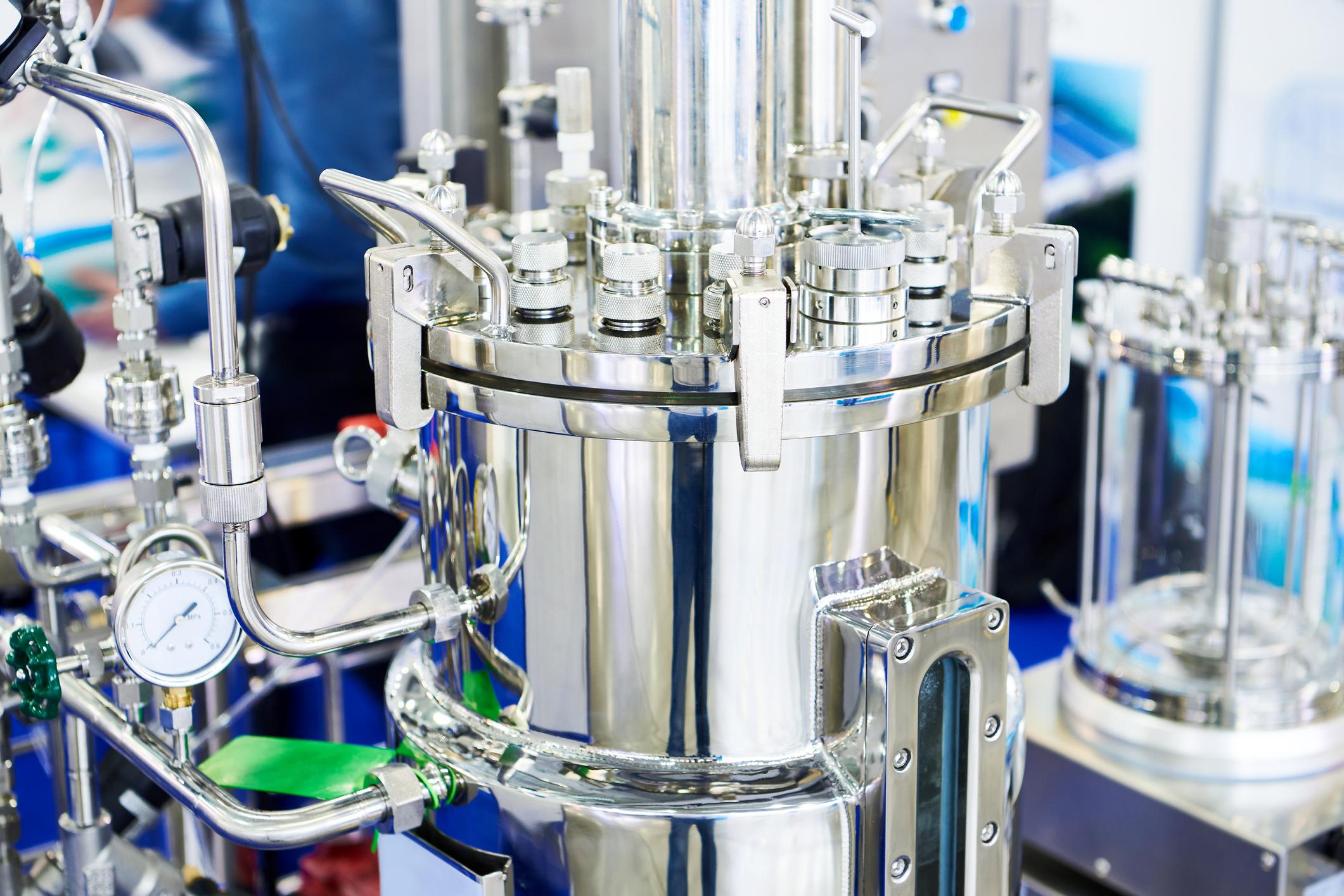
Mammalian manufacturing has increasingly shifted toward single-use systems. Microbial production may use either single-use or stainless-steel equipment, depending on the organism, required scale, process economics, and product needs. At larger microbial scales, stainless-steel systems may become more relevant, particularly when cost of goods is a major consideration. At smaller scales, single-use systems may remain suitable. Rather than treating one equipment format as universally preferable, the manufacturing strategy must reflect the requirements of the individual program.
Despite these differences, mammalian and microbial processes share a common underlying challenge: both depend on the control of complex biological systems. Process parameters must be selected and maintained to support consistent growth, expression, productivity, and product quality. Experience with biological process control, scale-up, technology transfer, materials, and manufacturing variability can therefore provide value across both formats, even when the specific operating conditions differ.
Where Platforms Transfer — and Where They Do Not
Within biologics manufacturing, upstream development often presents some of the strongest opportunities for platformization. An established combination of cell line, culture format, and upstream-processing technology can provide a well-characterized starting point for a new program. Previous knowledge may include suitable media, operating parameters, infection or expression conditions, process-control strategies, equipment behavior, and scale-up risks. When a product is sufficiently aligned with that combination, the amount of initial exploratory work can be reduced.
Downstream processing generally requires more product-specific adaptation. The behavior of a drug substance during clarification, filtration, chromatography, concentration, and formulation is influenced by its physicochemical and biological characteristics. For viral products, differences in surface properties, vector type, impurity profile, stability, and target concentration can significantly affect downstream performance. Even closely related products may behave differently during purification.
These differences can influence the selection and sequencing of purification operations (e.g., chromatographic binding and recovery). They may also affect concentration and filtration behavior and the ability of the process to clear product- and process-related impurities. Product-specific characteristics can further shape the formulation of intermediates and the final drug substance, with implications for product stability. They may also affect analytical method performance, requiring methods to be adapted to the specific matrix/buffer background and attributes of each product.
For these reasons, an upstream platform may transfer nearly intact while downstream operations require substantial optimization. Product-specific changes to purification or formulation may also require corresponding verification or adaptation of analytical methods.
The objective is to reuse proven knowledge wherever it remains scientifically appropriate, allowing development resources to focus on the areas where product behavior creates genuine uncertainty.
Value Across the Development Life Cycle
Platform-based development can create value at several points in the product life cycle. For an early-stage sponsor that has identified a candidate but has not yet established a manufacturing process, an existing platform can provide a faster and more certain route toward initial clinical evaluation. Rather than beginning with a broad investigation of every possible cell line, technology, material, and unit operation, the program can start from a process with an established record and focus on the candidate-specific questions that remain.
For a product that aligns closely with an existing platform, this approach may significantly shorten the path to first-in-human studies. In some circumstances, an established process may support clinical entry in approximately one year, compared with more than two years for fully de novo development in which the basic manufacturing process has not yet been identified. The actual benefit depends on the product, the quality and completeness of the available data, and the degree of platform fit.
Platforms can also support later-stage programs. A biopharma client may have generated initial clinical material using a limited manufacturing approach that is not practical at larger scale. In that situation, a contract development and manufacturing organization (CDMO) may be able to apply an established cell line–technology combination to accelerate conversion to a more scalable upstream process, even if work is still required to adapt downstream operations.
Prior platform knowledge can strengthen technical decision-making throughout development. It can support initial technical and manufacturability assessments, improve early identification and mitigation of potential risks, and help guide the selection of scalable manufacturing technologies. Building on established experience also facilitates more accurate cost-of-goods planning, smoother technology transfer, greater process robustness, more effective commercial supply planning, and improved predictability of development and manufacturing timelines.
Materials and Supply Planning
Material strategy is an important but sometimes overlooked component of platform-based development. In a fully de novo process, the complete set of required raw materials and consumables may not become clear until development is well advanced. Procurement teams may then discover that a critical material has a long lead time, is not readily available in the necessary grade, or cannot be supplied reliably at the intended manufacturing scale.
An established platform provides earlier visibility into recurring material requirements. Critical materials can be identified sooner, supplier relationships can be developed in advance, and orders can be placed with greater confidence. Repeated use of known materials can also support more established supplier relationships and more predictable procurement.
This benefit has become increasingly important as geopolitical pressures, constrained supplies, and extended lead times complicate biopharmaceutical manufacturing. A platform supported by qualified materials and dependable suppliers can improve readiness and reduce the risk that a program will be delayed by an item identified too late in development.
Supply planning should not be treated as separate from the manufacturing platform. It is one of the forms of prior knowledge that makes manufacturing more predictable and the process more reproducible.
Analytical Platforms and Regulatory Use of Prior Knowledge
Analytical development can also benefit from platformization. The more consistent the manufacturing process and product class, the greater the opportunity to establish broadly applicable analytical approaches. Generic or adaptable methods can support impurity testing, viral safety testing, and other quality assessments across multiple programs. Product-specific methods and verification remain essential, particularly for functional attributes, but not every method must necessarily be created from the beginning.
Effective analytical platform development includes generic methods and newer approaches such as next-generation sequencing–based viral testing. Such approaches may allow multiple viral testing needs to be addressed within a common analytical workflow, while still requiring product-specific verification.
Platform data may also support regulatory strategy by providing a broader basis for risk assessment and process understanding. When a new product uses a previously characterized vector backbone, cell system, or manufacturing approach, data from earlier programs may help justify the selection of process parameters, operating ranges, and control strategies. The client must establish the relevance of those data to the new product, but a well-supported platform can provide evidence beyond the experience generated with a single candidate.
For products approaching commercialization, accumulated platform knowledge may strengthen the scientific and risk-based foundation for process performance qualification. Greater familiarity with critical process parameters, acceptable ranges, recurring sources of variability, and equipment performance can improve process performance qualification (PPQ) planning and increase confidence in the control strategy.
Regulators are also considering how qualified platform technologies and prior knowledge may be leveraged across products. In May 2024, the U.S. Food and Drug Administration issued draft guidance for the statutory Platform Technology Designation Program established under section 506K of the Federal Food, Drug, and Cosmetic Act.1,2 The European Medicines Agency has also continued to explore platform approaches and the use of prior knowledge in development.3 These initiatives are not equivalent to every internal manufacturing platform used by a CDMO, but they reflect broader regulatory interest in the appropriate reuse of established knowledge and data.
Platforms as Innovation Enablers
Reducing redundant development work is one of the most immediate benefits of a platform, but it is not the only one. When teams do not need to reconsider every basic process choice for every candidate, they can devote more attention to the scientific and technical questions that genuinely distinguish the product. In that sense, standardization can enable innovation rather than constrain it.
A platform cannot remain static. Technologies, analytical methods, automation tools, materials, and regulatory expectations continue to evolve. Once established, a platform must be reassessed and improved to ensure that it remains aligned with current capabilities and performance expectations.
Data generated through repeated use of a common platform can contribute to that continuous improvement. More consistent processes produce more comparable data, allowing teams to identify recurring sources of variability, refine risk assessments, and improve operating ranges. Over time, these data sets may also provide a stronger foundation for statistical modeling, artificial intelligence, and machine-learning applications.
Such tools depend on data quality and consistency. Platformization alone does not make AI-driven process development possible, but it can help create the structured data foundation that future models will require.
Why Experience Determines the Value of a Platform
A platform encompasses more than bioreactors, filters, chromatography systems, and standard operating procedures. Its value depends on the knowledge accumulated by the people who have developed, transferred, operated, investigated, and improved the process across multiple products. That experience allows teams to determine whether a new candidate aligns with an existing platform, identify which prior data remain relevant, and decide which unit operations can be transferred directly. It also helps reveal where product-specific development is required, which risks have already been characterized, which new risks must be investigated, and how upstream, downstream, analytical, and drug product decisions may affect one another.
A less experienced organization may possess the same equipment but lack the practical knowledge needed to combine and apply those technologies effectively. Meaningful platform capability should therefore be evaluated based on both relevant product experience and a demonstrated track record with the required manufacturing technologies.
Sponsors should also examine whether an organization can connect knowledge across the complete process. A drug substance platform may provide significant value, but issues arising during freezing, thawing, formulation, filling, visual inspection, stability testing, or quality control can become more difficult to investigate when drug substance and drug product activities are divided among multiple organizations. Experience must therefore extend beyond individual technical teams to the interfaces connecting each stage of development and manufacturing.
Connecting Platform Knowledge Across the End-to-End Process
At IDT Biologika, we view platform-based development and end-to-end service as closely connected.
Our platforms are not limited to a single upstream or downstream operation. Depending on the product and program, platform knowledge can extend from cell systems and drug substance manufacturing through formulation, filling, visual inspection, analytical testing, and quality control. Technical teams across these functions develop familiarity with the relevant modality and understand how decisions or observations in one part of the process may affect another.
This integration becomes particularly valuable when an unexpected finding occurs. A visual-inspection result, for instance, may need to be evaluated in the context of formulation, freezing and thawing, filling conditions, or product stability. When these capabilities are housed within one organization, information can move more directly between teams, and mitigations can be developed with a fuller understanding of the process.
IDT Biologika’s long experience developing, producing, and commercializing viral vaccines provides an important foundation for this approach. Knowledge accumulated through those programs is now being applied to viral vectors, oncolytic viruses, and other advanced modalities.
The applications may differ, and no new candidate can simply be assumed to fit an existing process. However, experience with viral backbones, cell systems, upstream technologies, purification operations, analytical methods, commercial manufacturing, and regulatory expectations provides a stronger starting point. Our teams can return to the individual elements of established platforms, identify what remains relevant, and combine or adapt them to meet the needs of the new product.
The Growing Importance of Platform Solutions
Platform approaches are becoming increasingly relevant as the pharmaceutical pipeline evolves. Many of the industry's largest commercial opportunities have already been addressed by established therapies, shifting innovation toward smaller patient populations and more specialized products. New development is increasingly directed toward rare diseases, orphan indications, targeted therapies, and smaller patient populations. These programs may require moderate rather than blockbuster-scale manufacturing and must often advance with constrained development budgets.
For startups and other emerging sponsors, the period before initial clinical proof of concept is especially sensitive. Substantial investment is required before it is known whether a candidate will demonstrate acceptable safety and meaningful activity in humans. Sponsors therefore need development strategies that reduce avoidable technical uncertainty without requiring unnecessary upfront investment.
An appropriately selected platform can help provide that balance. It can offer a more mature starting point, improve risk assessment, clarify material and scale-up needs, and support a more predictable route to clinical evaluation. Reaching those milestones more efficiently may also help emerging companies secure the funding needed to continue development.
The greatest benefits arise when standardization and customization are treated as complementary rather than opposing goals. Developers should standardize the technologies, methods, materials, and process elements that prior knowledge has shown to be reliable, while concentrating scientific resources on the attributes that make each candidate unique.
A meaningful platform is therefore not a fixed template. It is a proven foundation that enables better product-specific decisions. By combining platform knowledge with experienced people and end-to-end process understanding, developers can reduce avoidable uncertainty and create a stronger path from early development to sustainable commercial manufacturing.
References
1. Draft Guidance for Industry: Platform Technology Designation Program for Drug Development. U.S. Food and Drug Administration. May 2024.
2. “Platform Technologies.” Federal Food, Drug, and Cosmetic Act § 506K, 21 U.S.C. § 356k (2023), added by the PREVENT Pandemics Act, Pub. L. No. 117-328, div. FF, tit. II, § 2503, 136 Stat. 4459, 5762–5764 (2022).
3. “Webinar on the Use of Platform Approaches in the Non-Clinical and Clinical Domains.” European Medicines Agency. 2 Mar. 2026.