Key Takeaways
Mucosal vaccines can induce local immune responses, including secretory immunoglobulin A (sIgA) and tissue-resident memory cells, that complement systemic immunity.
Intranasal, inhaled, and oral vaccines encounter different biological and delivery barriers, making administration route an integral part of vaccine design.
Human studies demonstrate that mucosal vaccination can generate substantial local immunity, but the magnitude and character of those responses vary considerably among candidates and regimens.
Mucosal boosting after systemic priming could provide complementary layers of protection rather than requiring mucosal vaccines to replace injectable vaccines.
Better mucosal vaccine development will require validated correlates of protection, standardized immune measurements, and reproducible integration of formulation and delivery.
Rethinking Where Vaccine Protection Begins
For pathogens that enter through the respiratory or gastrointestinal tract, vaccine design increasingly raises a question of geography. It is not enough to ask how strong an immune response a vaccine can generate. Developers are also interested in whether relevant immune defenses can be established in tissues positioned to respond early during exposure.
That objective underlies much of the renewed attention to mucosal vaccination. Whereas parenteral vaccines primarily generate systemic immunity, vaccines administered through mucosal routes can induce local responses that include sIgA, mucosal immunoglobulin G (IgG), and tissue-resident memory T and B cells. In the respiratory tract, these components can act close to the point of exposure and may contribute to blocking viral entry, limiting replication, and reducing transmission.1
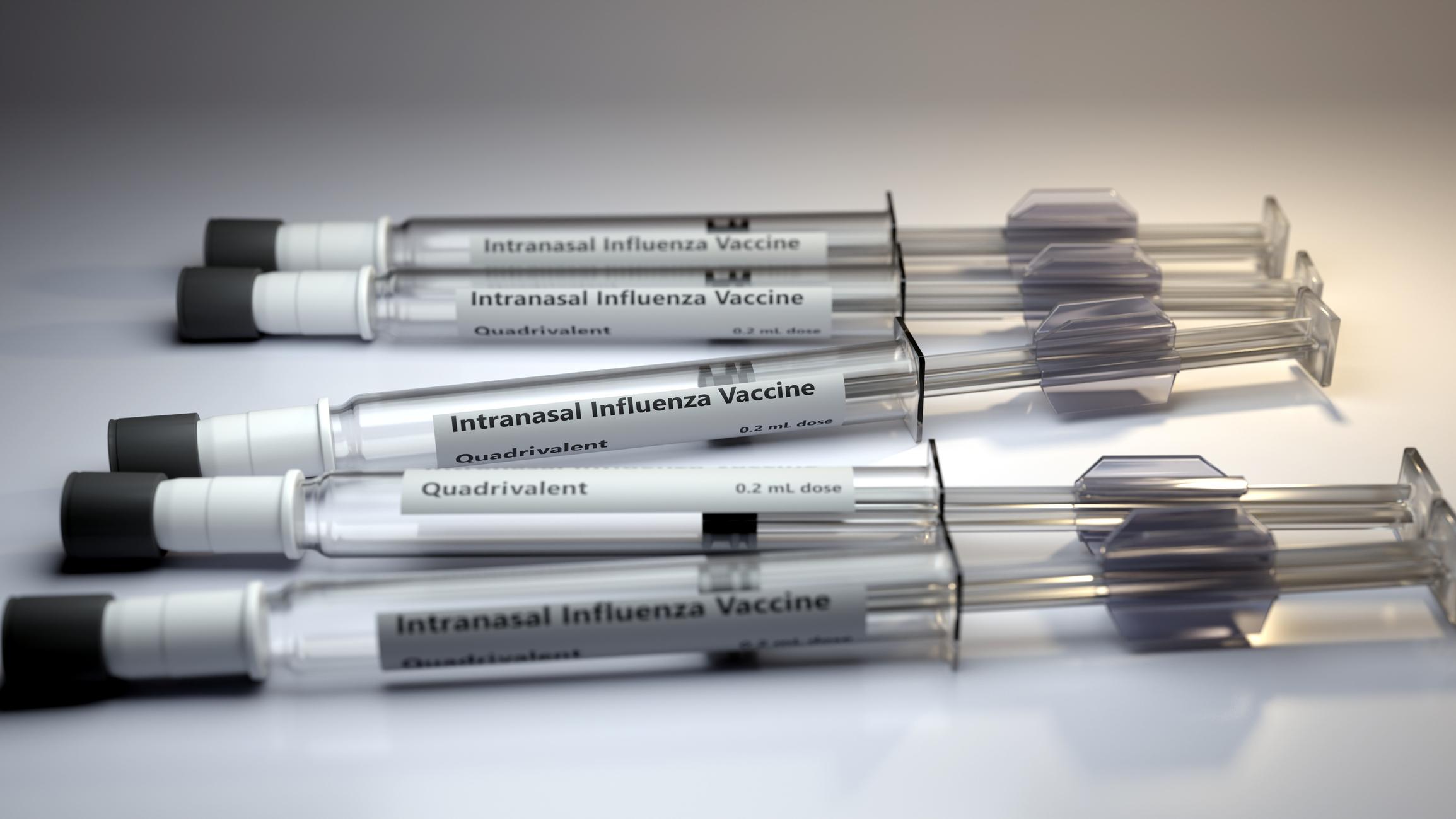
Mucosal vaccination itself is not new. Rotavirus vaccine is administered orally in routine U.S. vaccination, while the live attenuated influenza vaccine FluMist is administered intranasally and is approved for people two through 49 years of age. Oral vaccines are also available against diseases, including typhoid and cholera.2–5
More consequential for next-generation vaccine development is the deliberate use of route of administration to shape the location and character of the immune response. Mucosal vaccination offers the possibility of establishing defenses at pathogen-entry sites before infection becomes firmly established, while systemic immunity can continue to provide protection if a pathogen progresses beyond those initial barriers.6
This does not make mucosal administration inherently superior to injection, nor does it imply that injected vaccines produce no mucosal immunity. Rather, it expands the variables that can be considered when designing protection. Antigen and platform remain fundamental, but the anatomical distribution of the desired response can become part of the strategy as well.
Human studies now provide evidence that intranasal, inhaled, and oral vaccination can generate meaningful local responses. They also show that those responses can differ sharply among candidates. The central challenge is shifting from demonstrating that mucosal immunity can be induced to understanding which forms matter most, how they can be generated consistently, and when they translate into clinically meaningful protection.
Building Immunity at the Site of Exposure
The biological appeal of mucosal vaccination begins with the immune defenses concentrated at mucosal surfaces. These tissues form interfaces between the body and many pathogens and contain immune mechanisms that are not fully represented by measurements taken from blood.
sIgA is a central component of that local defense. Respiratory mucosal vaccination can generate sIgA alongside mucosal IgG and cellular immune responses. Because these antibodies are present at mucosal surfaces, they may encounter pathogens before extensive replication has taken place, creating an opportunity for earlier immune control.1
Local immunity also includes memory cells that remain within mucosal tissues. Tissue-resident memory lymphocytes can contribute to long-term protection following mucosal infection, providing immune cells already positioned within the relevant tissue when a pathogen returns. Tissue-resident memory T cells have been characterized more extensively than corresponding resident memory B cell populations, leaving important gaps in understanding how different forms of local immune memory contribute to protection.7
Mucosal vaccination can generate several types of local responses at once. In a phase I study of an inhaled adenovirus-vectored COVID-19 vaccine, investigators detected respiratory T cell, antibody, and trained innate immune responses following vaccination.8 Such findings broaden the immunological picture beyond serum antibody titers and underscore the potential importance of characterizing the response within the tissue itself.
A vaccine may ultimately generate systemic antibodies, local antibodies, cellular memory, and innate responses in different proportions. The most useful combination may depend on the pathogen, the tissue it infects, and the clinical outcome being targeted. The challenge is therefore not simply to maximize a single immune measurement but to identify and generate the responses most relevant to protection.
The Route Is Part of the Vaccine
“Mucosal vaccination” describes a biological strategy, but it encompasses several very different delivery environments. Intranasal, pulmonary, and oral vaccines may all seek to engage mucosal immunity, yet each route exposes the vaccine to distinct physical and biological constraints.
Intranasal vaccines must contend with mucus, mucociliary clearance, and the nasal epithelial barrier, all of which can affect how much antigen remains available and how long it can interact with relevant tissues.9 Where the administered material deposits within the nasal cavity also matters. Regional deposition determines the first point of contact between droplets or particles and the body, linking the route directly to formulation and delivery considerations.10
Oral vaccines face a different obstacle course. Vaccine material entering the gastrointestinal tract encounters gastric acidity, changing pH, proteolytic and digestive enzymes, mucus, and the intestinal epithelium. Oral formulations must also promote an active immune response rather than tolerance.11 These conditions create requirements that differ fundamentally from those of nasal delivery.
Pulmonary vaccination extends the same principle to another anatomical compartment. Inhaled aerosol delivery can target deeper regions of the respiratory tract rather than concentrating exposure in the nasal cavity. A 2025 phase I study delivered an adenovirus-vectored COVID-19 vaccine by inhaled aerosol and evaluated respiratory immunity directly, including through bronchoscopy.8
A nasal spray, an inhaled aerosol, and an oral tablet therefore do not represent interchangeable ways of delivering the same biological concept. Each route changes what the vaccine must survive, where it travels, and which tissues it encounters. Choosing a mucosal route is consequently part of choosing the biological environment in which the vaccine will have to function.
Human Evidence Shows Both Promise and Variability
Clinical development has moved mucosal vaccination beyond a largely mechanistic proposition. Human studies show that substantial local immune responses can be generated, including in people who have already received systemic vaccination. At the same time, the magnitude and character of those responses vary considerably.
A phase III comparison of the intranasal COVID-19 vaccine BBV154, marketed as iNCOVACC, and intramuscular Covaxin enrolled 3,160 adults, with 2,971 receiving the two-dose intranasal regimen. The intranasal vaccine generated higher salivary IgA than the injectable comparator while also meeting the predefined superiority criterion for serum neutralizing antibodies against the ancestral severe acute respiratory syndrome coronavirus 2 (SARS-CoV-2) strain.12 The result demonstrates that a mucosal route can support local immunity without excluding a substantial systemic response.
Other studies have shown how large local responses can become under some conditions. In 128 previously vaccinated healthcare workers, two intranasal doses of the adenovirus-vectored vaccine NB2155 produced a geometric mean fold increase in nasal spike-specific sIgA of 4.5 after the first dose and 51.5 after the second across the strains evaluated.13 The contrast between the first and second doses also suggests that regimen and prior immune history can shape the eventual response.
However, intranasal administration alone does not guarantee that outcome. A 2026 phase I study of NDV-HXP-S in 35 previously vaccinated adults reported only modest increases in salivary sIgA and variable exploratory immune responses. The study was small and not powered to establish statistical significance, but it provides a useful counterpoint to more dramatic immunogenicity findings.14
Evidence from inhaled vaccination adds another dimension. In a phase I study involving 32 healthy adults, an aerosolized chimpanzee adenovirus-vectored vaccine generated respiratory T cell, antibody, and trained innate immune responses after a single dose.8 Because this was an early-stage study focused primarily on safety, it cannot establish protection against infection or transmission. It does, however, reinforce the ability of mucosal delivery to engage multiple immune components in humans.
The clinical evidence is therefore most informative when viewed collectively rather than as a ranking of individual products. Mucosal administration can produce striking local responses, modest responses, or complex combinations of local and systemic immunity. The route creates the opportunity, but product design and vaccination regimen shape how that opportunity is realized.
Oral Vaccination Expands the Geography of Mucosal Immunity
Oral vaccination complicates any simple assumption that the best mucosal route must directly match the anatomical site where infection occurs. Human studies show that vaccination through the gastrointestinal tract can generate responses relevant to both gastrointestinal and respiratory pathogens.
A phase II human influenza challenge study evaluated an oral adenovirus type 5–based vaccine tablet and found protection against H1N1 viral challenge. Vaccine-induced cellular responses also correlated with protection from viral shedding.15 The study is particularly instructive because influenza is a respiratory infection, yet vaccination through the gastrointestinal tract generated responses associated with protection in a respiratory challenge model.
The finding does not eliminate the importance of anatomical targeting. It instead demonstrates that mucosal immune responses initiated at one site can have implications elsewhere. Administration site, measured immune response, and ultimate site of protection do not necessarily align in a simple one-to-one relationship, making route selection both more versatile and more biologically complex.
A 2025 phase II placebo-controlled norovirus challenge study provides another example. An oral vaccine generated mucosal immunity, protected against GI.1 challenge, and reduced viral shedding in stool and emesis. Antigen-specific IgA was detected in nasal lining fluid, saliva, and fecal samples, demonstrating measurable responses across several mucosal compartments following oral immunization.16
Oral vaccination can therefore engage mucosal immune pathways with effects that extend beyond the gastrointestinal tract. Realizing that potential still requires overcoming the route’s considerable formulation constraints, including acidity, enzymatic degradation, mucus, epithelial barriers, and the possibility of tolerance induction. 11
For developers, the broader lesson is that route should be selected according to the immune response a vaccine is intended to create rather than according to anatomical intuition alone.
Mucosal Boosting Could Complement Systemic Priming
One of the most consequential implications of the emerging clinical evidence is that mucosal vaccination does not necessarily have to replace established injectable vaccines. In some development strategies, systemic vaccination can establish one layer of immunity and a subsequent mucosal dose can add or strengthen responses at mucosal surfaces.
A phase III study evaluated aerosolized adenovirus type 5 (Ad5)-nCoV as a heterologous booster after two doses of an inactivated COVID-19 vaccine. At day 28, the geometric mean neutralizing antibody titer against the Omicron BA.4/5 variant was 107.7 after the aerosolized booster compared with 17.2 following another dose of the inactivated vaccine. The study also reported 35.1% relative protection against SARS-CoV-2 infection compared with the inactivated-vaccine booster.17
Other clinical programs have explored the same broad strategy. Participants in the NB2155 study had previously received two or three injected doses of inactivated vaccine before receiving intranasal vaccination.13 Participants in the inhaled aerosol study had already received at least three doses of messenger RNA (mRNA) vaccine.8
These approaches suggest a development model in which systemic and mucosal vaccination can play complementary roles. A priming regimen can establish circulating antibodies and systemic memory, while a mucosal booster is intended to strengthen defenses within exposed tissues. Intramuscular prime followed by mucosal boost has accordingly been identified as an important strategy for continued investigation.18
This model also expands the variables developers need to optimize. Prior immune exposure, route, timing, and booster sequence may all affect the combined response. The large increase in nasal sIgA after a second intranasal NB2155 dose and the responses observed after aerosol boosting illustrate how strongly vaccination history and regimen can influence mucosal immunogenicity.13,17
Immunogenicity Is Not the Same as Efficacy
As encouraging as many mucosal immunogenicity results are, generating a measurable local immune response does not establish that the response will prevent clinically meaningful infection. That distinction remains one of the central unresolved issues for the field.
A large randomized, double-blind, placebo-controlled phase III trial evaluated the intranasal dNS1-RBD COVID-19 vaccine across 33 sites in four countries. Overall efficacy against confirmed symptomatic infection caused by omicron variants was 28.2%, with a 95% confidence interval of 3.4% to 46.6%. Because the predefined success criterion required efficacy above 30%, the study did not meet that threshold.19
That result sits alongside other clinical studies reporting striking mucosal antibody responses and illustrates why immune markers cannot yet be assumed to function as universal surrogates for protection. The clinical significance of mucosal measurements, such as sIgA and IgG, remains incompletely defined, and the field still needs validated mucosal correlates of protection. Standardized assays and sampling protocols are also needed to make results more comparable across studies, along with harmonized approaches for evaluating effects on infection and transmission.18
Tissue-resident immune populations add another analytical challenge. Standardized methods for quantifying tissue-resident memory T and B cell responses in human mucosal tissues remain limited.7 A vaccine could therefore influence important forms of local immunity that are more difficult to sample and compare than conventional serum antibody responses.
Human challenge studies provide one way to connect immunological measurements with defined clinical outcomes. In the oral norovirus challenge study,16 serum functional blocking antibodies and fecal IgA were identified as correlates of protection within that study population and vaccine setting. Those specific correlates cannot be extrapolated automatically to another pathogen or platform, but the study illustrates the type of evidence needed to move from observing mucosal responses to determining which ones matter.
The next stage of development will require greater precision in defining success. For each pathogen and vaccine strategy, researchers need to determine which local responses contribute to protection, where those responses need to reside, how strong and durable they must be, and which measurements can track them reproducibly enough to guide clinical decisions.
Designing for Reproducible Mucosal Immunity
Once a desired mucosal response has been identified, the practical challenge is generating it consistently. Formulation, delivery, and analytical strategy consequently sit close to the core biological objective of a mucosal vaccine.
For intranasal products, regional deposition creates an immediate connection between formulation and device performance. The physical properties of the administered material and the behavior of the delivery system affect where droplets or particles travel within the nasal cavity and which tissues they first encounter.10 Candidates based on seemingly similar technologies can also differ in vector serotype, antigen sequence, formulation, and delivery device, any of which may contribute to differences in mucosal responses.18
Oral vaccination poses the same reproducibility requirement through a different set of constraints. The formulation must allow vaccine components to navigate or withstand gastrointestinal conditions sufficiently to reach relevant immune tissues and generate an active response. Gastric acidity, enzymes, mucus, epithelial barriers, and tolerance create several points at which the administered dose and the eventual immune exposure can diverge.11
Measurement presents a parallel challenge. A vaccine intended to generate local immunity cannot be characterized solely by conventional blood-based immunogenicity measures. Nasal secretions, saliva, respiratory samples, fecal material, and tissue-associated immune populations can provide information about mucosal responses, but these sample types introduce different collection and analytical requirements. Standardized mucosal assays and sampling protocols remain an identified development need.18
A promising immune mechanism becomes clinically useful only when a vaccine can generate the intended response consistently across doses and recipients and when that response can be measured well enough to establish its relationship to protection. The variability already observed across human studies suggests that mucosal vaccination will not have a single universal recipe. Successful development will depend on understanding which product and regimen variables are responsible for the immune responses that ultimately emerge.
Better Immunity Will Require Better-Defined Immunity
The field has moved beyond asking whether mucosal vaccination can generate local immunity in humans. The harder question is which local responses provide meaningful protection and how reliably developers can reproduce them.
Answering that question will require a more precise understanding of how local and systemic immunity interact, which immune components matter for individual pathogens, and how route and regimen can be used to generate the desired combination. The same precision will be needed in the assays used to measure those responses and in the clinical evidence used to determine whether they predict protection.
Antigen and platform will remain central to vaccine design, but they need not be the only dimensions considered deliberately. For pathogens that encounter the body through mucosal surfaces, the next generation of vaccines may be judged not only by how much immunity they generate, but by whether the right immunity is present where it is needed when exposure occurs.
References
1. Tang, Patrick Chun Hean, et al. “Combating Respiratory Diseases with Mucosal Vaccines.” Journal of Virology. 100: e0014626 (2026).
2. “Vaccine Administration: During Vaccination.” Centers for Disease Control and Prevention. 24 Jun. 2025.
3. “FluMist.” U.S. Food and Drug Administration. 28 Nov. 2025.
4. “Preventing Typhoid Fever and Paratyphoid Fever.” Centers for Disease Control and Prevention. 13 Jul. 2026.
5. “Cholera Vaccines.” Centers for Disease Control and Prevention. 15 May 2024.
6. Dotiwala, Farokh, and Arun K Upadhyay. “Next Generation Mucosal Vaccine Strategy for Respiratory Pathogens.” Vaccines. 11: 1585 (2023).
7. Longet, Stephanie, and Stephane Paul. “Pivotal Role of Tissue-Resident Memory Lymphocytes in the Control of Mucosal Infections: Can Mucosal Vaccination Induce Protective Tissue-Resident Memory T and B Cells?” Frontiers in Immunology. 14: 1216402 (2023).
8. Jeyanathan, Mangalakumari, et al. “Induction of Lung Mucosal Immunity by a Next-Generation Inhaled Aerosol COVID-19 Vaccine: An Open-Label, Multi-Arm Phase 1 Clinical Trial.” Nature Communications. 16: 6000 (2025).
9. He, XY, LK Cai and JS Yang. “[Research Progress on Nasal Mucosal Immunity and Intranasal Vaccines].” Zhonghua Yu Fang Yi Xue Za Zhi. 59: 390–396 (2025).
10. Chen, John, et al. “Characterizing Regional Drug Delivery within the Nasal Airways.” Expert Opinion on Drug Delivery. 21: 537–551 (2024).
11. Vela Ramirez, Julia E, Lindsey A Sharpe and Nicholas A Peppas. “Current State and Challenges in Developing Oral Vaccines.” Advanced Drug Delivery Reviews. 114: 116–131 (2017).
12. Singh, Chandramani, et al. “Phase III Pivotal Comparative Clinical Trial of Intranasal (iNCOVACC) and Intramuscular COVID 19 Vaccine (Covaxin®).” npj Vaccines. 8: 125 (2023).
13. Sun, Baoqing, et al. “An Intranasally Administered Adenovirus-Vectored SARS-CoV-2 Vaccine Induces Robust Mucosal Secretory IgA.” JCI Insight. 9: e180784 (2024).
14. Liu, Sean TH, et al. “Phase 1 Trial of Intranasal NDV-HXP-S in Previously Vaccinated Adults.” Vaccine. 89: 128870 (2026).
15. McIlwain, David R, et al. “Human Influenza Virus Challenge Identifies Cellular Correlates of Protection for Oral Vaccination.” Cell Host & Microbe. 29: 1828–1837.e5 (2021).
16. Flitter, Becca A, et al. “An Oral Norovirus Vaccine Generates Mucosal Immunity and Reduces Viral Shedding in a Phase 2 Placebo-Controlled Challenge Study.” Science Translational Medicine. 17: eadh9906 (2025).
17. Li, Jing-Xin, et al. “Safety, Immunogenicity and Protection of Heterologous Boost with an Aerosolised Ad5-nCoV after Two-Dose Inactivated COVID-19 Vaccines in Adults: A Multicentre, Open-Label Phase 3 Trial.” The Lancet Infectious Diseases. 23: 1143–1152 (2023).
18. Knisely, Jane M, et al. “Mucosal Vaccines for SARS-CoV-2: Scientific Gaps and Opportunities—Workshop Report.” npj Vaccines. 8: 53 (2023).
19. Zhu, Fengcai, et al. “Safety and Efficacy of the Intranasal Spray SARS-CoV-2 Vaccine dNS1-RBD: A Multicentre, Randomised, Double-Blind, Placebo-Controlled, Phase 3 Trial.” The Lancet Respiratory Medicine. 11: 1075–1088 (2023).