Key Takeaways
Large-scale stainless-steel bioreactors remain important for high-volume commercial biologics, even as single-use systems expand further into commercial manufacturing.
Higher titers and process intensification can increase productive capacity without proportional increases in installed bioreactor volume.
Capacity utilization, demand uncertainty, and capital timing increasingly shape whether large, fixed assets or more flexible manufacturing networks offer the stronger economic fit.
Single-use bioreactors are reaching larger commercial scales, but recurring consumables costs, supply dependencies, and process requirements complicate simple comparisons with stainless steel.
Future biologics manufacturing capacity is likely to rely on a mix of large stainless-steel facilities, commercial-scale single-use systems, intensified processes, and hybrid networks rather than a single dominant model.
The Capacity Race Is Still Very Much Alive
Biologics manufacturers are sending seemingly contradictory signals about the future of capacity. Some of the industry’s largest players continue to build facilities around enormous bioreactors and very large aggregate capacity, while others are extending single-use manufacturing further into commercial production.
FUJIFILM Biotechnologies opened the first phase of its Holly Springs, North Carolina, facility with eight stainless-steel 20,000-L mammalian cell culture bioreactors and plans to add another eight at the same scale.1,2 Samsung Biologics is pursuing a similarly ambitious expansion in aggregate capacity. Plant 5, with 180,000 L of capacity, is operational, and the company’s Bio Campus II plans call for four 180,000-L plants totaling 720,000 L by 2032.3 Lonza likewise operates large-scale assets, including approximately 330,000 L of capacity at Vacaville in 12,000-L and 25,000-L bioreactors.4
Despite these large-scale expansions, substantial investment is also moving in another direction. AGC Biologics plans to operate four 2,000-L and two 5,000-L single-use bioreactors at its Yokohama site, where a customer has already committed commercial biologics programs before the facility opens.5 Lonza’s own network spans both approaches, with single-use systems up to 2,000 L alongside stainless-steel bioreactors ranging from 6,000 L to 25,000 L.6
If the bioreactor arms race is understood simply as a competition to install more vessel volume, it clearly has not stopped. The more consequential change is that installed liters are becoming a less complete measure of manufacturing strength.
Installed Liters Are Becoming a Less Complete Measure of Capacity
Nominal reactor volume describes the physical scale of a manufacturing network, but it does not by itself describe how much product that network can make. As process productivity improves, the relationship between installed liters and actual output becomes less direct.
Roche’s manufacturing analysis illustrates the effect within one large biologics portfolio. The company reported average titers rising from 1.5 g/L for products in the 2000–2015 period to 3.0 g/L for 2015–2025 and projected an average of 4.8 g/L for 2025–2035. Over the same periods, average demand expressed as manufacturing runs declined from 87 to 32, with a projected 31 for 2025–2035. Roche also projected an overall fivefold productivity improvement from 2000 to 2030 through higher-yielding cell lines, improved media, and perfusion technology, alongside a portfolio shift toward smaller-volume products.7
Those figures are specific to Roche and include forward-looking assumptions, but the underlying principle is supported experimentally. In a concentrated fed-batch study using two cell lines, process intensification increased output by 105% for one cell line and 70% for the other without increasing reactor volume.8
A 2,000-L reactor running a substantially more productive process does not provide the same manufacturing capability as a 2,000-L reactor operating with a less productive process. As titers rise and processes intensify, productive capacity can increase without a proportional increase in volumetric capacity.
Installed liters are therefore becoming less useful as a standalone competitive metric. Capacity increasingly has to be considered in terms of what a facility can actually produce rather than simply the volume of its bioreactors.
Productivity Can Reduce the Need for Scale Without Eliminating It
Productivity gains can defer the need for additional reactor volume, but they do not make physical scale irrelevant when demand becomes sufficiently large.
The same concentrated fed-batch study that demonstrated 70–105% increases in output projected the intensified process into a 2,000-L facility and compared it with traditional fed-batch production at 15,000 L. Despite substantial gains in productivity, output from the intensified 2,000-L facility remained below that of the much larger conventional facility. The intensified process also introduced operational complications associated with high cell mass.8
Roche reaches a compatible conclusion from a portfolio-planning perspective. Even while projecting higher titers, greater productivity, and smaller average manufacturing requirements, the company anticipates continuing to need both 2,000-L production and large-volume manufacturing in 12,000-L reactors.7
Process improvement can move the threshold at which additional physical capacity becomes necessary. It cannot guarantee that the threshold disappears.
Utilization May Matter More Than Maximum Scale
Once productive capacity is separated from nominal reactor volume, utilization becomes central to the economics of scale.
Capacity-planning research examining multiple products, facilities, and batch and perfusion processes has shown that decisions about when to expand capacity depend on projected demand, process characteristics, and utilization across the manufacturing network. The modeling specifically used utilization to identify when additional capacity should be considered.9
A very large facility can be highly attractive when demand is sufficient to keep its assets productively occupied. The calculation changes when future requirements are less certain. Underutilized capacity still carries the cost of the capital committed to create it.
An analysis comparing stainless-steel and hybrid disposable facility configurations illustrates why cost of goods alone does not capture that problem. In a modeled case designed around approximately 450 kg of monoclonal antibody (mAb) production and 6,000 L of installed capacity, the economic ranking changed when capital timing and project risk were incorporated into return on investment and net present value calculations. The modeled hybrid facilities required capital spending over three years rather than four and reached break-even approximately 2–2.5 years earlier than the stainless-steel configuration.10
Those values come from a specific 2011 model and are not current industry benchmarks. The broader implication is more durable: capacity that can be deployed incrementally can carry a different financial risk than capacity that must be committed well ahead of proven demand.
More recent modeling of end-to-end continuous mAb manufacturing reinforces the importance of uncertainty. In a multiproduct facility producing clinical and commercial lots, the modeled continuous process reduced annual production costs by up to 23% and facility footprint by up to 51% relative to an optimized fed-batch comparator, with greater modeled advantages when demand fluctuated.11
The economics of future capacity growth therefore depend not only on maximum output but on how effectively that capacity can remain occupied as product requirements change.
Single-Use Is Moving Deeper Into Commercial Manufacturing
Single-use technology offers another way to align capacity with changing demand, and the scale available from disposable systems is expanding.
Commercial single-use bioreactors are now available at 5,000 L.12 AGC Biologics plans to install two systems at that scale alongside four 2,000-L single-use bioreactors at its Yokohama facility. The site is intended for commercial biologics manufacturing, and an undisclosed customer has committed five commercial biologics programs while securing half of the site’s mammalian capacity.5
The importance of that development lies in widening the range of commercial manufacturing requirements that can be addressed without very large permanent infrastructure. Single-use manufacturing can no longer be treated solely as an early-development or low-volume option when commercial programs are being assigned to 2,000-L and 5,000-L disposable systems.
Commercial stage does not itself necessarily dictate a move to stainless steel. The decision increasingly depends on product demand, utilization, portfolio complexity, process productivity, and the value assigned to redirecting capacity among programs.
Larger single-use systems do not erase the distinction between a 5,000-L disposable reactor and a 20,000-L or 25,000-L stainless-steel vessel. Instead, they narrow the range of commercial requirements for which very large permanent infrastructure is the only practical scale solution.
Flexibility Is Valuable, but It Is Not Free
The appeal of single-use capacity extends beyond vessel size. Current analysis identifies faster changeovers, greater operational flexibility, and reduced cross-contamination risk among the advantages associated with single-use technology.13
Those benefits have economic value in a multiproduct environment, but they come with recurring costs and supply dependencies. A 2024 industry survey found substantial dissatisfaction with the cost of single-use systems: more than 60% of respondents were dissatisfied with cost, and 32.3% identified it as the leading area requiring supplier attention.14
Reliance on disposable components can also create exposure to the availability of bags, filters, tubing, and related materials. That vulnerability became visible during the COVID-19 pandemic, when more than 80% of respondents to a 2021 survey reported critical shortages of manufacturing consumables, including filters, single-use bags, tubing, and raw materials.15 The finding reflects an exceptional historical disruption rather than current supply conditions, but it shows how flexibility at the facility level can introduce dependencies elsewhere in the manufacturing system.
The value of flexibility has to be weighed against the recurring costs and supply dependencies that accompany it. Capital timing, consumables, utilization, changeovers, and supply exposure all enter the calculation. A manufacturer supporting one exceptionally large and predictable product consequently faces a different capacity problem from a multiproduct operation balancing programs with varied commercial requirements.
Process Intensification May Be the More Important Disruption
Single-use versus stainless steel is only one layer of the capacity decision. Process intensification can change not only the reactor volume required but also the economics, footprint, and operational characteristics of the facility built around it.
Studies comparing fed-batch, perfusion, and continuous strategies show that process architecture can materially alter manufacturing economics and facility requirements. In one economic comparison, an alternating tangential flow perfusion process offered a potential 20% cost-of-goods reduction relative to conventional fed-batch when a fivefold increase in maximum viable cell density was assumed. Savings were also found at a threefold increase across most of the combinations evaluated. The same analysis identified greater modeled robustness for fed-batch, showing that productivity and operating simplicity do not necessarily improve together.16
Continuous manufacturing can extend those effects across more of the process. Economic reviews have identified higher productivity, smaller footprints, flexibility, and potential capital and operating advantages among the benefits available from continuous biopharmaceutical manufacturing.17 Modeling across clinical and commercial antibody production has also found that the preferred manufacturing strategy can differ by development stage, company size, portfolio, and the weighting assigned to cost versus operational feasibility.18
The most recent end-to-end analysis strengthens the connection to capacity planning. Its modeled continuous process reduced facility footprint by up to 51% relative to an optimized fed-batch comparator, illustrating how process architecture can change the physical infrastructure required to support a manufacturing portfolio.11
The reactor decision can therefore become partly an output of process development rather than its starting point. The gains available from greater productivity still have to be weighed against process complexity, robustness, and operational feasibility.
Large Stainless-Steel Facilities Still Have a Strong Case
The forces favoring more productive and flexible capacity do not amount to an argument against large stainless-steel manufacturing.
The concentrated fed-batch comparison makes the reason especially clear: even after substantial process intensification, a modeled 2,000-L facility still produced less than a 15,000-L conventional facility.8 For sufficiently high commercial requirements, physical scale can solve a production problem that productivity improvements alone do not necessarily eliminate.
Current investment reflects that continued need. FUJIFILM is deploying 20,000-L stainless-steel bioreactors at Holly Springs and plans a second set of eight reactors at the same scale.1 Lonza’s mammalian network includes stainless-steel bioreactors extending to 25,000 L, and Roche expects continued need for 12,000-L large-volume production despite projected productivity improvements.6,7
Large scale also does not necessarily imply a monolithic facility architecture. FUJIFILM organizes its 20,000-L stainless-steel reactors into modular four-bioreactor manufacturing units.2
Modularity concerns how capacity is organized and expanded. Single-use concerns the equipment and fluid-contact technologies used within the process. A large stainless-steel campus can therefore be modular, while a facility built around disposable systems still depends on how intelligently its capacity is configured and utilized.
The future contest is less likely to pit a “mega-facility model” against a “modular model.” Those characteristics can coexist within the same manufacturing strategy.
Sustainability Does Not Produce a Simple Winner
Environmental performance adds another variable, but it does not provide a straightforward answer to the stainless-steel versus single-use question.
An assessment of a 2,000-L single-use drug substance process found that electricity used to operate the manufacturing plant contributed more to overall life-cycle environmental impact than disposal of the plastic components themselves. The end-of-life contribution from single-use plastics was extremely small across the impact categories evaluated.19
More recent analysis has complicated the assumption that single-use systems therefore carry an inherent sustainability advantage. A 2026 bottom-up study using two real-world 2,000-L facility cases found a higher carbon footprint associated with single-use technologies than earlier estimates had suggested and identified filters and bags as important emissions hotspots. Comparisons of selected interchangeable process steps also found that stainless-steel configurations can have lower carbon footprints than their single-use counterparts as electricity grids become less carbon intensive. The same work found that an optimized hybrid design combining stainless-steel and single-use technologies could reduce plastic waste and associated emissions.13
The environmental comparison, like the economic one, depends on the architecture of the complete process.
Matching Architecture to the Capacity Problem
The evidence increasingly supports a portfolio approach to manufacturing architecture rather than convergence on one dominant model.
High and predictable demand can continue to justify very large reactor capacity. Large single-use systems expand the commercial range that can be addressed with disposable technology. Higher titers and intensified processing can reduce the volumetric capacity required for some products. Multiproduct environments increase the importance of utilization, changeovers, and the ability to redirect assets as requirements change. Hybrid configurations allow manufacturers to combine permanent and disposable technologies instead of forcing every process into one platform.
Existing networks already reflect this diversity. Lonza operates single-use systems up to 2,000 L alongside stainless-steel bioreactors ranging from 6,000 L to 25,000 L.6 Its recent investments include both 2,000-L expansion in Portsmouth and the ramp-up of a 20,000-L asset in Visp.4 Roche similarly expects to retain both 2,000-L and 12,000-L production as its portfolio and process productivity evolve.7
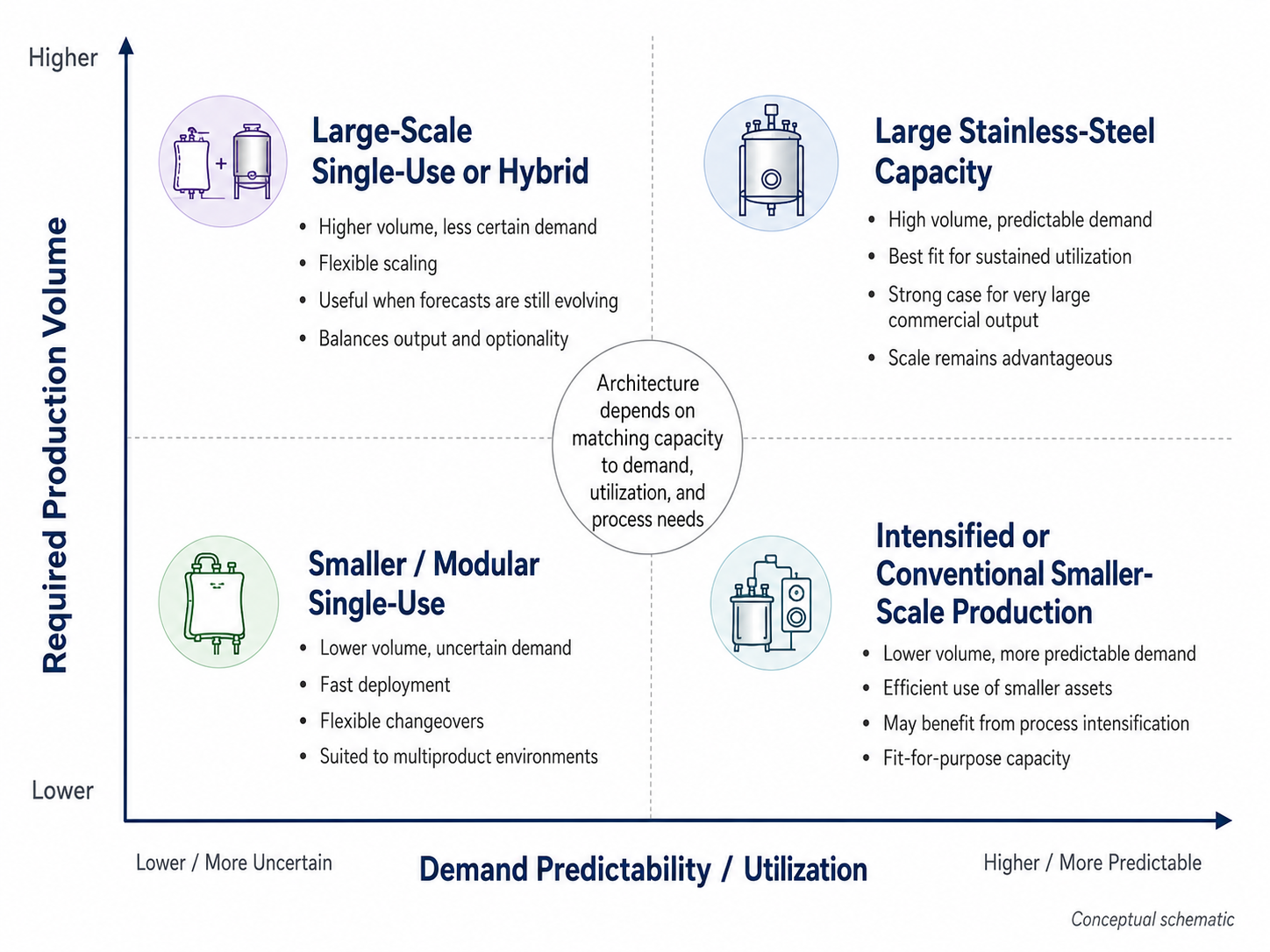 Figure 1. Capacity Architecture Decision Map
The competitive advantage in such a landscape is increasingly one of optionality: the ability to match capacity architecture to product requirements and to adjust that match as demand, process productivity, and portfolios evolve.
For one program, that may mean highly utilized large-scale stainless steel. For another, it may mean commercial-scale single-use production. A third may become viable at smaller scale because process intensification reduces its volumetric requirements. Across a portfolio, a manufacturing network that can accommodate all three has more ways to respond without forcing fundamentally different products into the same capacity model.
The Next Arms Race Is for the Right Capacity
The bioreactor arms race is not over because the industry has stopped building large facilities. Manufacturers continue to commission enormous stainless-steel assets even as other companies push single-use systems into larger commercial applications.1,3,5
Higher titers, intensified and continuous processes, larger single-use systems, and more sophisticated capacity planning have changed what those installed liters can accomplish and how valuable they are. Very large reactors still have a clear role when commercial requirements justify them, but the ability to build the most volume is becoming less informative than the ability to deploy the right type of capacity for a particular product and portfolio.
Future biologics manufacturing is therefore likely to remain heterogeneous, with large stainless-steel reactors where volume warrants them, single-use systems where flexibility carries greater value, intensified processes where productivity can reduce physical requirements, and hybrid networks that combine those approaches.
The next capacity race will be decided less by who can install the most liters than by who can make the best use of the liters they have.
References
1. “FUJIFILM Biotechnologies Celebrates the Grand Opening of its Commercial-Scale Cell Culture Manufacturing Site in North Carolina.” FUJIFILM Biotechnologies. 24 Sep. 2025.
2. “Scale Up for Large Scale Manufacturing.” FUJIFILM Biotechnologies. Accessed 20 Aug. 2026.
3. “Bio Campus II.” Samsung Biologics. Accessed 20 Aug. 2026.
4. “Integrated Biologics.” Lonza Annual Report 2025. 1 Apr. 2026.
5. “AGC Biologics Lands Commercial Manufacturing Agreement for Yokohama Site Worth Hundreds of Millions of Dollars.” AGC Biologics. 28 Jul. 2026.
6. “Mammalian Drug Substance Manufacturing.” Lonza. Accessed 20 Aug. 2026.
7. “Roche’s First Quarter Sales 2024 Presentation.” Roche. 24 Apr. 2024.
8. Yang, William C, et al. “Concentrated Fed-Batch Cell Culture Increases Manufacturing Capacity Without Additional Volumetric Capacity.” Journal of Biotechnology. 217: 1–11 (2016).
9. Siganporia, Cyrus C, et al. “Capacity Planning for Batch and Perfusion Bioprocesses Across Multiple Biopharmaceutical Facilities.” Biotechnology Progress. 30: 594–606 (2014).
10. Sinclair, Andrew, and Miriam Monge. “Monoclonal Antibody Manufacturing: Cost Benefits of Hybrid Disposable Systems.” BioProcess International. 9: 12–17 (2011).
11. Partopour, Behnam, and David Pollard. “Advancing Biopharmaceutical Manufacturing: Economic and Sustainability Assessment of End-to-End Continuous Production of Monoclonal Antibodies.” Trends in Biotechnology. 43: 462–475 (2025).
12. “DynaDrive™ Single-Use Bioreactor, 240 V.” Thermo Fisher Scientific. Accessed 20 Aug. 2026.
13. Reiners, Jan, et al. “Revisiting the Carbon Footprint of Single-Use Technologies in Biomanufacturing: A Bottom-Up Analysis Reveals a Paradigm Shift.” Biotechnology and Bioengineering. 5 Jul. 2026. https://pubmed.ncbi.nlm.nih.gov/42402159/
14. Deni, Ioanna. “Report: Single-use Bioreactor Uptake Plateaued, Other SUT On The Rise.” BioProcess Online. 12 Aug. 2024.
15. Baker, Denyse. “COVID-19 Related Shortages of Manufacturing Components — There is a Way Through!” PDA Letter. 25 Aug. 2021.
16. Pollock, James, Sa V Ho, and Suzanne S Farid. “Fed-Batch and Perfusion Culture Processes: Economic, Environmental, and Operational Feasibility Under Uncertainty.” Biotechnology and Bioengineering. 110: 206–219 (2013).
17. Yang, Ou, Maen Qadan, and Marianthi Ierapetritou. “Economic Analysis of Batch and Continuous Biopharmaceutical Antibody Production: A Review.” Journal of Pharmaceutical Innovation. 15: 182–200 (2020).
18. Pollock, James, et al. “Integrated Continuous Bioprocessing: Economic, Operational, and Environmental Feasibility for Clinical and Commercial Antibody Manufacture.” Biotechnology Progress. 33: 854–866 (2017).
19. Budzinski, Kristi, et al. “Streamlined Life Cycle Assessment of Single Use Technologies in Biopharmaceutical Manufacture.” New Biotechnology. 68: 28–36 (2022).