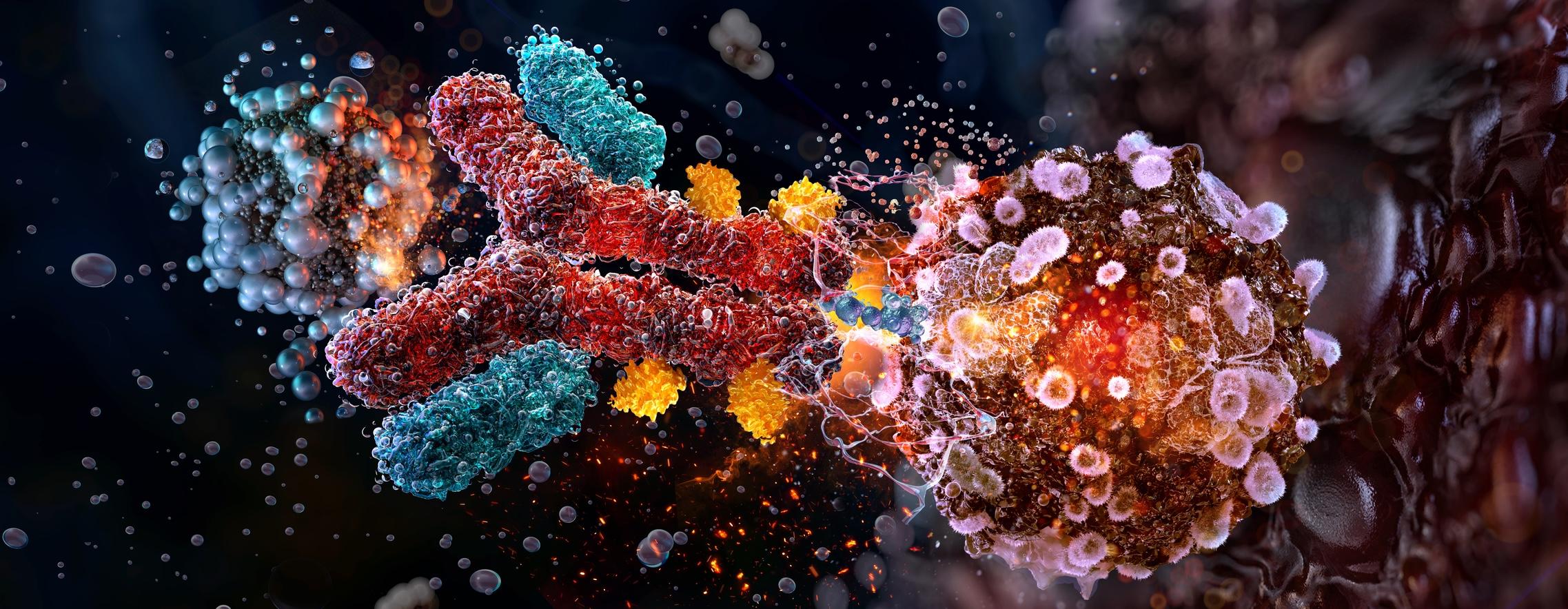
Macrophage checkpoint biology is opening new possibilities for cancer immunotherapy by targeting the signals tumors use to evade phagocytosis. Pheast Therapeutics is advancing this approach through PHST001, an anti-CD24 antibody designed to activate macrophage-mediated tumor clearance while addressing the safety and therapeutic-window limitations associated with earlier CD47 programs. In this Q&A, Pheast Therapeutics Co-Founder and Chief Executive Officer Roy Maute, Ph.D., discusses the scientific rationale behind CD24, the lessons carried forward from Forty Seven, the company’s clinical and combination strategy, and the broader potential of macrophage-directed therapies, with Pharma’s Almanac Editor in Chief David Alvaro, Ph.D.
David Alvaro (DA): Can you briefly trace the scientific and professional path that led you to your current focus on macrophage checkpoint biology?
Roy Maute (RM): I have always been passionate about science and biology, and I was drawn to genetics because genes are at the root of everything a cell does. In graduate school, I focused on cancer genetics, particularly the genetic changes that drive B cell leukemia and lymphoma. When I began my postdoctoral work in Irv Weissman’s lab at Stanford, the initial plan was to study cancer stem cell phenotypes using genetic screens. However, the field was shifting rapidly toward immunotherapy, and many people in the lab had begun focusing on the interactions between macrophages and cancer. That direction also connected with findings from the lab where I did my graduate work showing that some of the most common alterations in diffuse large B cell lymphoma affect molecules involved in immune interactions. I became interested in the signals that regulate whether the immune system recognizes and attacks cancer, and that has really defined my path ever since.
DA: Can you walk us through the journey from your postdoctoral work through the founding of Pheast Therapeutics?
RM: It was not a straight line. In the Weissman lab, the key macrophage checkpoint pathway was the CD47–SIRPα axis. That work grew out of the lab’s long-standing interest in hematopoietic stem cells and the question of how those cells protect themselves from macrophage attacks when they enter the bloodstream. CD47 functions as a foundational “don’t eat me” signal, and cancers can co-opt that mechanism. By the time I arrived, the lab was already thinking seriously about how to target the pathway therapeutically. My own work focused on identifying additional signals with overlapping functions through genetic screening.
At the same time, I worked with colleagues on differentiated molecules against the PD-1/PD-L1 pathway. That collaboration led us to form Ab Initio Biotherapeutics, a bootstrapped startup initially focused on those molecules and on antibody-discovery technologies. The platform ultimately attracted more interest than the therapeutic program, particularly for discovering antibodies against G-protein–coupled receptors. We partnered with Pfizer and eventually sold the company for its technology.
After that, I reconnected with colleagues who had formed the immuno-oncology biotech Forty Seven and advanced magrolimab — an anti-CD47 monoclonal antibody designed to block the “don’t eat me” signal used by cancer cells — into the clinic. The company had already completed monotherapy dose escalation and was evaluating magrolimab across several indications. About six to nine months after I joined, the team identified a promising clinical signal that became central to Gilead’s acquisition roughly a year later. That experience gave me direct exposure to both the promise and the limitations of macrophage checkpoint therapy, and those lessons became foundational for Pheast.
DA: Why did CD47 make sense as the first macrophage checkpoint target, and what did you learn from that clinical development program?
RM: When a field enters a new biological space, the first target is rarely the final or optimal answer. CD47 nevertheless made complete sense as the first attempt because it is a foundational signal that macrophages use to distinguish self from non-self. That is both its strength and its weakness. Nearly every cancer can exploit the pathway, but CD47 is also expressed broadly on healthy tissues, especially red blood cells and platelets. That expression pattern sharply limits the modalities and effector functions that can be used safely.
The Forty Seven team therefore pursued a relatively pure checkpoint-blocking approach with an IgG4 antibody. A more active IgG1-like molecule could cause immediate anemia and thrombocytopenia by directing immune activity against healthy blood cells. The rationale was that blocking CD47 might generate enough activity on its own or could be paired with another agent that supplied the complementary pro-phagocytic signal.
Early clinical data showed responses that appeared more frequent and deeper than expected, which justified moving rapidly into broader development. However, in phase III trials, the program ultimately did not achieve the necessary therapeutic window: the clinical benefit was not sufficient to overcome the toxicity signals. I still believe in the underlying biology, but the experience demonstrated that target expression, modality, and combination strategy are inseparable. When we formed Pheast, we expected CD47 drugs to succeed and focused on differentiation. As the landscape changed, that same focus proved valuable because CD24 offered a way to preserve the macrophage biology while addressing some of CD47’s limitations.
DA: What made CD24 stand out as a more differentiated target?
RM: My Pheast co-founder Amira Barkal discovered CD24 through a genetic screening approach while completing her M.D./Ph.D. studies in the Weissman lab. I was no longer in the lab when she made the discovery, but I had helped train her on some of the techniques and saw the story after it had matured substantially. Even while I was deeply invested in CD47 and SIRPα, I was immediately struck by CD24’s potential differentiation.
The most important distinction is its expression pattern. CD47 is expressed almost everywhere, and cancers may express two or four times more of it than normal cells. CD24 is not expressed ubiquitously. It is present in selected normal tissues, but some cancers express it at levels up to roughly 200-fold higher. Even before considering macrophage biology, that degree of tumor-associated expression tells you the target is likely to matter. It is especially prominent in solid tumors, and its expression can be associated with aggressive disease and poor outcomes.
Whether you begin from the cancer side or the macrophage side, the conclusion is the same: CD24 belongs in the company of important therapeutic targets. The difficult part is not deciding that the target matters; it is determining how best to drug it. That has been Pheast’s focus from the beginning.
DA: Was Pheast formed specifically around CD24, or around a broader macrophage-focused discovery strategy?
RM: Pheast was formed around CD24 as the lead target, with discovery capabilities built in as a clear avenue for expansion. To me, the ideal company has a focused first program and a direct path to the clinic, but also the ability to conduct new science and generate additional programs. We designed Pheast to have both.
The timing also helped. Forty Seven’s acquisition and other investments in macrophage-targeted therapies created strong interest in the space. We could present a very clear story: the founding group included world experts in macrophage biology, CD24 represented the next compelling target, and it was similar enough to validated biology to be understandable but different enough to offer meaningful advantages. We remained prepared to change course if the early science contradicted the hypothesis, but at every stage the data reconfirmed that CD24 was a strong target for drug development.
DA: You joined Pheast as Chief Scientific Officer. How did you ultimately move into the CEO role?
RM: My identity is still fundamentally that of a scientist. My original dream job was to be CSO of a small company pursuing science that I found genuinely exciting. I have always loved the startup environment: a lean team of people aligned around a common scientific goal.
Pheast began with an unusually strong founding group. Amira brought deep expertise as the discoverer of CD24’s macrophage biology. I had company-building experience, knowledge of the science, and direct experience with clinical development of a related target. We also had very senior scientific founders. What we initially lacked was an experienced CEO who could manage fundraising and guide the company toward the clinic. Because the first stage of the company was predominantly scientific, I stepped in as CSO while we raised our Series A and began searching for a long-term CEO.
The search produced good candidates, but none that seemed to be the right fit. Meanwhile, the company kept advancing: we reached the IND, developed the clinical plan, and moved into the clinic. At that point, the board recognized that the company was being run effectively and asked me to take the CEO role. Pheast had become my baby, and I was happy to do whatever the company needed. I also discovered that I enjoyed translating complex science for broader audiences, raising capital, and leading the organization. Those responsibilities felt like a natural extension of running a scientific team, even though the science and clinical progress remain the parts of the job that energize me most.
DA: How has Pheast’s culture changed as the company has grown and entered the clinic?
RM: Clinical development inevitably changes the center of gravity because there is nothing more meaningful than seeing even a glimmer of benefit in patients with life-threatening disease. The clinic becomes the focal point of resources and attention. But my experience at Forty Seven also showed me that a company can progress clinically without losing its scientific roots. Even later in its development, the research team remained the heart and soul of that company.
We have tried to preserve that at Pheast. As we built the clinical organization, we were deliberate about hiring people who value close interaction with the research team. Our Chief Medical Officer, for example, is not only an accomplished clinician but also a scientist at heart who actively engages with the laboratory team. That exchange improves both execution and culture.
We also made a deliberate decision about a year and a half ago to remain as lean as possible. In 2022, I might have expected Pheast to have 75 or more employees by mid-2026. Instead, we have approximately 35. That decision was financially prudent, but it also means the scientific core remains a larger share of the organization. Many non-research employees work remotely, while the research team is predominantly in the laboratory, so the physical environment still feels like an earlier-stage company. I believe that scientific intensity benefits not only discovery but also how we approach clinical development and company building.
DA: What makes CD24 challenging to drug, and how did those challenges shape PHST001?
RM: CD24 is an unusual target. It is a very small peptide with little folded structure and is heavily glycosylated; approximately half of its amino acids are potential glycosylation sites. Its interaction with inhibitory receptors such as Siglec-10 depends on those glycosylation patterns, but the structural details are still not fully understood. That creates uncertainty about where an antibody must bind to block the pathway effectively. There is also very little protein “real estate” for a conventional peptide-binding antibody. Some existing antibodies bound the peptide with unclear functional consequences, while others recognized glycosylation groups that were not necessarily unique to CD24.
We therefore expected the first phase of discovery to be unusually broad and empirical. We screened many binding modes and allowed the data to guide us where structural understanding was incomplete. We also applied lessons from CD47. Macrophage activation can produce toxicity, particularly in peripheral blood cells. CD24 is not expressed on red blood cells or platelets, which removes major CD47 liabilities, but it is present on neutrophils and B cells. We had to determine how strongly we could activate macrophages while preserving an adequate safety margin.
Although the industry often prioritizes monotherapy potency, we believed long-term development would depend first on safety. We selected an IgG4 antibody designed primarily to block the pathway rather than aggressively recruit immune effector function. Because CD24 is expressed at extraordinarily high levels on many cancer cells, even an IgG4 can cluster densely enough to produce meaningful activity. We intentionally did not pursue more aggressive options such as an IgG1, T cell engager, or ADC (antibody–drug conjugate) against CD24 because those modalities could attack normal CD24+ blood cells before reaching an effective tumor dose. PHST001 was designed to create a differentiated therapeutic window rather than simply maximize preclinical potency.
DA: Another company reached the clinic with a CD24 antibody first. How did you view that competition?
RM: I was not surprised or especially concerned. A target with no commercial competition is often a target that other people do not believe in. The competitor chose a high-effector-function antibody and appeared to optimize for monotherapy activity. Based on our understanding of CD24 expression, we expected that approach to encounter dose-limiting toxicity in peripheral cells before achieving meaningful efficacy, and that appears to be what happened.
Being first would have provided useful bragging rights, but we were confident in our scientific rationale and did not believe the clinical gap would be large. The competitor’s difficulties are a double-edged sword. It leaves PHST001 with a clearer opportunity to establish the pathway, but it also means our data must carry more of the burden of validating CD24. In general, we welcome credible activity elsewhere in macrophage biology because success across the field helps establish the broader therapeutic paradigm.
DA: How did you approach indication prioritization for PHST001?
RM: Indication strategy is still evolving as we learn more from the clinic and as the treatment landscape changes. An inflexible plan created when dosing the first patient would already be outdated. Fortunately, CD24 biology provides strong direction. Some diseases can be excluded because CD24 is not expressed or is not biologically relevant. At the other end of the spectrum, ovarian cancer has been a clear priority because CD24 is highly expressed in most patients, is substantially elevated relative to the normal tissue of origin, and is sometimes driven by focal genetic amplification. High CD24 expression is also associated with poorer outcomes across multiple treatment settings. Together, those observations create a strong biological case.
Even among well-supported indications, a small company cannot pursue everything at once. Our phase Ia dose escalation therefore began with safety and flexibility as the priorities. We allowed patients with a range of solid tumor types to enroll because CD24 could be relevant in a large proportion of them, while encouraging sites to identify tumor types most strongly supported by the biology. We did not require only the highest CD24 expressors in ovarian cancer because our preclinical work suggested that once expression exceeds a threshold, other biological factors may become more important. The clinical data generated so far support that decision.
As we moved into phase Ib, the studies became indication-specific and were informed by tumor biology, preclinical efficacy, emerging clinical data, and the competitive landscape. Ovarian cancer remains central, and PHST001 has received FDA Fast Track designation in that indication. We see scientific support, substantial unmet need, and viable combination opportunities. We will not abandon a well-supported indication simply because development is competitive, but commercial and competitive considerations will become more influential as we evaluate additional indications where the scientific signal is less definitive.
DA: Was combination therapy always part of the strategy, or did it emerge after seeing the monotherapy data?
RM: Combination therapy was built into our thinking from the beginning. The CD47 experience showed that macrophage checkpoint agents can look very potent as monotherapies in preclinical models but may require a complementary pro-phagocytic or “eat me” signal in patients. The first meaningful clinical proof of concept for magrolimab came from its combination with rituximab in heavily pretreated lymphoma rather than from monotherapy. Although that development path later became less relevant as CAR-T cells, ADCs, and T cell engagers transformed the treatment landscape, the biological lesson remained important.
For PHST001, the monotherapy goals were first to demonstrate a differentiated safety profile and second to establish that the drug and target are biologically active. Our early clinical data presented at AACR 2026 supported both objectives. We observed peripheral cytokine changes consistent with strong activation of the macrophage and myeloid cell types we intended to engage. We have also seen clinical benefit in a subset of monotherapy patients, including prolonged disease stabilization and shrinkage of target lesions, as assessed using RECIST (Response Evaluation Criteria in Solid Tumors), although we have not yet reported objective monotherapy responses. That pattern is consistent with our mechanistic expectations.
We therefore began preparing phase Ib combination protocols after only a few months of monotherapy experience. Preclinical data support combinations with chemotherapy, radiation, tumor-targeting antibodies, and ADCs because those agents can provide complementary signals or mechanisms of tumor killing. The optimal path depends partly on a rapidly changing treatment landscape, but we believe the broader principle is sound: activate a powerful immune mechanism and pair it with an agent that attacks the tumor in a different way. That is also what has ultimately worked best across much of immuno-oncology, where chemotherapy and radiation remain important partners rather than being displaced entirely by checkpoint therapy.
DA: What would success for PHST001 mean for patients and for the broader mission of Pheast Therapeutics?
RM: The challenge of pursuing a new target and a new therapeutic mechanism is that there is less precedent. The opportunity is that successful proof of concept would add an entirely new tool to the clinical toolbox that can pair naturally with many existing therapies. ADCs can produce strong antitumor activity, but combining agents that rely on similar cytotoxic mechanisms may not be the best way to deepen or extend responses. Achieving that often requires a complementary mechanism of action, and we believe PHST001 can provide one.
Our first objective is to establish a meaningful role in diseases where the data are already strongest, including ovarian cancer. From there, CD24 biology gives us opportunities to expand into several additional cancers. Not every indication will succeed, but we believe PHST001 can become relevant across a meaningful group of tumor types. For a clinical-stage company, delivering that kind of patient impact is the fundamental goal.
Pheast was also built to generate more than one program. We do not generally describe ourselves as a platform company, but our research team has discovered many novel regulators of macrophage biology that work through mechanisms distinct from established checkpoints. We recently announced a second pipeline molecule, PHST677, a bispecific ADC. One arm targets E-cadherin (CDH1), which we have identified as a powerful inhibitor of macrophage phagocytosis through a distinct mechanism. The other targets Nectin-4, a clinically validated ADC target. The molecule is designed to combine macrophage activation, tumor-selective binding, and cytotoxic payload delivery in a single agent.
PHST677 has not yet entered the clinic, but it represents the broader pipeline we believe this research can support. Some future molecules may be ADCs, and others may use different modalities. Success with PHST001 would validate the mechanism and give us the opportunity to advance that portfolio. With sufficient resources, our relatively small research team could generate and move many programs toward the clinic. For now, the priority is to prove that macrophage-directed biology can produce meaningful clinical benefits. The data we are seeing make us very excited about that possibility.