Key Takeaways
Downstream processing is emerging as a major frontier for PAT adoption, as chromatography and membrane operations involve dynamic process conditions that benefit from real-time monitoring.
Spectroscopic techniques such as Raman, near-infrared, and UV/Vis spectroscopy are leading PAT implementations because they enable rapid, minimally invasive monitoring of protein concentration and other process variables.
Chromatography and ultrafiltration/diafiltration are natural starting points for downstream PAT, where real-time measurements can improve column loading decisions, pooling strategies, and membrane performance monitoring.
Chemometric modeling and soft sensors translate complex analytical signals into actionable process insight, enabling more sophisticated monitoring and digital process management.
Future biologics manufacturing may incorporate predictive monitoring frameworks, integrating analytical sensors, statistical models, and digital twins to support more responsive and data-driven purification processes.
The Evolution of Process Analytical Technology in Biopharmaceutical Manufacturing
Process analytical technology (PAT) emerged in the early 2000s as part of broader efforts to modernize pharmaceutical manufacturing and encourage greater scientific understanding of production processes. Regulatory guidance from the U.S. Food and Drug Administration (FDA) introduced PAT as a framework intended to promote innovation in pharmaceutical development, manufacturing, and quality assurance by enabling manufacturers to monitor and control processes using scientific and risk-based approaches rather than relying primarily on end-product testing.1
This shift reflected a broader transformation in pharmaceutical manufacturing philosophy. Rather than verifying quality only after a batch has been completed, the PAT framework emphasizes designing processes that consistently produce products with the desired quality attributes. Analytical measurements collected during processing can provide direct insight into the variables that influence product quality, allowing manufacturers to detect deviations earlier and maintain tighter control over critical process parameters.
PAT is closely aligned with the principles of quality by design (QbD) described in the International Council for Harmonisation guideline ICH Q8(R2). QbD emphasizes developing a detailed scientific understanding of how process variables influence product attributes during pharmaceutical development. This knowledge enables the definition of design spaces and control strategies intended to ensure consistent product quality during routine manufacturing.2
Within this framework, PAT serves as a practical mechanism for translating development knowledge into operational control. Analytical tools integrated into manufacturing processes provide timely measurements of critical variables and product attributes, allowing manufacturers to verify that processes remain within defined control boundaries.
When the concept was first introduced, discussions around PAT largely focused on improving process understanding during development. Over time, however, advances in analytical instrumentation, sensors, and data analysis have made it increasingly feasible to deploy PAT tools directly within manufacturing environments. As a result, PAT has evolved from a development philosophy into a set of practical analytical technologies capable of providing real-time insight into production processes.
This evolution has particular significance for biologics manufacturing, where complex products and multi-step purification workflows create strong incentives for improved process visibility and control.
Why Downstream Processing Is the Next Frontier for PAT
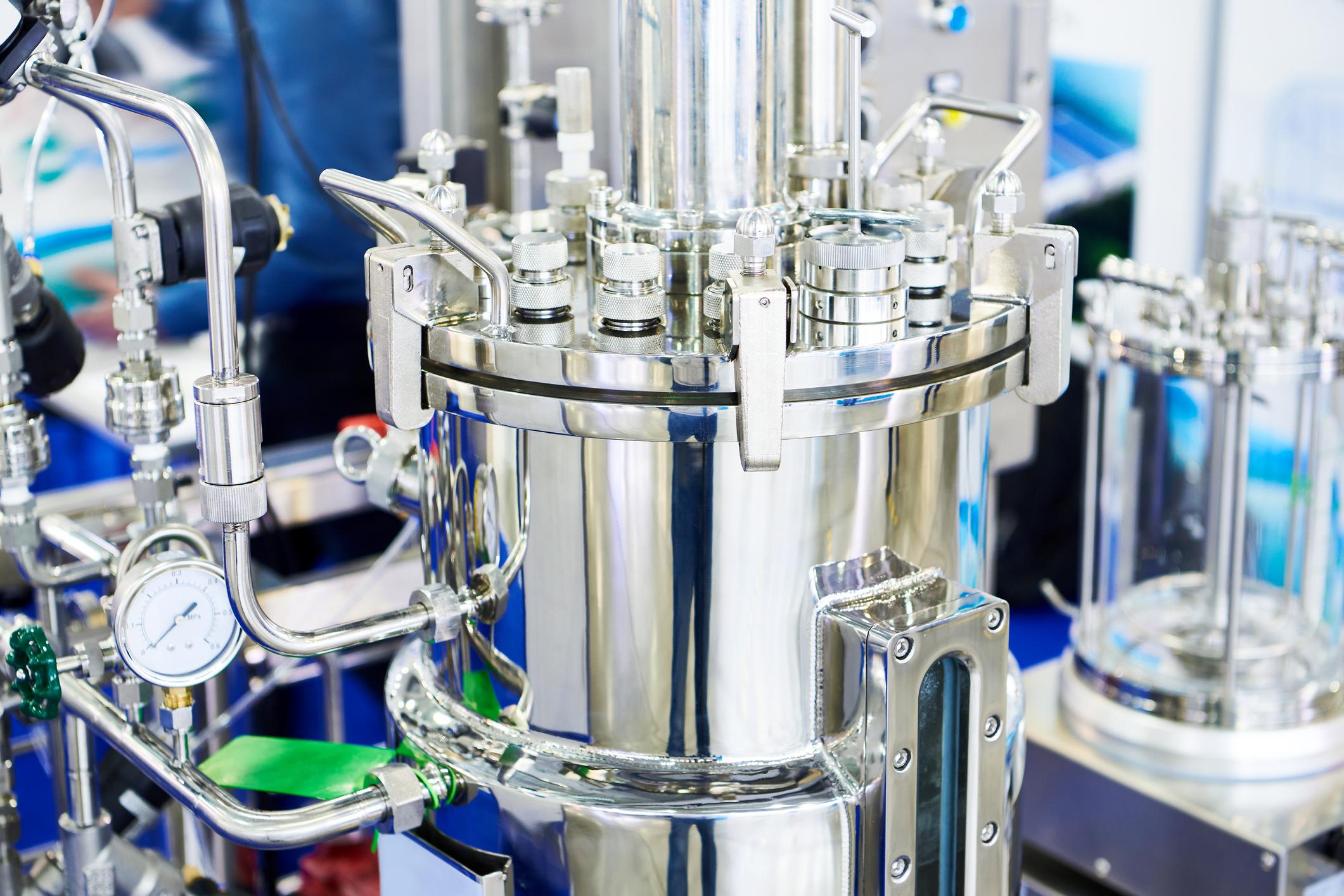
Downstream processing (DSP) encompasses the purification steps used to recover and refine therapeutic products after cell culture or fermentation. For biologic drugs, such as monoclonal antibodies (mAbs) and recombinant proteins, downstream workflows typically include multiple chromatography, filtration, and concentration operations designed to remove impurities while isolating the target product.
These purification processes must manage highly complex mixtures. In addition to the therapeutic protein, process streams may contain host-cell proteins, nucleic acids, aggregates, product variants, and residual media components. Each purification step alters the composition of the mixture, progressively enriching the product while removing contaminants.
The dynamic nature of these systems makes downstream monitoring particularly challenging. Chromatography columns operate under changing loading conditions as feed material passes through the resin bed. Filtration membranes experience variations in pressure and flux as fouling develops. Buffer exchange operations alter solution composition over time.
Operational decisions during these steps can have significant consequences. Pooling strategies determine which fractions of a chromatographic run will be retained as product. Breakthrough monitoring ensures that column capacity is used efficiently without allowing impurities to contaminate collected material. Membrane performance during filtration affects processing time, throughput, and product recovery.
Downstream processing is also economically significant. Purification operations frequently represent a substantial portion of the total manufacturing cost for protein therapeutics because they require specialized resins, filtration systems, buffer preparation infrastructure, and complex operational workflows.
Traditional monitoring approaches in DSP often rely on intermittent sampling followed by offline laboratory analysis. While these measurements provide valuable information, they may introduce delays between sampling and data availability. During that interval, process conditions may continue to evolve.
For these reasons, downstream purification presented a compelling opportunity for PAT deployment. Analytical tools capable of providing timely insight into process conditions and product attributes could improve operational control, increase process efficiency, and reduce uncertainty in critical decisions such as column loading and pooling strategies.
The Analytical Technologies Enabling Downstream PAT
The growing interest in PAT for downstream processing has led to the exploration of several analytical technology families capable of monitoring purification processes in real time. These tools include spectroscopic techniques, chromatography-based analytical methods, biosensors, and statistical modeling approaches that enable the interpretation of complex analytical signals.3
Spectroscopic Monitoring Technologies
Spectroscopic methods have become some of the most widely explored PAT tools in bioprocess monitoring. Techniques like Raman spectroscopy, near-infrared spectroscopy, and ultraviolet/visible spectroscopy detect interactions between light and molecular structures within process streams.
These techniques are attractive for PAT applications because they can provide rapid measurements with minimal sample preparation. In many cases, spectroscopic probes can be integrated directly into process flow paths, allowing analytical signals to be collected without removing samples for external laboratory analysis.4
Raman spectroscopy has received particular attention in biologics manufacturing. Researchers have investigated its use for monitoring protein concentration, detecting aggregation, evaluating glycosylation patterns, and identifying membrane fouling during filtration operations. Because Raman spectra contain information about multiple molecular features simultaneously, the technique can provide a multidimensional view of process streams when interpreted using appropriate analytical models.5
Ultraviolet spectroscopy also plays an important role in purification monitoring because many proteins absorb light strongly at specific UV wavelengths. Multi-wavelength UV systems can generate spectral datasets that allow protein concentration to be monitored across a wide range of process conditions.6
Chromatographic Analytical Monitoring
In addition to spectroscopic approaches, chromatographic analytical techniques are increasingly being adapted for PAT applications. While liquid chromatography has traditionally been used as an offline analytical method for product characterization, newer systems are being developed to enable faster analysis times and integration with manufacturing workflows.
Online liquid chromatography methods are designed to provide rapid measurements of product attributes during processing. By reducing analytical turnaround time, these approaches make it possible to obtain near–real-time information about product composition and impurity profiles within purification workflows.7
Biosensor Technologies
Biosensor systems represent another emerging analytical category. These tools typically rely on biological recognition elements capable of binding specific molecules in process streams. When combined with signal-transduction mechanisms, such sensors can generate highly specific measurements for targeted analytes.
Because of their molecular specificity, biosensors may provide direct measurements of critical quality attributes that are difficult to monitor using more general analytical methods.3
Chemometrics and Multivariate Analysis
Many PAT tools generate complex datasets that require statistical modeling for interpretation. Spectroscopic signals, for example, often consist of measurements across many wavelengths that reflect overlapping contributions from multiple molecular species.
Chemometric methods such as principal component analysis (PCA) and partial least squares (PLS) regression are commonly used to interpret these datasets. These techniques identify patterns within analytical signals and correlate them with process variables or product attributes, allowing raw measurements to be translated into meaningful process information.
Chromatography as a Natural Starting Point for Downstream PAT
Chromatography plays a central role in the purification of many biologic therapeutics, particularly mAbs. Capture and polishing chromatography steps remove process impurities while isolating the therapeutic protein from complex mixtures generated during upstream production.
Because these operations strongly influence yield, purity, and process efficiency, they are natural targets for PAT implementation.
Recent research has demonstrated PAT approaches capable of monitoring protein concentration during chromatography loading using near-infrared spectroscopy. By integrating a flow-cell sensor into the process stream, these systems can collect concentration data continuously as feed material passes through the column. Demonstrations of this approach in continuous monoclonal antibody purification systems have shown that real-time concentration measurements can support improved column loading strategies and operational control.8
Advances in analytical liquid chromatography further extend this capability. Fast LC methods designed for process monitoring can provide rapid information about product attributes during purification operations, allowing analytical insight to be incorporated directly into manufacturing workflows.7
Monitoring Membrane Operations in Ultrafiltration and Diafiltration
Ultrafiltration and diafiltration (UF/DF) are typically among the final purification steps in biologics manufacturing. These operations are used to concentrate the therapeutic protein and adjust buffer composition before formulation or storage.
Membrane-based separations introduce several operational variables that influence performance. Transmembrane pressure, flow rate, and crossflow velocity affect filtration efficiency, while membrane fouling caused by protein accumulation can alter pressure profiles and reduce permeate flux.
PAT strategies for UF/DF monitoring typically combine analytical measurements with process instrumentation. Inline conductivity sensors can track salt concentration during diafiltration, providing direct insight into buffer exchange progress. UV spectroscopy can monitor protein concentration as ultrafiltration proceeds.
Research demonstrations have shown that integrating multiple analytical signals, such as concentration, conductivity, and pressure measurements, can provide a comprehensive view of UF/DF performance and enable earlier detection of process deviations.9
From Sensors to Digital Process Control
While analytical sensors provide the raw data for PAT systems, the interpretation and application of those data require additional computational tools. Chemometric models translate complex analytical signals into quantitative estimates of process variables, enabling real-time monitoring of purification performance.
More advanced monitoring frameworks incorporate soft sensors — mathematical models that estimate variables that cannot be measured directly. These models integrate information from process instrumentation, analytical sensors, and control systems to infer parameters slikeproduct concentration or membrane performance.
The combination of analytical sensors, chemometric models, and digital monitoring platforms is gradually transforming how purification processes are managed. Rather than relying solely on retrospective analysis of laboratory samples, modern monitoring systems can provide continuous insight into process conditions.
These capabilities support more proactive approaches to process management by enabling operators to detect emerging deviations earlier in purification workflows.
Implementation Challenges
Despite significant progress in analytical technology, several challenges remain for widespread PAT adoption in downstream processing.
One challenge arises from the analytical complexity of purification streams. Biologics purification involves heterogeneous mixtures containing multiple proteins and impurities with similar physicochemical properties. Spectroscopic signals often reflect overlapping contributions from these components, making accurate interpretation dependent on well-validated chemometric models.
Integration also presents technical challenges. Successful PAT deployment requires coordination across instrumentation, data acquisition systems, analytical modeling frameworks, and manufacturing control systems.
As a result, many current PAT implementations remain focused on specific unit operations rather than plant-wide monitoring strategies. Spectroscopic probes may monitor chromatography loading, inline sensors may track diafiltration conductivity, and UV detectors may measure concentration in filtration systems.
The Future of Downstream Process Monitoring
The future of downstream process control will likely involve increasingly integrated monitoring systems that combine analytical sensors, statistical modeling, and digital process modeling.
Spectroscopic measurements can provide rapid insight into molecular composition within purification streams. Chemometric models interpret these signals and convert them into estimates of process variables. Digital monitoring platforms integrate these data sets with operational data from process control systems.
Researchers and industry observers are also exploring predictive process control strategies. By combining analytical measurements with computational models, these systems may eventually forecast process behavior and support proactive operational decisions.
Digital twin models represent one potential approach. When linked with real-time process data, these simulations could allow manufacturers to anticipate how changes in operating conditions may affect purification outcomes.
As analytical technologies continue to evolve, downstream processing may become an increasingly data-driven component of biologics manufacturing. PAT tools will likely play a central role in improving process visibility, operational efficiency, and product quality across complex biologics purification workflows.
Realizing the full potential of PAT in downstream bioprocessing will require more than the continued development of analytical sensors. Successful implementation depends on integrating instrumentation, data infrastructure, and statistical modeling into coherent monitoring and control strategies that span multiple purification operations. Manufacturers must also invest in the validation of chemometric models, the development of interoperable data systems, and the operational expertise needed to interpret complex analytical signals in real time. As these capabilities mature, PAT will move beyond isolated analytical tools toward fully integrated process monitoring frameworks. Achieving this transition will be essential if biologics manufacturing is to evolve toward the continuously monitored, data-driven purification systems that many experts see as the future of biopharmaceutical production.
References
1. Guidance for Industry: PAT — A Framework for Innovative Pharmaceutical Development, Manufacturing, and Quality Assurance. U.S. Department of Health and Human Services. Sep. 2004.
3. Sathiyapriyan, Pavithra, et al. “Current PAT Landscape in the Downstream Processing of Biopharmaceuticals.” Anal. Sci. Adv. 6: e70013 (2025).
4. Carvalho, Mariana, et al. “A review on quantitative process analytical technology for continuous downstream processing of monoclonal antibodies.” Authorea. 5 Sep. 2025.
5. Esmonde-White, Karen A, et al. “Raman spectroscopy as a process analytical technology for pharmaceutical manufacturing and bioprocessing.” Anal. Bioanal. Chem. 409: 637–649 (2017).
6. Esmonde-White, Karen A, et al. “The role of Raman spectroscopy in biopharmaceuticals from development to manufacturing.” Anal. Bioanal. Chem. 414: 969–991 (2021).
7. Graf, Tobias, et al. “Expediting online liquid chromatography for real-time monitoring of product attributes to advance process analytical technology in downstream processing of biopharmaceuticals.” Journal of Chromatography A. 1729: 465013 (2024).
8. Thakur, Garima, Vishwanath Hebbi, and Anurag S Rathore. “An NIR-based PAT approach for real-time control of loading in Protein A chromatography in continuous manufacturing of monoclonal antibodies.” Biotechnology and Bioengineering. 117: 673–686 (2010).
9. Prasad, Akanksha. “Leveraging Process Analytical Technology for Real-Time Control in Biopharmaceutical Manfuacturing.” BioProcess International. 27 Jan. 2026.