Key Takeaways
Insect cell expression systems are emerging as a scalable, cost-effective alternative to mammalian cells for viral vector and virus-like particle (VLP) manufacturing, offering higher yields, improved full/empty capsid ratios, and faster development timelines for vaccines and gene therapies.
Advances in baculovirus expression vector systems (BEVS), CRISPR-engineered cell lines, and chemically defined media are significantly improving productivity, product quality, and robustness, making insect cell platforms more suitable for commercial biopharmaceutical manufacturing.
Virus-free and next-generation BEVS technologies reduce impurities and downstream purification challenges, enabling cleaner production of complex biologics such as VLP vaccines and adeno-associated viral (AAV) vectors.
Larval expression and antigen display technologies expand the flexibility of insect-based biomanufacturing, supporting low-cost, rapid production of vaccines and diagnostic proteins with simplified workflows and high scalability.
Continued integration of artificial intelligence, synthetic biology, and advanced process monitoring is expected to accelerate adoption of insect cell platforms, positioning them as a key manufacturing solution for next-generation vaccines, viral vectors, and protein therapeutics.
Many Applications of Insect Cell Expression for Biopharma Production
While the majority of recombinant proteins and antibodies; next-generation modalities, including viral vectors; and many subunit vaccines are produced via mammalian cell culture, insect cell culture has found wide applicability. Since heterologous human IFN-β was produced as the first biopharmaceutical produced using an insect cell expression system,1 advantages and has been used for both developmental and commercial production of a number of different products
Most approved producers are vaccines, including those against influenza virus, human papilloma virus, and SARS-CoV-2 (six total by different agencies), and different cancers.2,3 The large number of COVID-19 vaccines produced using insect cell expression reflects the ability of the technology to support rapid development and updating of vaccines. Several approved animal vaccines are also manufactured using insect cell expression systems.
Several other human vaccines produced using insect cells are in development, including those against respiratory syncytial virus (RSV), Ebola virus, norovirus, poliovirus.2 These systems are also being explored for production of complex protein therapeutics, with several candidates in the clinic.
Many Drivers for Insect Cell Expression of Viral Vectors and VLPs
Mammalian expression systems (e.g., Chinese hamster ovary (CHO), human embryonic kidney) are widely used for production of recombinant proteins, antibodies, and viruses for human therapeutics because they generate products with appropriate post-translational modificaitons. Insect cell expression systems have some advantages over mammalian systems, particularly for intracellular proteins and multi-protein complexes.4 They are also highly productive and because multiple genes can be inserted into certain insect vectors (e.g., baculovirus), insect cells systems are capable of expressing multiple products at one time.
Other practical advantages of insect cells are their ability to be adapted to both adherent and suspension cell culture conditions, no need for supplementation of carbon dioxide, high performance in serum-free media, and tolerance of large numbers of passages without loss of transfectivity.3
Production of biologics using insect cell systems has also been shown to be readily scalable and cost-effective, particularly for the manufacture of viruses, viral vectors, and virus-like particles (VLPs), as well as protein subunits and therapeutic cancer vaccines.5,6 In a recent survey, respondents rated insect cell expressions systems highly for their ease of use and speed as well.7 This technology is also viewed as a safe approach to biologics production because insect viruses do not replace, transit, or integrated in mammalian cells.2
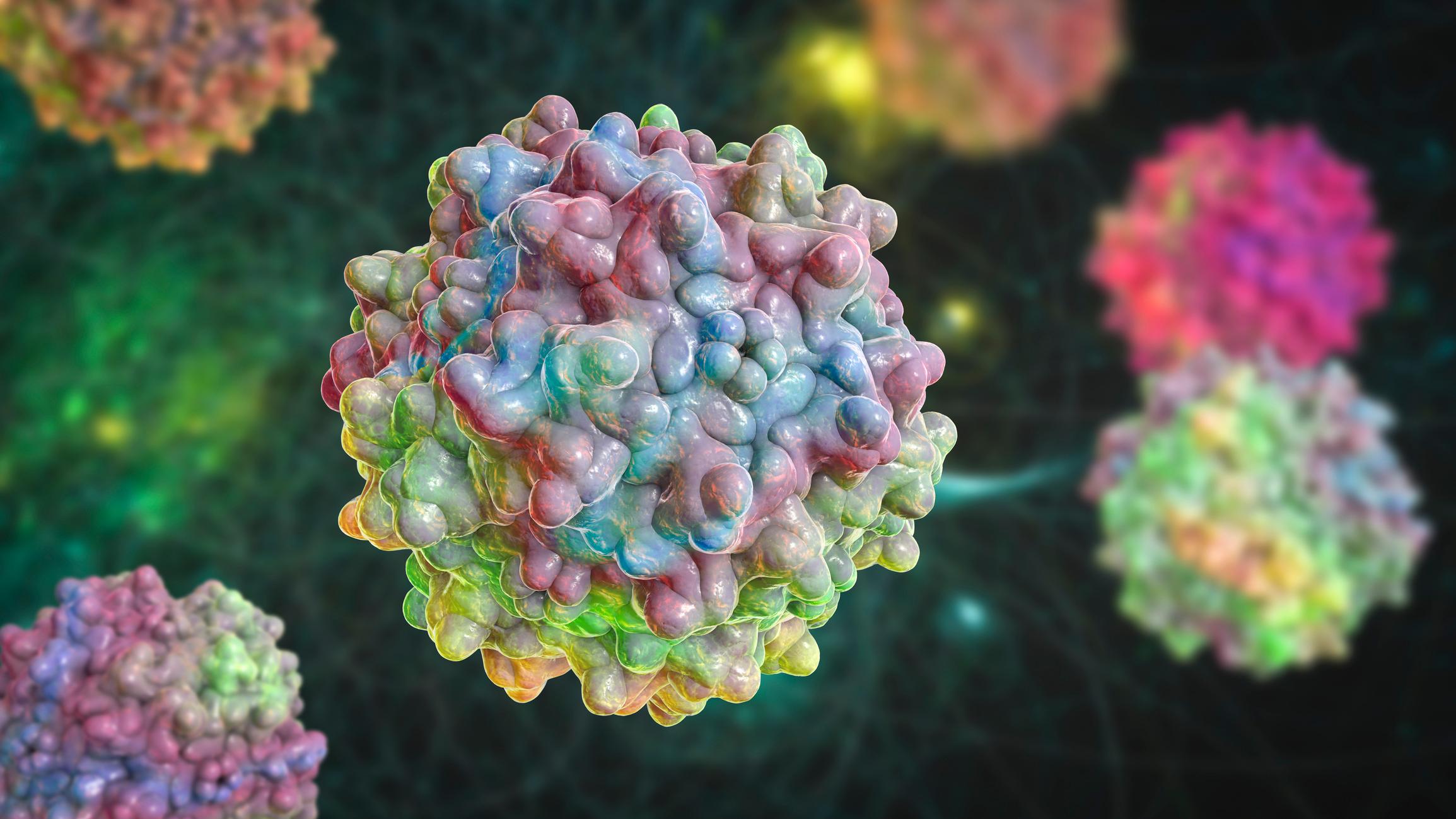
Insect cell expression is an attractive option for VLP production because it supports proper protein folding and posttranslational modifications critical for self-assembly and antigenicity.1 The ability of insect cells to insert large DNA molecules is also relevant here, as it enables production of large, complex proteins.9 Compared with mammalian HEX293 cells for adeno-associated viral vector manufacturing, insect cell expression is often more scalable, provides higher yields with higher full/empty capsid ratios and lower host-cell DNA impurities, combined several other attractive attributes.7,9
A Choice of Virus-Based and Virus-Free Insect Cell Systems
There are a few types of insect cells widely used for biologics production, including those derived from Spodoptera frugiperda, including Sf9, Sf21, and Sf900+, which is commercially known as expresSF+, and from Trichoplusia ni, namely BTI-Tn-5B1-4, or High Five™ Cells.3
Choice of the insect cell line is often dictated by the end-use application.9 For instance, Sf9 cells have a higher growth rate and better tolerate high densities and shear stress and are good for large-scale production. HighFive cells, meanwhile, typically give higher yields of secreted proteins but also generate proteases that can degrade large protein products. While using baculovirus has become the standard method for insect cell expression of active drug substances, alternatives, virus-free systems have also been developed.
In the baculovirus expression vector system (BEVS), a recombinant baculovirus containing the transgene expressing the desired product is created either through recombination or transposition.2 The former takes place within insect cells via homologous recombination. The latter initially was achieved using a specialized bacterial strain, such as the Escherichia coli–based Bac-to-Bac system.10 With this approach however, there are concerns over the presence of bacteria-derived impurities.3 That has led to the development of newer options that avoid this issue, such as the flashBAC™ system. Other examples include the BestBac™ and DiamondBac™ platforms. After amplification through multiple passages, insect cells are infected with the virus at a specific multiplicity of infection (MOI) and then cultured to achieve maximum expression of the target protein.
It is also possible to generate insect cell expression systems without baculovirus infection.3 In this approach, plasmids that contain the transgene encoding the target protein and specific promoters that enable constitutive expression in the absence of baculovirus are transfected directly into insect cells. Advantages include avoidance of cellular lysis and the production of virus-derived impurities that can be difficult to separate, particularly from VLP products. The generated, stable cells lines are suitable for scalable, long-term production, but it does take more time to develop them
Better Cell Lines and Specialized Media are Improving Performance
The advantages offered by insect cell expression have attracted the interest of several drug and vaccine developers and technology companies, leading to investments in R&D and evolution of promoters and cell lines, fit-for-purpose cell culture media, and other aspects of insect cell platforms.2–4,9
Improvements in viral promoters and genomes have resulted in more productive systems that also generate lower levels of challenging impurities, while new cell lines have been designed to grow in new chemically defined culture media developed to support ever high cell densities. Some cell lines designed specifically to produce viruses, virus-like particles, or therapeutics proteins have also been introduced. Better passage protocols enable greater consistency and robustness, and cell lines lacking concerning endogenous viruses have increased the safety of biologics production using insect systems.
The application of CRISPR/Cas-9 (clustered regularly interspaced palindromic repeats/CRISPR-associated protein 9) gene editing has also contributed to improved cell lines with better protein folding and more mammalian style (human-like) glycosylation capabilities. That includes virus-free, stable cell lines that have much shorter protocols, reduced variability, and simpler purification requirements.
Improved process optimization capabilities combined with advanced process monitoring and control technologies, such as real-time flow micrometry and super-resolution fluorescence microscopy, are also boosting the performance of insect cell expression systems.
Larval Expression and Baculovirus-Mediated Antigen Displaying Technologies Showing Promise
Rather than perform cell culture with insect cells in a bioreactor, the production of proteins and other biologics can be achieved using insect larvae.2 This approach can be more cost-effective and scalable. Two products approved in this manner that have received regulatory approval include Virbagen® Omega (Virbac, recombinant feline interferon omega) for treatment of viral infections in cats, which is produced in silkworm larvae, and Fatrovax® (Fatro S.p.A.), a rabbit hemorrhagic disease virus (RHDV) vaccine produced from the pupae of T. ni.
Silkworm larvae are receiving greater interest recently, particularly for animal vaccine development, due to their low cost and availability, while CrisBio® technology from Cocoon Bioscience enhances the performance of recombinant AcMNPV in T. ni for subunit vaccine production.2 The manufacturing platform leverages single-use systems and robotic technology and generates milligrams of protein per infected pupa.
Separately, baculovirus insect cell systems can also be designed to produce proteins on viral or cellular membranes.2 This display technology allows for antigens to be presented on cell surfaces in their native epitope conformations, which can minimize aggregation, simplify purification, and reduce workflow complexity. This approach is useful not only for vaccine and therapeutic production but also diagnostic applications.
Solution for Downstream VSP Purification Difficulties
While insect cell systems are highly suitable for cost-effective production of VLPs, they do present downstream purification challenges, owing to the presence of similarly sized baculovirus particle impurities. To address this problem, one research group developed a system ((BacFreets) containing an engineered baculovirus vector that does not produce baculovirus particles at 33 °C, which is slightly higher than the typical reaction temperate of 27 °C.5 They demonstrated its use at large scale for production of a number of VLPs, including chikungunya virus (CHIKV), West Nile virus (WNV), coxsackievirus A6, and foot-and-mouth disease virus (FMDV) with baculovirus particle reduction up to 99.97% and minimal impact on virus yields. Importantly, the BacFreets system is compatible with all existing baculovirus expression systems. The next step is to demonstrate the technology at commercial scale
Expanding Use Expected
The promise of insect cell expression has not been fully realized despite the many advantages it offers. The recent improvements in cell lines, promoters, vectors, and media should help drive greater use going forward.4 Several BEVS-derived candidates are in preclinical and clinical development, including a number of human vaccines against COVID-19, influenza, HPV, RSV, malaria, Ebola, Zika, dengue, West Nile virus, yellow fever virus, and others.3
More needs to be done, though, to further simply workflows, increase scalability, and optimize processes (including through cell line and media engineering, particularly with respect to achieving PTMs similar to those obtained with mammalian cell culture and increasing the survival times under process conditions.9 Such improvements should help increase the accessibility and affordability of insect cell systems for production of viral vectors and VLP-based vaccines and therapeutics.
Application of artificial intelligence and machine learning for protein structure prediction combined with advances in single-cell sequencing, gene editing, and synthetic biology will, meanwhile, enable development of tailored expression systems that maximize efficiency, scalability, and flexibility.2
References
1. Smith, GE, MD Summers, and MJ Fraser. “Production of Human Beta Interferon in Insect Cells Infected with a Baculovirus Expression Vector.” Mol. Cell. Biol. 3: 2156–2165 (1983).
2. Huang, Nongyu, Yuquan Wei, and Jiong Li. “Insect cell expression system: advances in applications, engineering strategies, and bioprocess development.” J. Biol. Eng. 19:88 (2025).
3. Sułek, Michał and Agnieszka Szuster-Ciesielska. “The Bioengineering of Insect Cell Lines for Biotherapeutics and Vaccine Production: An Updated Review.” Vaccines (Basel). 13: 556 (2025).
4. Challener, Cynthia A. “Advances in Insect Cell-Expression Systems.” BioPharm International. 38: 18–20 (2025).
5. van Oosten, Linda, et al. “Engineered thermoswitch in the baculovirus expression vector system for production of virus-like particle vaccines with minimized baculovirus contaminants.” Trends in Biotechnology. 43: 1690-1713 (2025).
6. Walls, Laura and Sharyn Farnsworth. “The Perfect Hosts for Vaccine and Virus Expression: Insect Cell Expression Systems.” Fujifilm Biotechnologies. Accessed 1 Feb. 2026.
7. Schütz, A, et al. “A concise guide to choosing suitable gene expression systems for Recombinant protein production.” STAR Protoc. 4: 102572 (2023).
8. Zhu, Yingmin, Amy Sheng, and Xuejiao Zhang. “Innovations in Baculovirus-Insect Cell Expression Systems.” Sino Biological. Accessed 2 Feb. 2026.
9. Wang, Fei, et al. “Application of the Insect Cell-Baculovirus Expression Vector System in Adeno-Associated Viral Production.” Appl. Sci. 14:, 10948 (2024).
10. Kwiatkowska, J, et al. “A beginners guide to Sf9 and Sf21 insect cell line culture and troubleshooting.” Sci. Rep. 15: 19907 (2025).