
Key Takeaways
Multi-organ chips must preserve tissue-specific culture environments while enabling controlled exchange of drugs, metabolites, and signals.
Chip materials can alter drug exposure through sorption and release, making material characterization part of reliable pharmacological testing.
Scalable manufacturing requires consistent geometry, flow systems, interfaces, and quantitative quality control.
Interlaboratory results must be interpreted within the tested cells, protocols, and platform configuration.
FDA qualification applies to a defined context of use; acceptance into an earlier ISTAND stage does not establish completed qualification.
Connecting Organs Is Only the Beginning
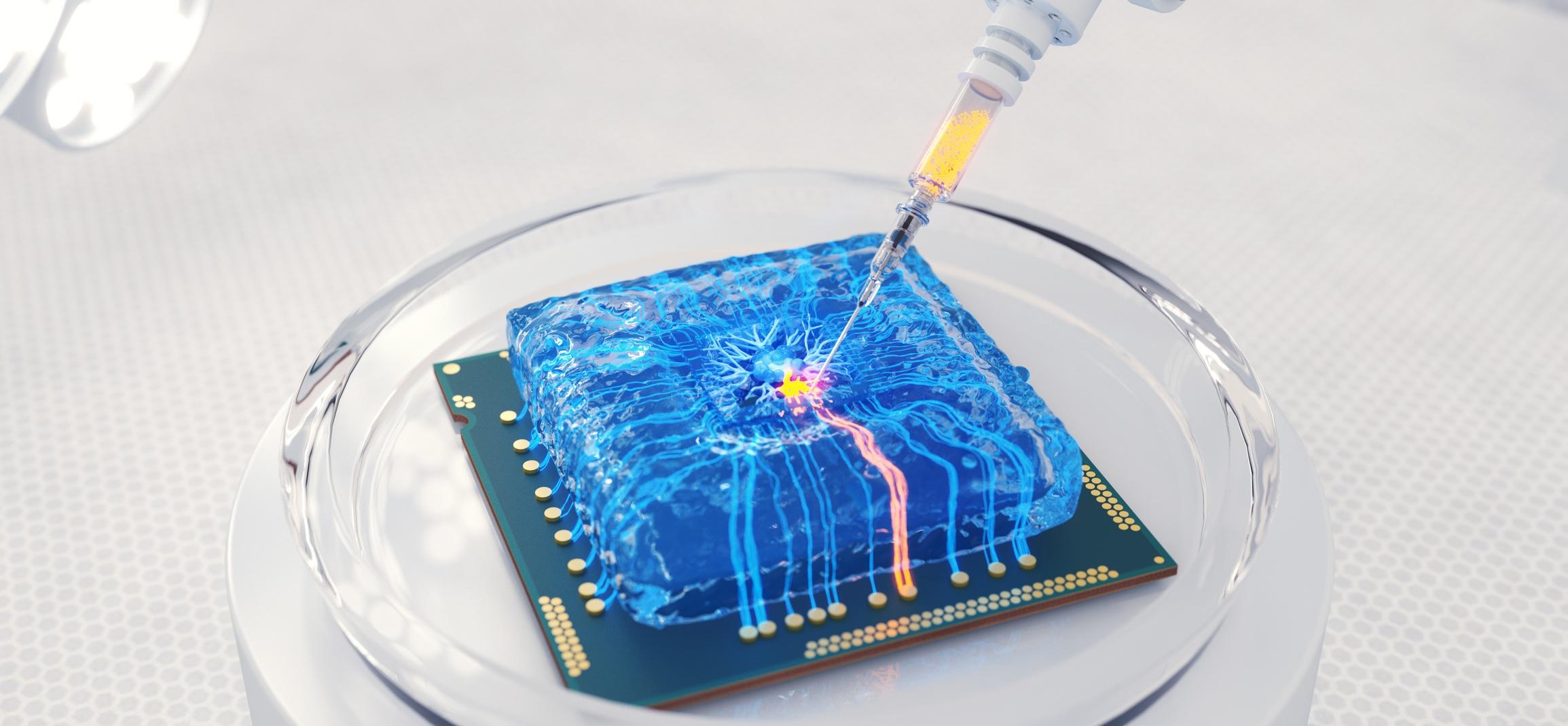
Predicting how a drug behaves in humans requires understanding interactions among organs. Absorption, distribution, metabolism, excretion, and toxicity (ADMET) arise from coordinated processes, so responses measured in individual tissue models do not capture the full picture. Multi-organ-on-a-chip systems seek to reproduce aspects of those interactions by linking tissue compartments through controlled fluid exchange.
These platforms extend organ-on-chip approaches by allowing drugs, metabolites, and biological signals to move between distinct tissue environments. Their usefulness depends on maintaining the local conditions each tissue needs while permitting communication with other compartments. Connecting tissues therefore introduces an engineering challenge: preserving their individual functions within a shared system.
A recent review published in Nature Biomedical Engineering examines what meeting that challenge will require.1 Although researchers have demonstrated inter-organ coupling, the authors identify substantial barriers to translation-ready platforms, including preservation of tissue-specific biochemical and biomechanical niches, scalable manufacturing, and reproducible measurements of drug response.
For drug developers, these requirements make platform production part of the evidence question. A connected model must preserve its intended tissue environments, circulation, and exposure conditions consistently enough to support the application for which it is being evaluated. Manufacturing and standardization consequently belong at the center of multi-organ chip development.
Shared Circulation Must Preserve Distinct Tissue Niches
Inter-organ communication creates a tension between shared circulation and local culture requirements. Directly connecting compartments through microchannels or porous membranes allows exchange, but mixing can erode differences between tissue-specific media and compromise maturation during long-term culture.
Programmable fluid transfer and biological barriers offer different approaches to managing that tension. Robotic systems can transfer fluid between organ compartments while retaining tissue-specific culture environments. Other architectures place a vascular barrier between each tissue and a shared circulation, allowing exchange across an interface while preserving separate media.
A primary study involving human heart, liver, bone, and skin tissues illustrates the value of this separation.2 Researchers matured the tissues individually, then connected them through recirculating vascular flow. Endothelial barriers separated the tissue compartments from the circulation. Over four weeks, this configuration preserved structural, functional, and molecular tissue properties better than a configuration that allowed the media to mix.
The comparison supports niche preservation within that experimental architecture. Its manufacturing implication is that the interface separating tissue and circulation must retain its intended function after assembly. Consistent production therefore needs to account for the architecture’s biological interfaces as well as its fluidic connections. The review identifies reliable flow systems and quantitative quality-control metrics as priorities for moving such platforms beyond laboratory prototypes.1
Physiological Scaling Requires Explicit Design Choices
Preserving tissue-specific media does not determine how fluid should move between compartments. Some systems discussed in the review scale inter-organ fluid transfer to physiological cardiac-output fractions, providing a defined basis for allocating flow. This addresses one feature of circulation rather than establishing comprehensive reproduction of human physiology.
Platforms also differ in tissue scaling, fluidic routing, vascular interfaces, and media composition. Those differences complicate comparisons across studies and laboratories. The review describes these advances as fragmented across architectures, with key niche-preserving features still incompletely integrated into multi-organ systems.
Descriptions of physiological scaling should therefore identify the feature being reproduced and distinguish it from capabilities requiring separate characterization. This gives users a more precise basis for evaluating whether the architecture suits the intended experiment.
Chip Materials Become Part of the Exposure Experiment
The concentration introduced into a chip may differ from the concentration remaining available within it. Polydimethylsiloxane (PDMS) can retain hydrophobic small molecules through surface adsorption and absorption into the polymer. In a connected system, this sorption can alter compartment-specific concentrations and compromise subsequent pharmacological predictions.
A study comparing PDMS with cyclic olefin copolymer (COC) provides controlled evidence of these interactions.3 Researchers tested seven pharmaceutical compounds, measured recovery after 24 hours of static incubation, and conducted separate washout experiments under flow. Lipophilic compounds showed greater retention in PDMS, with slower release associated with bulk absorption. COC showed lower retention and easier desorption under the tested conditions.
The investigators used deionized water to isolate material effects from more complex solution and biological interactions. They acknowledged that cells, pH, media composition, and other physiological conditions could alter retention and release. The results therefore establish material-dependent effects under controlled conditions; their numerical findings should not be applied directly to living multi-organ systems.
The comparison does not establish that COC eliminates drug loss. Recovery depended on both the material and the compound’s properties. Material characterization should therefore inform the interpretation of exposure under the intended operating conditions. A biological response becomes harder to interpret when the available drug concentration differs from the nominal concentration and that difference remains uncharacterized.
Moving From Laboratory Fabrication to Repeatable Production
Repeatable production must preserve the features on which the experiment depends. Laboratory-scale moulding and manual assembly can introduce variation in channel geometry, flow resistance, and surface properties. Characterization therefore needs to encompass these attributes and the tissue interfaces on which the experiment depends.
Fabrication methods bring different trade-offs. Resin-based approaches enable complex geometries, but biocompatibility, surface roughness, optical transparency, and mechanical properties remain challenges. Thermoplastic injection moulding offers a route to high-precision, large-scale production, although tooling costs create a barrier. The review does not establish a universally preferable method.
Modular architectures offer another practical route. Interchangeable components, standardized interfaces, and accessible pumping systems aim to simplify configuration and operation by users without specialist fabrication or fluidic-engineering expertise.1 In the heart–liver–bone–skin platform, modularity allowed tissues to undergo quality control before integration and permitted different tissue types, numbers, and arrangements within the system.2
The modular platform provides an experimental example, while the review identifies standardized assembly, reliable flow systems, and quantitative quality-control metrics as broader priorities for translation.
Interlaboratory Consistency Requires Control of Cells and Protocols
A study of the liver acinus microphysiology system (LAMPS) provides a concrete example of testing performance across laboratories. Two laboratories used coordinated protocols and the same primary-hepatocyte lot to compare selected functional, metabolic, and drug-response outcomes. Several outcomes were reproduced under those conditions.4
The findings also show why reproducibility needs assessment across individual parameters: selected biological outcomes were replicated, while flow-rate measurements remained inconsistent in some experiments.
LAMPS was a single-organ study. It does not establish reproducibility for connected multi-organ systems or across all cell sources and operating conditions. Its contribution is an example of interlaboratory evaluation with defined inputs, selected outcomes, and an identified weakness.
For multi-organ platforms, the question remains whether comparable evidence can be established for the complete configuration. Differences in layout, tissue scaling, fluid routing, vascular interfaces, and media composition make clear why results from one architecture cannot automatically establish consistency in another.
Readouts Must Support Observation Over Time
Consistent production and operation still leave the question of how to observe the connected tissues. Existing measurements often involve medium sampling, tissue retrieval, endpoint staining, biochemical assays, and off-chip analysis. These methods have supported demonstrations of drug response, but they can provide limited longitudinal information and may require destructive measurements.
Multimodal readouts offer complementary views of the experiment. Biological assays, optical imaging, and electrical, mechanical, and chemical measurements capture different aspects of tissue response. Their integration could help quantify effects across compartments throughout exposure, rather than relying predominantly on separate endpoint observations.
The maturity of these capabilities varies. Many approaches discussed in the review originated in organoids, engineered tissues, or single-organ chips. Demonstrated performance in those settings should remain distinguishable from integrated measurement capability in a complete multi-organ platform.
Artificial intelligence (AI) remains a prospective extension. Current examples discussed in the review principally concern single-organ applications. The authors identify reproducible manufacturing, niche-preserving architectures, multimodal measurements, and standardized data processing as foundations for anticipated multi-organ AI applications.
Qualification Begins With a Defined Question
The U.S. Food and Drug Administration’s (FDA) Innovative Science and Technology Approaches for New Drugs (ISTAND) program provides a framework for considering novel drug-development tools.5 The FDA identifies tissue chips addressing safety or efficacy questions as potential submissions. Qualification applies to a stated context of use, within which a qualified tool can support drug development and regulatory review.
The process includes a letter of intent, a qualification plan, and a full qualification package. Acceptance at an earlier stage permits progression to the next submission; it does not establish completed qualification. FDA also notes that qualification may not be the optimal pathway for every novel tool.6
For developers of multi-organ chips, a useful starting point is the decision the platform is intended to inform. That decision should guide which tissue functions, exposure conditions, operational parameters, and readouts require characterization and replication. The resulting evidence should establish how reliably the manufactured, assembled, and operated system supports that defined application, with its demonstrated capabilities and remaining limitations clearly stated.'
References
1. Li, Jiawei, et al. “Engineering human multi-organ tissue chip niches for drug absorption, distribution, metabolism, excretion and toxicity prediction.” Nature Biomedical Engineering. 5 Oct. 2026.
2. Ronaldson-Bouchard, Kacey, et al. “A multi-organ chip with matured tissue niches linked by vascular flow.” Nature Biomedical Engineering. 6: 351–371 (2022).
3. Grindulis, Karlis, et al. “Sorption and release of small molecules in PDMS and COC for Organs on chip.” Scientific Reports. 15: 14012 (2025).
4. Sakolish, Courtney, et al. “Analysis of reproducibility and robustness of a human microfluidic four-cell liver acinus microphysiology system (LAMPS).” Toxicology. 448: 152651 (2021).
5. “Innovative Science and Technology Approaches for New Drugs (ISTAND) Program.” U.S. Food and Drug Administration. Accessed 12 Oct. 2026.
6. “Innovative Science and Technology Approaches for New Drugs (ISTAND) Program Submission Process.” U.S. Food and Drug Administration. Accessed 12 Oct. 2026.