For recombinant biologics, including monoclonal antibodies, fusion proteins, and bispecifics, even subtle shifts in charge variant distribution or glycosylation can alter efficacy, clearance, and immunogenicity. As molecular formats grow more complex, consistent control of charge variants and N-glycan profiles becomes increasingly critical to meet target product profiles. Design-of-experiment (DoE) studies provide an efficient framework for building process understanding and optimizing robust manufacturing strategies. Using this approach, Samsung Biologics achieved a 7% reduction in acidic charge variants, a 25% reduction in basic charge variants, and measurable shifts toward desired glycoforms, such as afucosylation, galactosylation, and high-mannose. Case studies illustrate these outcomes for both a bispecific Fc fusion protein and an Fc fusion.
Charge Variants and N-Glycan Profiles as Critical Quality Attributes
Recombinant biologics are large, structurally complex molecules produced in mammalian expression systems, such as Chinese hamster ovary (CHO) cells. Owing to the nature of cellular expression, these products are intrinsically heterogeneous. Posttranslational modifications (PTMs) to individual amino acid residues arise during culture and are influenced by process parameters, including pH, temperature shifts, inoculation density, and feed or additive composition. In addition, degradation events within the bioreactor can further contribute to product variability.
Consequently, even under controlled CHO-based production, the final drug substance represents a distribution of molecular species that differ in charge variant profiles and glycosylation patterns. These heterogeneities directly impact critical quality attributes (CQAs), such as conformational stability, biological activity, pharmacokinetics, and immunogenicity. Accordingly, the detailed characterization of charge variants and glycan structures is required by regulatory agencies as part of a comprehensive quality assessment.
However, equally critical is demonstrating process control. Manufacturers must establish the specific process parameters that modulate the distribution of acidic, main, and basic charge variants, as well as the prevalence of glycoforms, such as afucosylated, galactosylated, and high-mannose structures. Identifying and managing these levers is key for maintaining product quality throughout the development phases, ensuring comparability at scale, and achieving consistent clinical performance.
A DoE Approach to Charge and N-Glycan Profile Optimization
The quality attributes of recombinant biologics expressed in CHO cell cultures are governed by a wide array of process parameters. Variables such as inoculation density, culture pH, temperature shifts, and feed or additive composition can influence PTMs, thereby altering charge variant distributions or N-glycan profiles. Identifying the critical process parameters (CPPs) most responsible for these effects is essential but cannot be efficiently accomplished using a one-variable-at-a-time approach. Such methods are time- and resource-intensive and risk overlooking interactions between parameters that may be critical to product quality.
DoE methodologies provide a structured framework for overcoming these limitations. By varying multiple parameters simultaneously and applying multivariate statistical analyses, DoE quantifies both independent and interactive effects. The resulting response surface models support the data-driven determination of CPPs while deepening the understanding of how process inputs affect CQAs. In this manner, quality is built into the process rather than verified retrospectively.
A key advantage of DoE studies is that they can be executed in parallel with other development and clinical manufacturing activities, eliminating delays in project timelines. For example, DoE-driven optimization can be applied to PTMs, including charge heterogeneity and glycosylation. Thoroughly designed studies help select process conditions that consistently yield the desired profiles, whether that entails reducing acidic and basic charge variants or enhancing afucosylation, galactosylation, and high-mannose content. Importantly, modulating these attributes has direct implications for therapeutic performance — impacting potency, stability, pharmacokinetics, manufacturability, and clinical outcomes.
When combined with targeted glycoengineering strategies, such as tailored feeds or additive supplementation, the DoE approach becomes a powerful tool for systematically fine-tuning molecular heterogeneity across diverse biologic modalities. This integrated strategy helps direct product profiles toward optimal efficacy and safety while they remain robust and reproducible at scale.
From Parameters to Profiles: Charge Optimization with DoE
Samsung Biologics employs DoE strategies that use multi-parallel bioreactor systems to systematically optimize charge variant profiles in recombinant proteins, which allows for parallel evaluation of multiple culture conditions. Parameters selected for testing, such as culture pH, feeding ratio, inoculation density, temperature, and specific additives, are chosen based on prior development experience and in-house expertise.
Charge variants generated under each condition are first quantified using imaged capillary isoelectric focusing. Selected profiles are then further analyzed utilizing response surface models that are built using multiple linear regression. These models account for the statistical significance of individual parameters, quadratic effects, and parameter interactions, providing a robust understanding of how each factor influences charge modulation.
For runs that yield promising outcomes, the harvested material is purified and reanalyzed to confirm the modulation of acidic, main, and basic peaks with high resolution. Statistical analysis of cell growth data, including titer, is integrated with charge distribution results to determine the cell culture conditions that maximize both the yield and prevalence of the main charge variant peak.
Case study: Charge optimization for an Fc fusion protein
A representative DoE study sought to optimize the charge variant distribution for an Fc fusion protein expressed in a CHO-K1 cell line. The parameter set was defined based on prior charge variant optimization experience, and all cultures proceeded successfully without the inhibition of cell growth. The resulting datasets were analyzed using stepwise regression, identifying conditions most strongly correlated with the desired charge modulation.
The outcomes are illustrated in Figure 1. Panel A shows the interaction profilers and maps how key culture parameters independently and interactively influence charge variant distribution. Panel B shows the prediction profilers and identifies the optimal parameter values for achieving the targeted charge profile, along with the predicted outcomes. Panel C shows the prediction model, confirming how these optimized conditions are expected to shift the charge variant distribution relative to the control.
Under optimized conditions, the study achieved a 7% reduction in acidic variants and a 25% reduction in basic variants, demonstrating the ability to rationally direct charge profiles while maintaining cell growth and productivity.
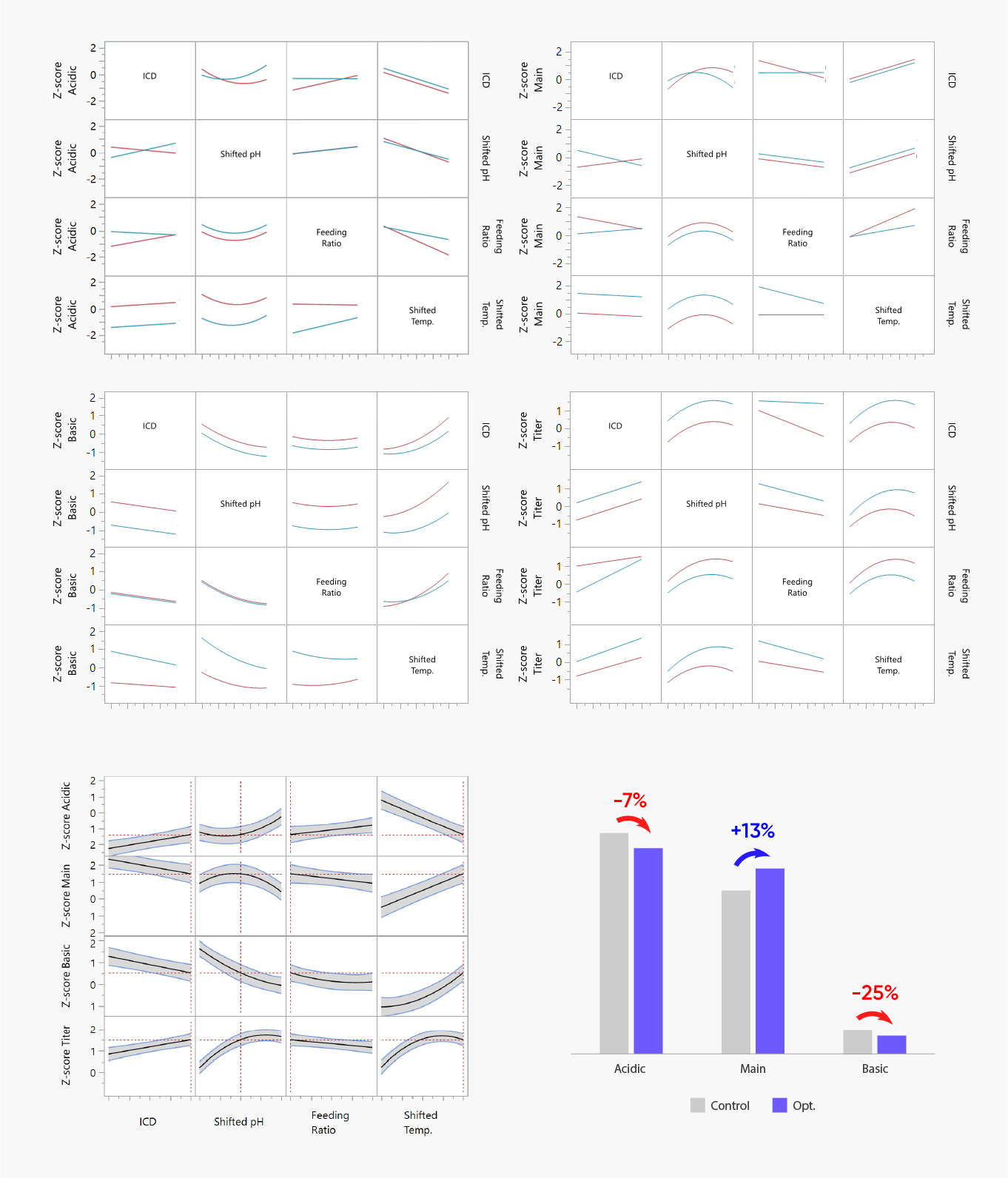 Figure 1. Statistical analysis of charge profiles. (A) Interaction profilers, (B) prediction profilers, and (C) prediction model for achieving the desired charge variant profile.
* Abbreviation: ICD: inoculum cell density, Temp.: temperature, Opt.: optimized condition
** For reference, in the prediction profiler (B), the red values on the X-axis represent the optimal points identified during statistical analysis. The corresponding red values on the Y-axis indicate the predicted outcomes at those optimal X-axis values.
DoE-Driven Control of Glycosylation Patterns
Samsung Biologics also applies DoE methodologies to systematically modulate N-glycan profiles in recombinant proteins. Experimental studies are conducted using a multi-parallel bioreactor system and scaled in a 2-L bioreactor. As with charge variant optimization, process parameters are selected based on internal expertise and prior development experience. Key interventions include a controlled temperature shift introduced on day six and the addition of glycan-modulating supplements on day seven.
Following harvest, products are purified by affinity chromatography, denatured, and enzymatically deglycosylated. Released N-glycans are fluorescently labeled with a 2-aminobenzamide kit and analyzed via ultra-performance liquid chromatography (UPLC). Glycan peaks of interest are further interrogated using JMP 17.0, again constructing a response surface via multiple linear regression to evaluate parameter effects, quadratic terms, and higher-order interactions on glycan modulation.
For runs showing favorable shifts in glycan distribution, the material is further purified and reanalyzed to confirm the modulation of individual N-glycan peaks. These data are then combined with cell growth and titer measurements to identify the optimal culture conditions that maximize both yield and the desired glycosylation pattern.
Case study: N-glycan optimization for a bispecific Fc fusion protein
A representative DoE study focused on optimizing the N-glycan profile of a bispecific Fc fusion protein expressed in a CHO-K1 cell line. Process parameters were defined using knowledge from previous related optimization projects, and all cultures proceeded without evidence of growth inhibition.
Individual N-glycan peaks were identified via UPLC prior to quantitative analysis. Outcomes were evaluated by stepwise regression, which revealed the conditions most strongly correlated with the targeted glycan modifications.
In Figure 2, Panel A shows the correlations between culture parameters, the occurrence of afucosylated, galactosylated, and high-mannose glycans, and Panel B shows the prediction model. Panel C shows a comparative result between the experimentally validated glycan profile at the optimal condition predicted by the profiler and the control group and identifies the parameter values expected to achieve the desired proportions of these glycoforms.
The optimized conditions clearly redistributed the glycoforms, increasing afucosylated glycans, decreasing galactosylated glycans, and controlling the levels of high-mannose structures—ultimately confirming the predictive power of the DoE model.
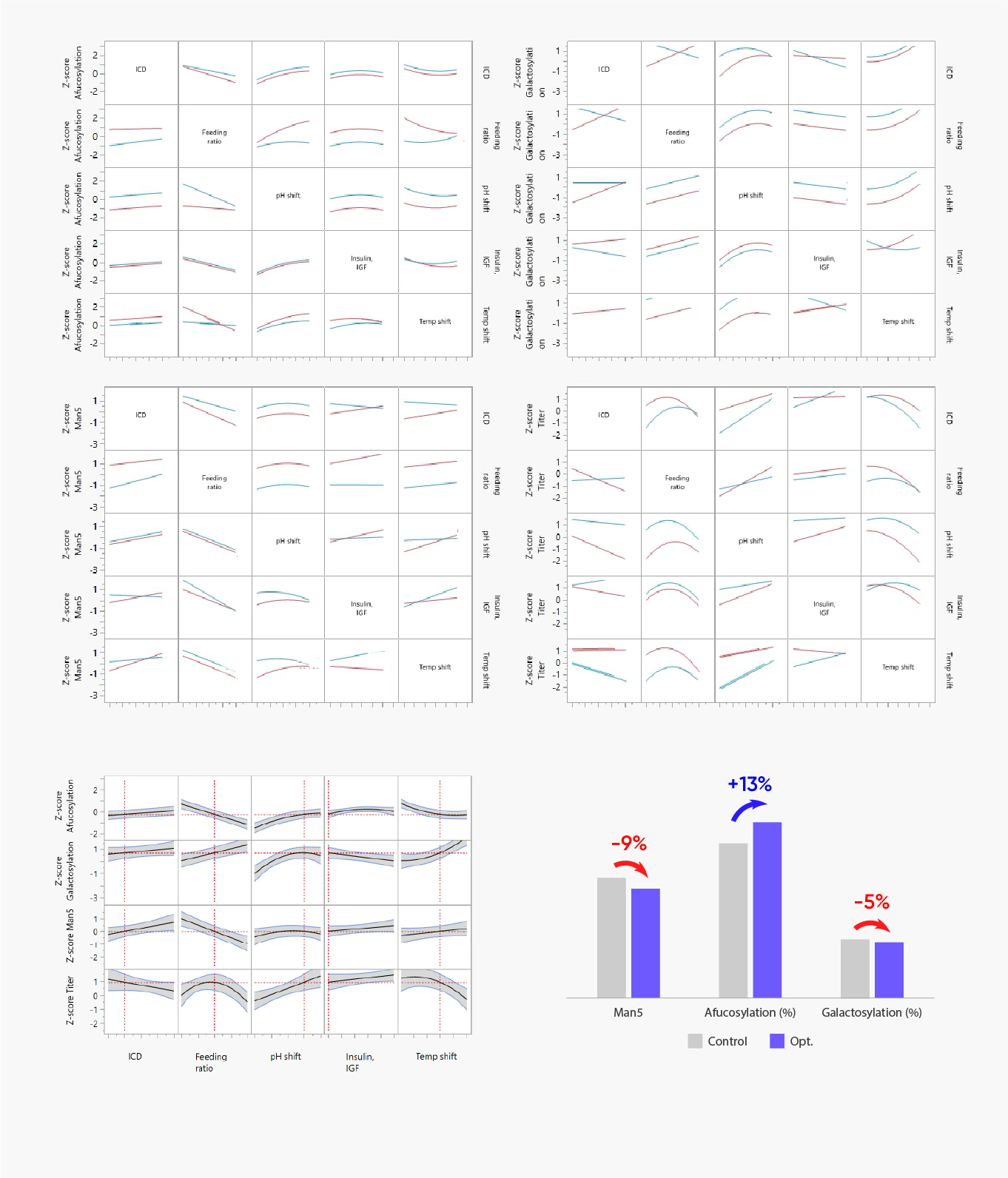 Figure 2. Statistical analysis of N-glycan profiles. (A) Interaction profilers, (B) prediction profilers, and (C) prediction model for achieving the desired N-glycan profile.
* Abbreviation: ICD: inoculum cell density, IGF: insulin-like growth factor, Temp.: temperature, Opt.: optimized condition
** For reference, in the prediction profiler (B), the red values on the X-axis represent the optimal points identified during statistical analysis. The corresponding red values on the Y-axis indicate the predicted outcomes at those optimal X-axis values.
Greater Process Understanding Without Extending Development Timelines
A comprehensive understanding of how process parameters influence charge heterogeneity, PTMs, impurity profiles, and other CQAs is essential for targeted biotherapeutics. However, development programs are often constrained by compressed timelines from gene to Investigational New Drug submission. The case studies presented demonstrate that Samsung Biologics has established the expertise, infrastructure, and analytical capabilities to evaluate charge variant and N-glycan profiles in a highly time-efficient manner.
A key advantage of the DoE framework is that these studies can be executed in parallel with other contract development services, including upstream and downstream process development and clinical material manufacturing, rather than as sequential activities. This concurrent execution prevents the extension of the standard development timeline.
Equally important, the DoE approach provides sponsors with a deeper understanding of the process levers that govern charge and glycan outcomes. This knowledge enables the early identification of potential CQAs, facilitates consistent control across development phases, and supports regulatory alignment by demonstrating a robust link between process parameters and product quality.
Moreover, by leveraging accumulated technologies and know-how, Samsung Biologics provides platform services — S-Glyn™, S-Opticharge™, and S-AfuCHO™ — further accelerating timelines and minimizing risks. S-Glyn™ evaluates N-glycan profiles and optimizes effector functions using a DoE approach, resulting in streamlined development timelines. S-OptiCharge™ enables stepwise upstream process development while precisely tuning charge profiles to meet the target quality specifications of therapeutic proteins. The S-AfuCHO™ platform improves therapeutic efficacy by generating fucose-free molecules via FUT8 knockout.
Further Reading
1. Charge Variant Analysis of USP Monoclonal Antibody Reference Standards: Technical Note. United States Pharmacopeia. Rockville (MD): USP. 2019.
2. Liu Y, et al. “Challenges and strategies for a thorough characterization of antibody acidic charge variants.” Bioengineering. 9: 641 (2022). doi:10.3390/bioengineering9110641
3. Chung S, et al. “Modulating cell‐culture oxidative stress reduces protein glycation and acidic charge variant formation.” mAbs. 11: 205–216 (2019). doi:10.1080/19420862.2018.1537533
4. Singh SK, H Malani, and AS Rathore. “Impact of acidic and basic charge variants of bevacizumab on structure and bioactivity.” Sci. Rep. 10: 7954 (2020).
5. Rathore AS. “Modulation of charge variant profile in mammalian cell culture” [dissertation]. Delhi: Indian Institute of Technology; 2017.
6. Thomann M, et al. “In vitro glycoengineering of IgG1 and its effect on Fc receptor binding and ADCC activity.” PLoS One. 10: e0134949 (2015).
7. Hatfield G, et al. “Specific location of galactosylation in an afucosylated antiviral monoclonal antibody affects its FcγRIIIA binding affinity.” Front. Immunol. 13: 972168 (2022).
8. Reusch D and ML Tejada. “Fc glycans of therapeutic antibodies as critical quality attributes.” Glycobiology. 25: 1325–1334 (2015).
9. Bheemareddy BR, PN Reddy, K Vemparala, and VR Dirisala. “Enhancement of effector functions of anti-CD20 monoclonal antibody by increased afucosylation in CHO cell line through cell culture medium optimization.” J. Genet. Eng. Biotechnol. 20: 141 (2022).