Key Takeaways
Injectable drug–device combination products that combine advanced biologic drugs in fit-for-purpose delivery devices often provide improved clinical outcomes and enhanced quality of life for patients.
Development of injectable drug–device combination products is highly complex and requires alignment of both formulation and device development activities and compliance with the similar but distinct regulatory pathways for drugs and medical devices.
The properties of the drug substance, excipients, and overall drug formulation directly impact the choice of device design and materials of construction. Similarly, the optimal device design for a given user (patient or healthcare professional), patient population, route of administration, and dosage influence some aspects of formulation development.
An integrated approach to the development of these complex injectable products from the outset is essential to ensure that all device components and the drug product formulation are compatible, material supply and validated analytical methods are established, and all aspects of the overall production process are validated ready to implement for clinical and commercial manufacture.
Defining the Complex Injectable Product
Drug–device combination products are considered to be complex injectable products, which also include those that contain complex mixtures of active pharmaceutical ingredients (APIs), polymeric compounds, or peptides; involve complex formulations, such as liposomes, suspensions, or emulsions; or are long-acting (e.g., sustained-release).1 In many cases, advanced delivery systems are leveraged to overcome bioavailability issues, realize targeted delivery of the active drug substances, and reduce dosing frequencies and undesired side effects.2 Products formulated with highly potent APIs (HPAPIs) are also considered complex owing to the need for special handling and containment to limit exposure to operators and the environment.
By combining advanced biologic drugs in fit-for-purpose delivery devices, these complex injectable products often lead to improved clinical outcomes and enhanced quality of life for patients.3 The also offer marketing and intellectual property advantages to their developers.2
Not surprisingly, the development of complex injectable products, including injectable drug–device combination products, is challenging.4 Formulations must be suitable for the intended patient population and compatible with the device design and materials. They must be stable and of an appropriate viscosity. Both the drug product and device must be manufactured in accordance with all applicable regulatory requirements.
Ensuring Compatibility with the Primary Container
Drug formulations for drug–device combination products must be compatible with all the materials used to construct the delivery device.5 That includes glass or plastic for the syringe compartment, cartridges, and other components; any residues from the device manufacturing process (e.g., tungsten oxide for glass); and any coatings used for lubrication of parts (typically silicone).
While plastic syringes are cheaper than glass, traditional polypropylene systems is unsuitable in prefilled devices owing to moisture transmission issues, which can result in changes in the formulation concentration. Alternative materials, including cyclic olefin copolymer (COC) and cyclic olefin polymer (COP) have better properties and are therefore garnering more interest for the production of prefilled syringes.
How Dose and Delivery Volume Shape Development
The required dosage influences many aspects of formulation development. Intravenous delivery in a hospital setting allows for lower concentration formulations delivered in large volumes over an extended period of time. The desire to increase patient convenience (and thus boost medication adherence) has driven the development of products that can be self-administered in the home (subcutaneous/ intramuscular delivery) without the need for hospital/clinic visits.
The acceptable delivery volume for subcutaneous/intramuscular delivery is typically a few milliliters, creating the need to develop higher-concentration formulations.5 High concentrations can lead to stability issues and also higher viscosities. Aggregation must be prevented through the use of appropriate functional excipients. High viscosity formulations can require more force to inject (especially when thinner needles are used to reduce pain), which can be an issue for certain patient populations. Rapid injection of volumes even as small as 2 mL can cause pain and discomfort at the inject site. Furthermore, most autoinjectors are designed for delivery of up to 1 mL. On-body devices with bolus injectors have been introduced that deliver up to 10 mL over several minutes to hours, addressing many of these issues. Ambulatory pumps, meanwhile, are often used for insulin delivery.
Using Excipients to Support Stability and Performance
Formulators of biologics included in injectable drug–device combination products rely heavily on functional excipients to address numerous challenges to their successful approval.2 Many different types of excipients are used to reduce aggregation propensity, prevent oxidation and other mechanisms of degradation, increase the stability of the formulation overall, reduce immunogenicity, and enhance solubility and bioavailability.
Surfactants are used to and suspensions. Lipidic excipients (e.g., phospholipids, fatty acids) increase the solubility of poorly water-soluble lipophilic molecules. Various polymers, both natural and synthetic, play numerous roles, including solubility enhancement and stabilization and can also be used to achieve sustained release for long-acting formulations and support targeted drug delivery via ligand modification. Other functional excipients are used to modify formulation properties including tonicity, osmolality, pH, and viscosity. Special excipients are also often needed to protect biologic drug substances during lyophilization and reconstitution.
Overcoming the Delivery Challenges of Biologics
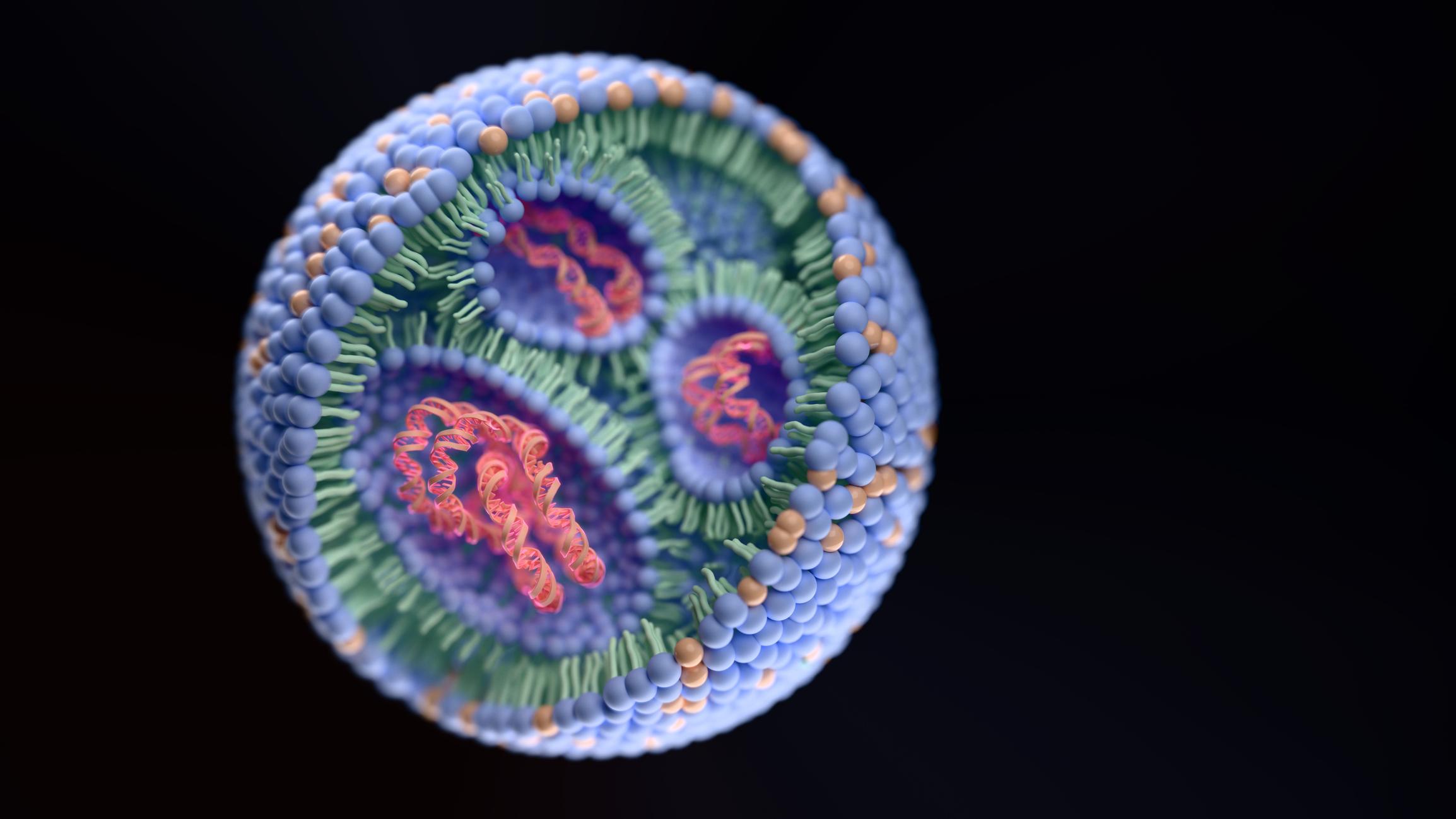
In addition to solubility, stability, immunogenicity and other issues based on their physicochemical properties, most biologic drug substances also have short half-lives in the bloodstream, undergo undesired protein binding, and are subjected to first-pass metabolism, all of which negatively impact their therapeutic efficacy.2 Formulators of both conventional products and injectable drug–device combination products have consequently turned to advanced drug delivery systems to overcome these limitations. Nanoscale systems, lipid- and polymer-based solutions (lipid nanoparticle, liposomes), and microcarriers, as well as sustained-release technologies, are leading examples.2,6 As with advanced functional excipients, many emerging delivery systems also support sustained release and site-specific delivery.
Aligning Drug and Device Development from the Outset
Development of devices and drug product formulations must follow two similar but distinct regulatory pathways. As such, two development teams are involved in the development of injectable drug–device combination products. They may be subset of an overarching drug–device development team. These teams must collaborate closely and pursue an integrated approach to the development of these complex injectable products from the outset of a project.3,7–9 The properties of the drug substance, excipients, and final formulation influence the optimal device design, while the materials of construction and design of a device influence some aspects of formulation development.
Given the complexity of injectable drug–device combination products, there is also expectation by regulatory agencies that thorough risk assessments will be performed and mitigation strategies developed to address them.3,4 Success in this area also requires extensive collaboration between the drug and device development teams.
The goal of the device development team, is to establish a device solution that assures safe and effective delivery of the drug product in a manner that leads to optimal efficacy.5 Knowledge of all aspects of device development are needed, including engineering and design, quality, manufacturing, commercial considerations, and regulatory requirements.
One of the first things the device development team must do is initiate human factors engineering (HFE) studies to understand how users (patients, healthcare workers) will interact with the proposed device and its packaging to ensure safety, ease of use, and minimal risk of error and facilitate medication compliance to achieve the best possible clinical outcomes.4 Formulation development teams must be aware of the results of the HFE studies, as they can impact device design and construction decisions that can in turn affect the choice of formulation ingredients.
The two teams must be constantly communicating to ensure that all device components and the drug product formulation are compatible. Formulation aspects, such as concentration, viscosity, and volume, must also be considered when evaluating the potential device type and specific design options.7
In addition to ensuring compatibility, collaboration of the device and drug development teams from the outset provides more flexibility during selection of a device design and also ensures that timelines for device and formulation development are appropriately aligned.8 When done properly, material supply and validated analytical methods are established and device production, drug product production and sterile filling into the primary container, final drug–device combination product assembly, and labeling and packaging processes have been validated and are ready to implement for clinical and commercial manufacture.4,8
It is important to note that even if an existing device and not a custom-designed system is used in a new drug–device combination product, knowledge of the regulatory pathway for device approval is still needed.4 Studies must be conducted to ensure compatibility and safe and effective delivery of the drug product. Device supply must be coordinated with the drug product development timeline. In addition, activities such as establishing a device quality system, developing a combination product design history file, and conducting post-marketing surveillance are still required.
Designing the Device Around the Product and the Patient
As with drug development, regulatory agencies encourage device development to proceed following quality-by-design (QbD) principles and guided by the quality target product profile (QTPP) of the drug–device combination product.10 The user (patient or healthcare worker), target patient population and disease state, route of administration, dosage, and properties of the formulated drug product all impact device design.
Beyond considering the user, properties of the drug product, and the desired performance of the device, best practice is to employ a risk-based approach that considers these factors, as well as data generated during early clinical studies to establish the optimal device solution. This strategy helps avoid the need for changes to the device design at later clinical stages, which can create the need for additional stability assessments, more formulation development work, and potentially clinical bridging studies, all of which add time and cost.
An effective delivery device is easy to use with little risk of error, supports effective administration with easy-to-follow instructions (and training if necessary), enables easy injection of the accurate dose without too much force, pain, or needle clogging. Storage sand shipping of the drug–device combination product must also be considered. Many off these attributes can only be achieved by taking into consideration the properties and nature of the drug formulation.
Dual-Chamber Devices Simplify Reconstitution and Delivery
Most biologic drug substances and formulated products are unstable at room temperature and many require storage and shipment at freezing temperatures, sometimes as low as –80 °C. Cold-chain management and logistics add complexity and cost that can be avoided using lyophilization. Freeze-dried powders can be shipped at room or modestly refrigerated temperatures. This approach, however, does not work for traditional prefilled syringes and autoinjectors.
Recently dual-chamber devices have been introduced that allow the development of injectable drug–device combination products that are produced as lyophilized powders.5 The dry powder is filled into one chamber and the diluent for reconstitution in the second chamber. The device is designed to enable the diluent to be easily transferred to the chamber with the dry powder chamber immediately before administration. Some devices even allow the preparation of multiple doses. The one downside of current dual-chamber devices is their bulkiness.
Selecting the Right Partner for End-to-End Development
Given the complexity of injectable drug–device combination product development, it can be beneficial to rely on external experts to help with or even manage the development process, particularly for emerging biotechs with little or no past development experience.11 Some contract service providers specialized in certain aspects of the process, such as formulation development or filling, final assemble, and packaging of drug–device combination products.
Other contract development and manufacturing organizations (CDMOs) provide more comprehensive services, supporting projects all the way from drug substance process development and manufacture through formulation and device development and final drug–device product manufacture. Access to end-to-end capabilities within a single provider can increase efficiency and productivity and reduce overall development timelines.
A few CDMOs have established their own proprietary delivery devices that have been validated and approved for large-scale manufacturing. It is important if working with a CDMO that has an existing device technology to ensure they have the engineering and analytical capabilities to smoothly tailor their platform to meet the specific needs of the particular formulated drug product in question.
References
1. Jiang, Xiaohui (Jeff). “Introduction to Complex Products and FDA Considerations.” Demonstrating Equivalence of Generic Complex Drug Substances and Formulations. U.S. Food and Drug Administration. 6 Oct. 2017.
2. Panchal, Kanan, et al. “An Expanding Horizon of Complex Injectable Products: Development and Regulatory Considerations.” Drug Delivery and Translational Research. 13: 433–472 (2023).
3. Gupta, Deepak Kumar, et al. “Ensuring Safety and Efficacy in Combination Products: Regulatory Challenges and Best Practices.” Frontiers in Medical Technology. 6: 1377443 (2024).
4. Welch, Bill. “Navigating the Complex Landscape of Drug-Device Combination Products: Key Considerations for Successful Commercialization.” PCI Pharma Services. 31 Jan. 2024.
5. Zakrzewski, Caroline. “Formulation & Device Development: A Symbiotic Relationship.” ONdrugDelivery. 120: 28–30 (2021).
6. Ahator, Stephen Dela, et al. “Overcoming Barriers to Delivery of Biologics by Novel Approaches and Advanced Delivery Systems.” Advanced Drug Delivery Reviews. 234: 115875 (2026).
7. Badelt, Steven, et al. “How to Build a Successful Combination Product Program.” Suttons Creek. Accessed 23 Jul. 2026.
8. “Improving Drug-Device Combination Product Co-Development.” Drug Delivery Leader. 8 Aug. 2025.
9. Seaward, Dave. “The Challenges of Developing Combination Products: Regulatory Complexity and the Case for a Holistic Development Strategy.” 3P Innovation Blog. 15 Feb. 2026.
10. DeGrazio, Fran, and Diane Paskiet. “Injectable Combination Product Development: Facilitating Risk-Based Assessments for Efficiency and Patient Centric Outcomes.” Journal of Pharmaceutical Sciences. 109: 2101–2115 (2020).
11. “Drug Delivery Devices and Combination Products: Making Informed Choices for Agile, Efficient Development.” Phillips Medisize. 9 Nov. 2023.