Key Takeaways
Lipase-family host-cell proteins may retain enzymatic activity that can degrade polysorbate stabilizing excipients, including PS20 and PS80, with potential implications for product quality and stability.
Conventional total HCP measurement provides an aggregate view of residual HCP burden but does not identify lipase-family HCPs or determine whether residual lipases remain active.
Functional lipase activity data provides a more direct indicator of lipase-related stability risk than lipase presence or abundance alone.
Samsung Biologics combines LC–MS HCP profiling with a targeted lipase activity assay to support risk-based DSP development, resin selection, process optimization, and control of polysorbate-related stability risk.
Why Lipase Matters in Biologics Development
Host-cell proteins (HCPs) are process-related protein impurities derived from the host organism during biotherapeutic manufacturing. If they are not sufficiently removed during purification of biologic drug substances, residual HCPs can, even at low levels, contribute to undesired immune responses. Their presence may therefore affect product quality and potentially patient safety.
Lipase-family HCPs raise an additional concern because they may retain enzymatic activity that can compromise product quality or stability. In particular, residual lipases can degrade stabilizing excipients, such as polysorbate 20 (PS20) and polysorbate 80 (PS80), which are commonly used to stabilize biologic formulations. Loss of these key formulation components can contribute to drug substance or drug product instability, including degradation, denaturation, or unfolding. Because some lipases are highly active, even small residual amounts may affect product stability, making careful monitoring and control essential.
Conventional total HCP measurement provides an aggregate measure of residual HCP burden, but it does not identify how much of that signal comes from lipase-family HCPs or determine whether any residual lipases remain enzymatically active. As a result, total HCP testing alone may not be sufficient to determine whether lipase-related risk has been adequately controlled. Targeted lipase activity testing and HCP identification give development teams a more direct way to assess and manage this important high-risk HCP category.
Measuring the Risk, Not Just the Protein
Because HCPs comprise many different individual proteins, total HCP measurements alone cannot determine how much lipase is present in a sample. Even when a lipase-family protein is detected, the more important question is whether that protein remains enzymatically active. Lipase-related risk can arise from trace levels of active enzyme, so assessing that risk requires a method that measures actual lipase activity.
This distinction shapes how lipase risk should be interpreted. Liquid chromatography–mass spectrometry (LC–MS) identification can confirm that a lipase-family HCP is present, while functional activity testing shows whether that protein is capable of catalyzing reactions that could affect product stability. A detected lipase may be inactive because of denaturation, structural alteration, inhibition, or other environmental conditions. Conversely, a small amount of active lipase may be more relevant to product risk than a larger amount of inactive protein. Total lipase content therefore provides useful context, but functional activity data offers a more direct indicator of whether residual lipase could contribute to polysorbate degradation and related stability concerns.
Managing High-Risk and Hitchhiker HCPs
Total HCP reduction measurements show how much residual HCP has been removed, but they do not reveal which proteins remain. That distinction can be consequential because some HCPs are more difficult to clear than others. Certain proteins may associate with the product, behave as “hitchhiker” HCPs, or co-elute during purification, allowing them to persist even as total HCP levels decline. Because residual HCPs differ in abundance, activity, and potential product impact, a lower total HCP result does not necessarily confirm that a high-risk protein has been sufficiently cleared.
Lipases are generally viewed as high-risk HCPs across biologics programs because even trace levels of active enzyme can degrade polysorbates and compromise drug shelf life. The degree of concern depends on the product and formulation, including formulation composition, polysorbate type, and polysorbate concentration. For polysorbate-sensitive formulations, lipase-related risk may therefore require more specific analytical attention than total HCP testing alone can provide.
A targeted lipase activity method supports a more risk-based approach to process development and impurity control. By measuring residual enzymatic activity directly, development teams can assess whether downstream purification is reducing the functional lipase risk most relevant to product stability. This creates a clearer basis for evaluating DSP performance, comparing process conditions, and mitigating polysorbate degradation risk.
Building Lipase Risk Assessment into Process Development
During downstream process development, lipase activity data can help evaluate whether purification steps are reducing the functional lipase risk most relevant to product stability. For example, activity results can help identify which chromatographic resins or process conditions most effectively remove active lipase, allowing teams to select options that provide stronger lipase clearance. By supporting resin screening and comparison of process conditions, the method can enable more informed DSP decisions and more effective process optimization.
Lipase activity screening can be especially valuable in early development, particularly for complex molecules in which structural variability may increase uncertainty around HCP co-purification or product association. When evaluation of a molecule’s primary structure or physicochemical properties suggests a higher HCP risk, early lipase activity testing can be incorporated alongside initial resin and buffer screening. This allows development teams to identify and address lipase-related risk before it becomes embedded in the process rather than discovering it only after a stability issue emerges.
Lipase activity testing can also support issue-driven investigations when unexpected stability problems arise, particularly those involving PS20 or PS80 degradation. In this setting, the assay can help determine whether residual lipase activity is contributing to the observed degradation and can then be used to verify whether process modifications have effectively reduced that activity.
Why LC–MS and Activity Testing Tell Complementary Stories
HCP levels are routinely measured using enzyme-linked immunosorbent assay (ELISA) techniques, which remain essential for assessing total residual HCP burden. More recently, LC–MS methods have been used to provide more detailed information on individual HCPs, as described in United States Pharmacopeia Chapter <1132.1>, Residual Host Cell Protein Measurement in Biopharmaceuticals by Liquid Chromatography–Mass Spectrometry.1,2
Detecting very low-abundance residual HCPs, including lipases present at less than 10 ppm, remains technically challenging. To address this challenge, Samsung Biologics has applied a method first introduced by Huang et al.3 In this workflow, native digestion of the sample is followed by detection using high-resolution electrospray ionization tandem mass spectrometry (ESI MS/MS). The resulting MS spectra are searched against appropriate sequence databases using Byos software. To improve the consistency and accuracy of relative HCP quantitation, internal standards from the MassPREP Digestion Standard Kit are spiked into the sample. Universal signal response factors are then calculated based on the peak areas of the internal standards, enabling relative quantitation of individual HCP levels in pseudo-ppm.
Samsung Biologics’ HCP ID by LC–MS method has been shown to be highly robust for identifying HCPs, including high-risk and hitchhiker proteins, and is now applied during DSP development for resin screening and feasibility assessment. For lipase-family HCPs, LC–MS profiling can show which lipases are present and how their relative levels change across process steps or conditions. Lipase activity testing adds the functional dimension, indicating whether residual lipases are enzymatically active and therefore capable of contributing to downstream effects such as polysorbate degradation.
These methods can also produce different but complementary signals. A sample may show detectable lipase-family HCPs by LC–MS but little or no measurable lipase activity. This can occur if the lipase has been partially denatured, structurally altered or represents a low-activity isoform. In that situation, the detected HCP may not pose an immediate functional stability risk, but LC–MS can still help guide downstream process development by supporting continued reduction of potential lipase-related HCPs.
Lipase activity data therefore provides an orthogonal functional readout that complements LC–MS profiling. LC–MS can identify lipase-family HCPs and estimate their relative abundance across process steps or conditions, while the activity assay evaluates whether residual lipases remain enzymatically active. When both lipase-family HCP levels and lipase activity decline across a purification process, the two data sets provide stronger evidence that lipase-related risk is being reduced. If the data sets do not align, the difference can help direct further investigation into factors such as enzyme activity, protein state, assay sensitivity, or the specific process step where clearance may need additional evaluation. In this way, combining LC–MS HCP profiling with lipase activity testing supports a more risk-based interpretation of lipase clearance and product stability risk.
A Functional Assay for Measuring Active Lipase
In response to continued industry interest in lipase activity testing and internal investigations related to PS80 degradation, Samsung Biologics developed a test method based on the ability of lipases to hydrolyze ester bonds. Because lipase activity can be assessed by measuring the rate at which those bonds are cleaved, the assay provides a direct functional readout of enzymatic activity. The overall protocol is outlined in Figure 1.
 Figure 1. Workflow of lipase assay.
In Samsung Biologics’ method, 4-methylumbelliferyl caprylate (MU-C8) serves as the lipase substrate.4 When lipase is present in the sample, MU-C8 is hydrolyzed into 4-methylumbelliferone (MU), a fluorescent molecule, and a C8 fatty acid (Figure 2). The generation of fluorescent MU produces a signal that can be readily detected using a microplate reader. This substrate-based approach is useful because degraded PS20 or PS80 do not generate detectable signals on their own, making direct detection of polysorbate degradation more challenging.
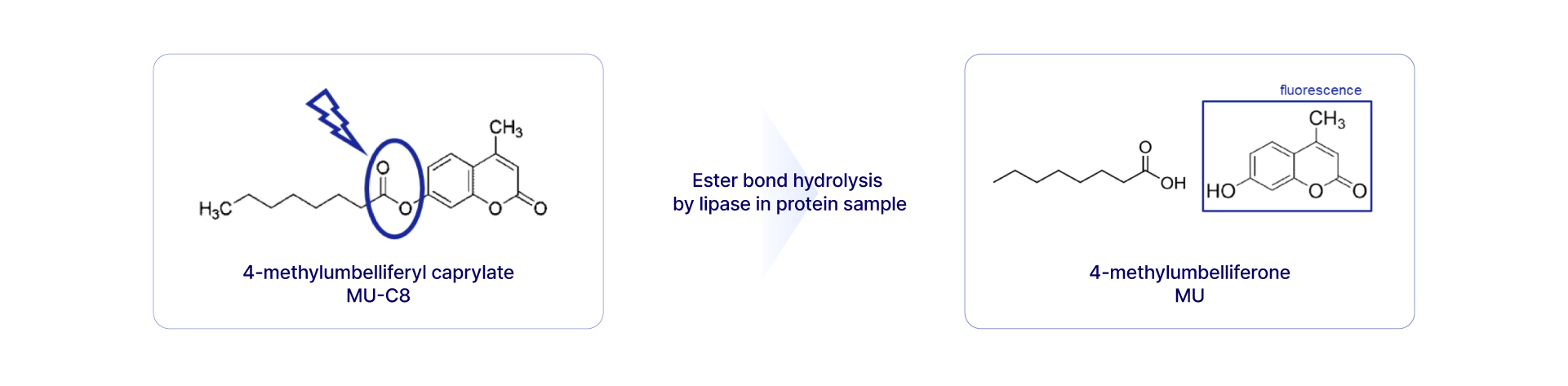 Figure 2. Lipase hydrolyzes MU-C8 into the fluorescent MU and a C8 fatty acid.
Lipase activity is determined by monitoring the increase in fluorescence over time. The activity rate is calculated by measuring the increase in relative fluorescence units per hour for both the sample and its matrix buffer. The matrix buffer value is then subtracted to account for background interference, and the corrected signal is converted to the concentration of MU product generated. The result is reported as MU concentration generated per hour (MU µM/h), which gives the development team a direct measure of lipase activity in the sample.
The method can be used to evaluate a wide range of sample types, including in-process monitoring samples from upstream and downstream processes, drug substance, drug product, and other relevant materials. This makes the assay a practical tool for assessing lipase activity throughout biologics process development and for supporting investigations when polysorbate degradation or other stability concerns arise.
Choosing Resins with High-Risk HCP Clearance in Mind
For complex molecules, including multispecific antibodies and fusion proteins, physicochemical characteristics may increase the risk of HCP co-purification or product association. In these programs, early risk prediction and a well-designed HCP reduction strategy are essential. During DSP development, chromatographic resin selection should therefore consider not only total HCP reduction but also the clearance of high-risk HCPs and, where relevant, their residual activity.
Across purification process evaluations for multiple protein molecules, Samsung Biologics has observed that different chromatography resins can produce different clearance profiles for lipase-series HCPs. This makes lipase-focused assessment especially valuable during early resin screening, when development teams are selecting process conditions that can reduce impurity risk before it becomes embedded in the downstream process.
In one early-phase DSP development example, six resin types (identified as A, B, C, D, E, and F) were tested to determine the optimal resin for purification of a Protein A eluate. The LC-MS results demonstrate that all six resins reduced total HCP levels, with resins A and F showing the strongest overall HCP removal (Figure 3).
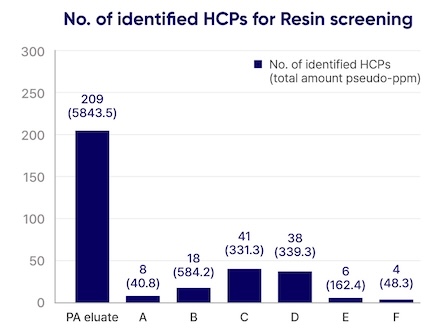 Figure 3. Number of identified HCPs for resin screening.
Samsung Biologics then used its LC–MS HCP ID method to characterize high-risk lipase-series HCPs in more detail and assess which resins most effectively removed them. Four types of lipases, totaling 81 ppm, were detected in the Protein A eluate. Most were cleared to below 15 ppm after treatment with the six resins, with resins A, E, and F showing the greatest removal of lipase-family HCPs (Figure 4).
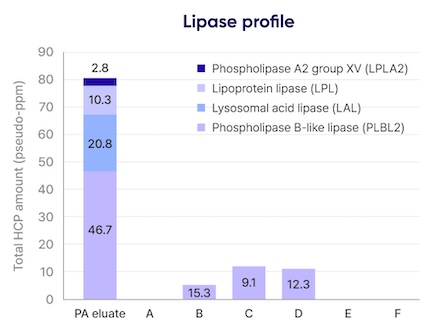 Figure 4. Profile of lipase species for resin screening.
This example illustrates why resin screening can benefit from more targeted HCP analysis. Total HCP reduction can identify broadly effective purification conditions, while LC–MS profiling shows whether specific high-risk HCPs, including lipase-family proteins, are being cleared. When paired with lipase activity testing, this approach can also help determine whether residual lipase-related risk has been reduced functionally, supporting more informed resin selection and downstream process optimization. Both LC–MS HCP profiling and lipase activity testing are now established technologies applied during early DSP development at Samsung Biologics.
Case Studies in Functional Lipase Control
Samsung Biologics has applied its lipase activity assay in multiple program settings. One application involved a late-phase technology transfer program, where the assay was used to confirm the stepwise clearance profile of lipase-family HCPs across downstream processing. A second application involved the use of lipase activity testing during process development for a bispecific antibody, where the assay supported evaluation of functional lipase-related risk alongside downstream process optimization. These examples show how lipase activity testing can support both later-stage confirmation of clearance performance and proactive process development.
Confirming Lipase Clearance During Late-Phase Tech Transfer
In one case, a late-phase program being tech-transferred to Samsung Biologics was evaluated using the in-house lipase activity assay. The results showed a consistent reduction in lipase activity across batches representing different stages of the transfer process, including the feasibility run, development run, and confirmation run (Figure 5). This pattern indicated that the process’s lipase clearance capability was reproducible and robust. The trend was also consistent with the client’s data, supporting comparability between the transferring and receiving sites.
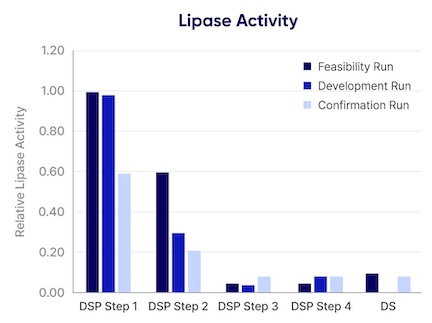 Figure 5. Lipase activity trends during tech transfer.
Late-phase programs place particular emphasis on process robustness and batch-to-batch consistency ahead of validation and commercial manufacturing. In this case, consistent lipase clearance performance provided confidence that residual lipase posed minimal risk to product stability and that the process could move forward with the lipase-related risk effectively controlled.
This experience showed that trend-based lipase clearance profiling can provide useful qualitative evidence during late-phase tech transfer. It also demonstrated that monitoring lipase activity throughout the downstream process can add value to product stability risk management beyond conventional HCP monitoring alone.
Assessing Lipase Clearance in a Complex Bispecific Product
In a second case, Samsung Biologics evaluated lipase activity clearance trends across the DSP process for a bispecific antibody, a product type that is generally known to present challenges for HCP removal. The study was designed to assess whether the downstream process could efficiently reduce functional lipase activity and support management of lipase-related risk in a complex biologic format.
The study also evaluated whether sample concentration influences lipase activity measurement. To assess this, Samsung Biologics compared unconcentrated samples with samples concentrated to a similar concentration range, allowing the team to determine whether concentration differences affected the assay readout.
The lipase activity assay showed efficient reduction of lipase activity through the DSP process. In addition, no significant difference in the final reported lipase activity, expressed as MU µM/h/(g/L), was observed between pre-concentration and post-concentration samples. These results indicate that the assay is robust and suitable for managing lipase-related risk in bispecific products.
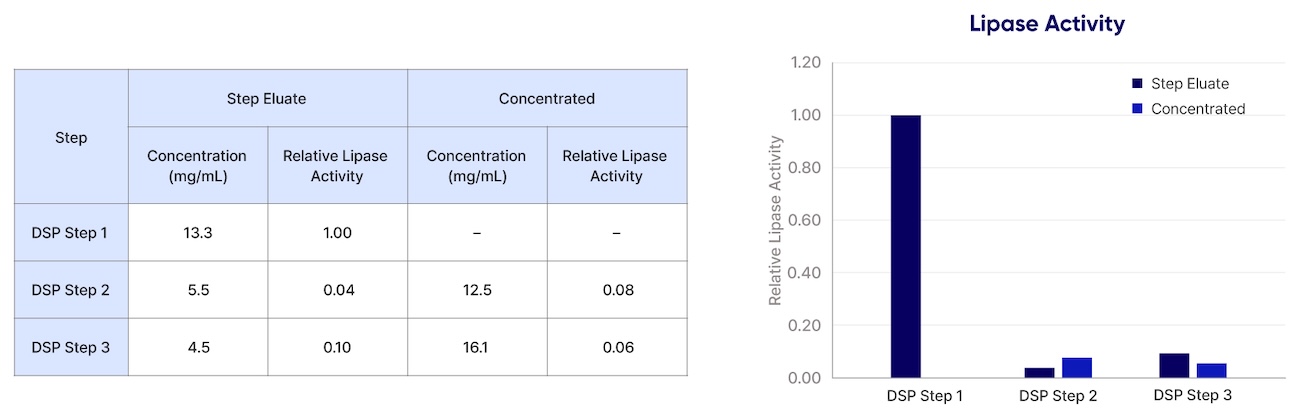 Figure 6. Lipase activity trends in bispecific material.
Toward Functional HCP Risk Control
Lipase activity data can help establish relevant lipase specifications and support process optimization by confirming that active lipase levels remain consistently controlled. Rather than relying only on aggregate impurity measurements, development teams can use functional activity data to assess the specific HCP risk most closely tied to polysorbate degradation and related stability concerns. When paired with LC–MS HCP profiling, lipase activity testing provides a more complete view of both lipase identity and functional activity.
Samsung Biologics now applies both LC–MS HCP profiling and targeted lipase activity testing as established in-house platforms for risk-based downstream process development. By measuring lipase activity directly, teams can better assess true clearance performance, set more meaningful control limits, and strengthen product quality assurance throughout biologics development.
References
1. “Host Cell Protein contaminants in mAb and protein therapy manufacturing.” United States Pharmacopeial Convention. Accessed 13 Jul. 2026.
2. <1132.1> Residual Host Cell Protein Measurement in Biopharmaceuticals by Liquid Chromatography-Mass Spectrometry. United States Pharmacopeial Convention. 2024.
3. Huang, Lihua et al. “A Novel Sample Preparation for Shotgun Proteomics Characterization of HCPs in Antibodies.” Analytical Chemistry. 89: 5436–5444 (2017).
4. Bhargava, Adithi C, et al. “High-Throughput, Fluorescence-Based Esterase Activity Assay for Assessing Polysorbate Degradation Risk during Biopharmaceutical Development.” Pharmaceutical Research. 38: 397–413 (2021).